How to Grow Palak at Home in India: Spinach Season, Germination Time & Complete Growing Guide
September 23, 2026
Which Fruits Can You Plant in October in India? 10 Best Fruits for Home Gardening
September 26, 2026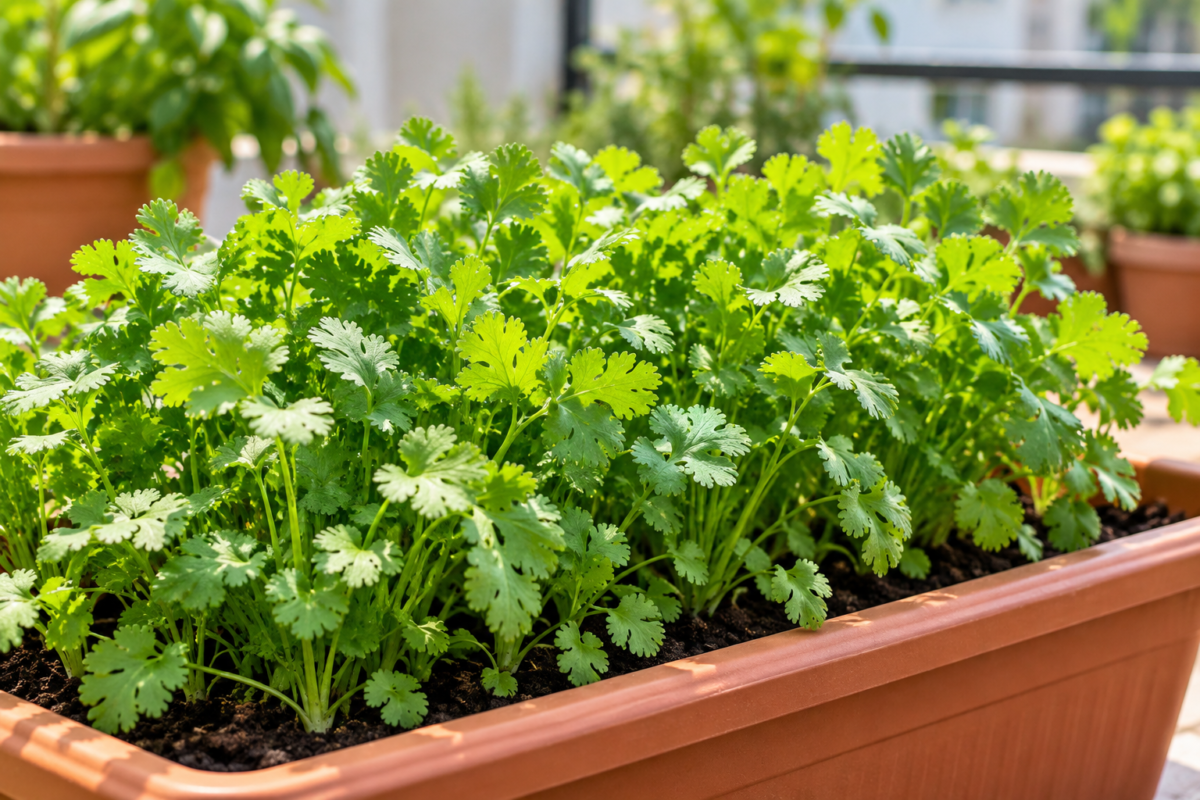
Coriander, also called dhania or dhaniya, is one of the most useful herbs to grow at home in India. Fresh coriander leaves can be harvested for chutneys, curries, salads, garnishing and everyday cooking, while mature plants can also produce coriander seeds.
The plant is fairly easy to grow, but beginners often face problems such as seeds not germinating, seedlings becoming weak, leaves turning yellow, slow growth or coriander flowering too early.
Most of these issues can be avoided by preparing the seeds correctly, using loose soil, maintaining even moisture and growing coriander during suitable weather.
This guide explains how to grow coriander at home, the best dhania season in India, coriander germination time, seed sowing, watering, sunlight, fertilizer, harvesting and common growing problems.
Coriander Plant at a Glance
| Growing Factor | Requirement |
|---|---|
| Common Name | Coriander / Dhania / Dhaniya |
| Botanical Name | Coriandrum sativum |
| Plant Type | Annual herb |
| Best Season | Cool to mild weather |
| Germination Time | Around 7–14 days |
| First Leaf Harvest | Around 30–45 days |
| Sunlight | Around 4–6 hours daily |
| Soil | Loose, fertile and well-draining |
| Watering | Light and regular |
| Best Container | Wide pot or rectangular planter |
| Difficulty | Beginner-friendly |
Best Coriander Season in India
Coriander grows best during cool to mild weather. Very high temperatures can make the plant flower quickly, reducing the period during which you can harvest fresh leaves.
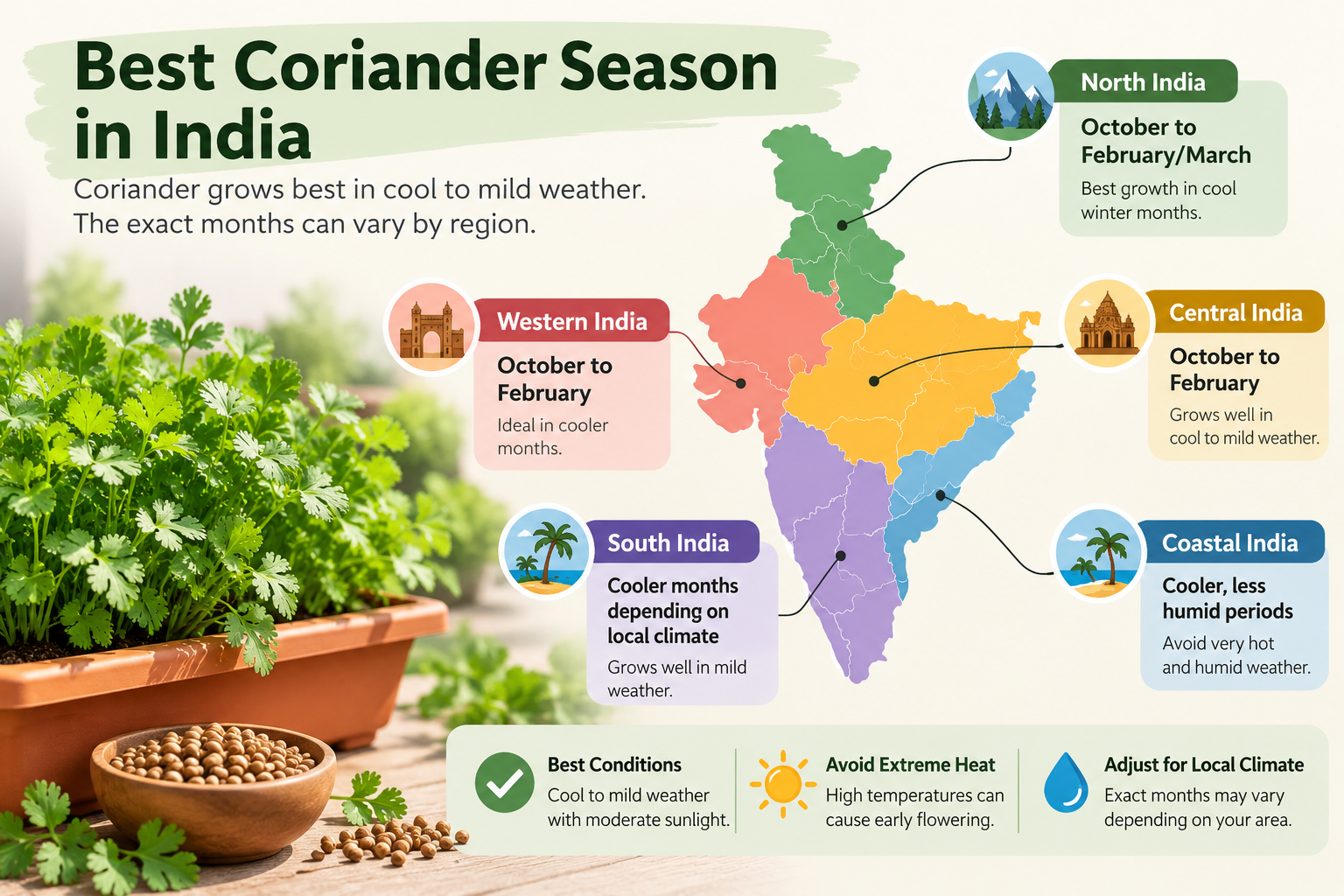
Coriander Growing Season by Region
| Region | General Growing Period |
|---|---|
| North India | October to February/March |
| Central India | October to February |
| Western India | October to February |
| South India | Cooler months depending on local climate |
| Coastal India | Cooler and less humid periods |
Can You Grow Coriander at Home?
Yes. Coriander is well suited to home gardening and does not require a large growing area.
- balcony planters
- terrace pots
- grow bags
- rectangular containers
- raised beds
- kitchen gardens
- backyard soil
- sunny window-side pots
How to Grow Coriander at Home From Seeds
Growing coriander from seed is usually the easiest method. The most important factors are seed preparation, suitable soil and consistent moisture.
Step 1: Choose the Right Pot for Coriander
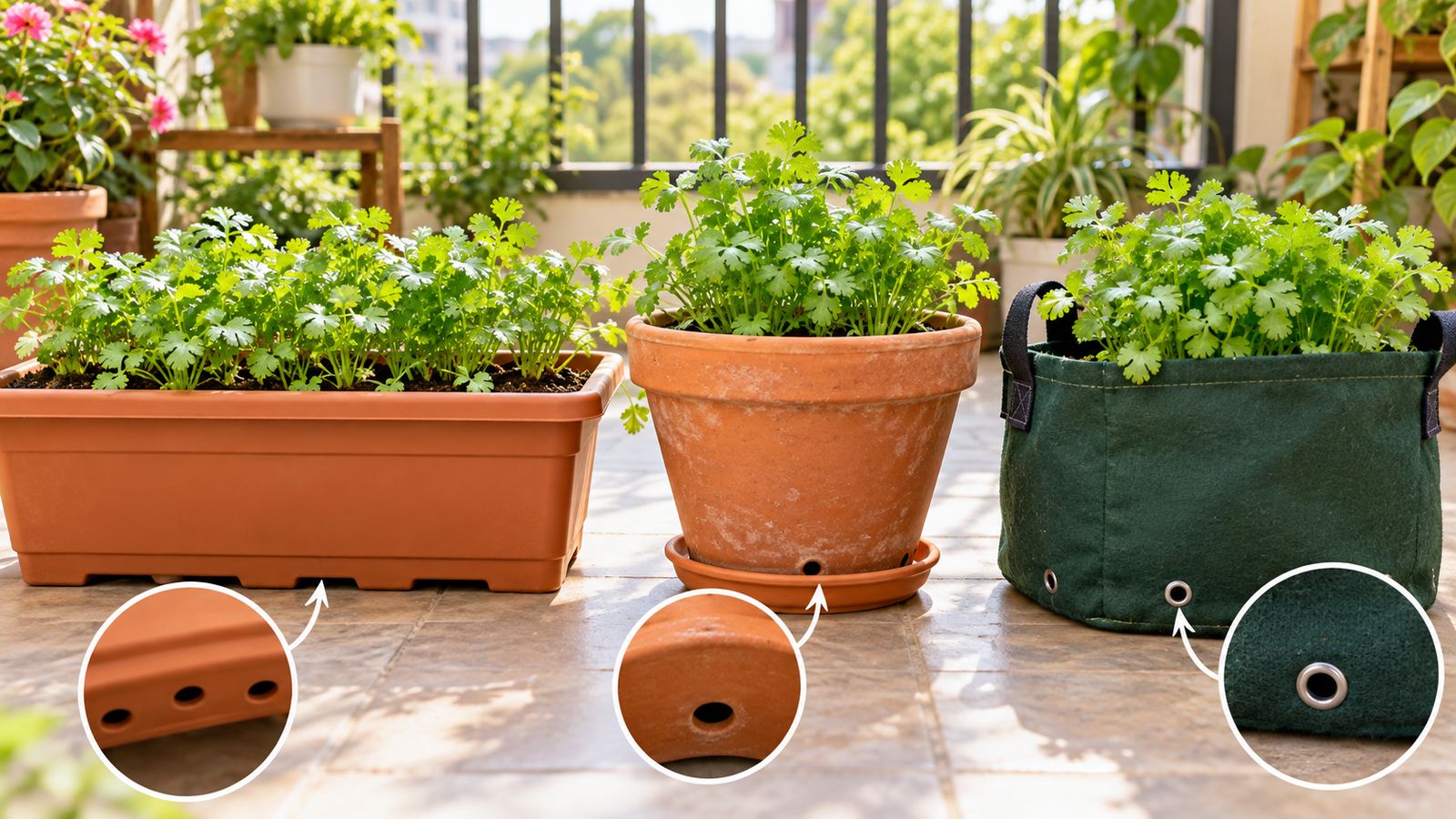
Coriander does not need an extremely deep container.
A pot around 15–20 cm deep is generally suitable for home growing.
Good options include:
- rectangular planters
- wide terracotta pots
- plastic pots with drainage holes
- grow bags
- balcony boxes
Step 2: Prepare the Best Soil for Coriander
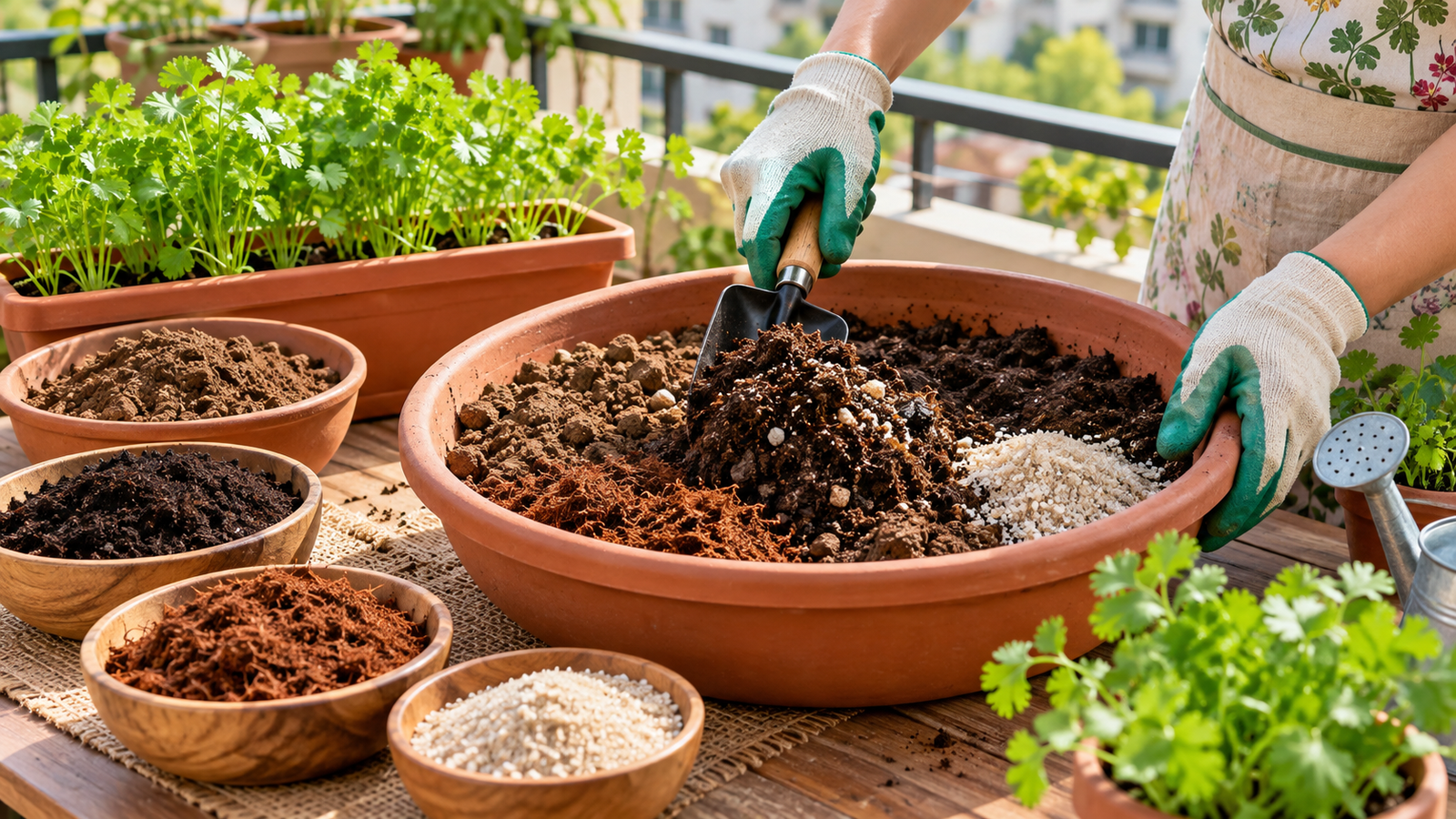
Coriander performs best in soil that is loose, fertile and well-draining while still retaining a moderate amount of moisture.
A simple potting mix can contain:
- garden soil
- compost or vermicompost
- cocopeat
- coarse sand when extra drainage is required
Avoid very compact soil because young coriander roots may struggle to grow properly.
Step 3: Prepare Coriander Seeds Before Sowing
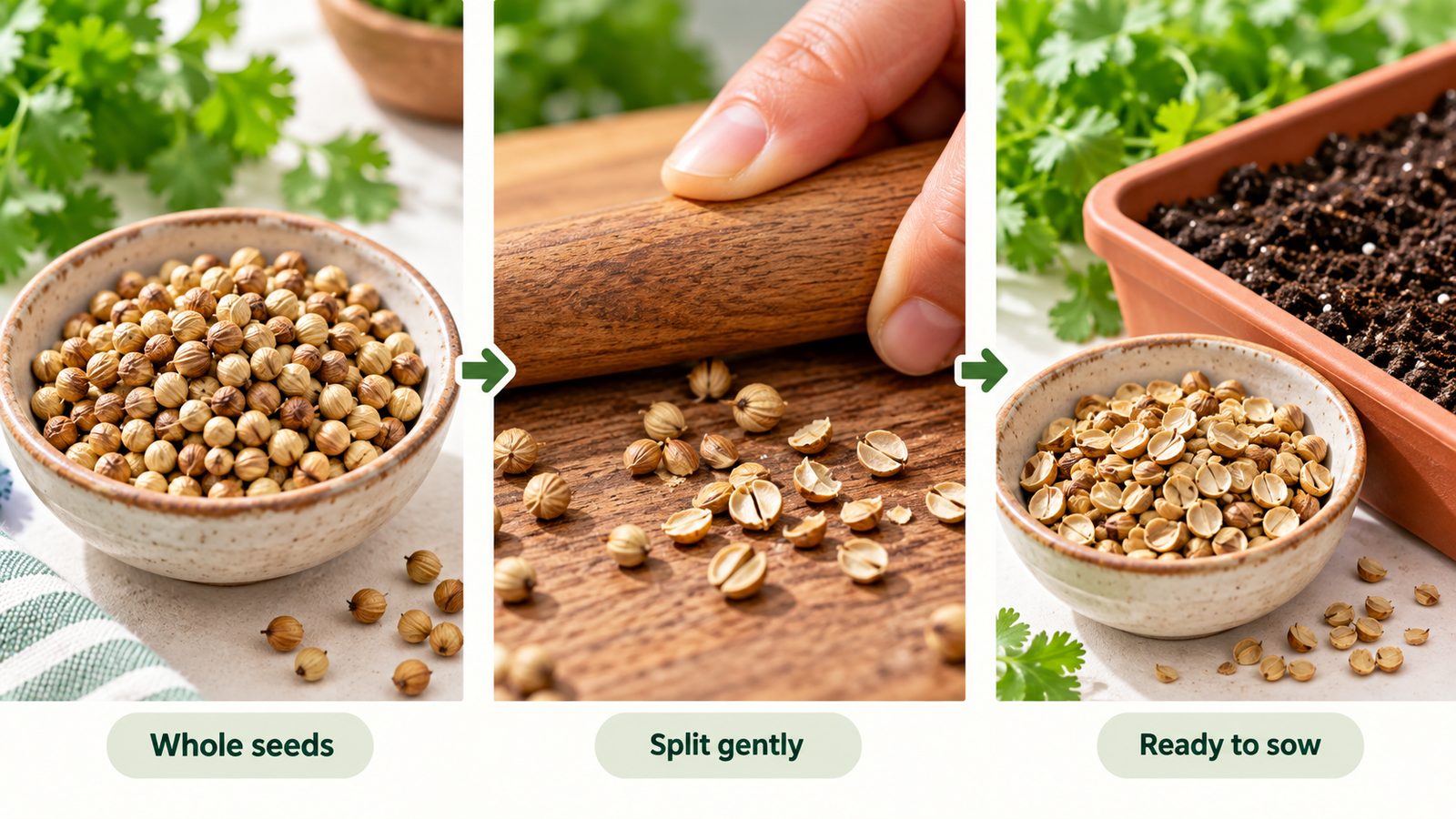
What we commonly call a coriander seed is a dry fruit that can contain two seeds.
Should You Split Coriander Seeds Before Sowing?
You can gently press or crack coriander seeds so that they separate into halves.
Do not crush them into powder.
- moisture reaches the seed more easily
- germination may become more even
- the seed halves are easier to distribute while sowing
Should Coriander Seeds Be Soaked Before Planting?
Soaking coriander seeds is optional. Fresh seeds, even moisture, suitable temperatures and correct sowing depth are more important for successful germination.
Step 4: Sow Coriander Seeds
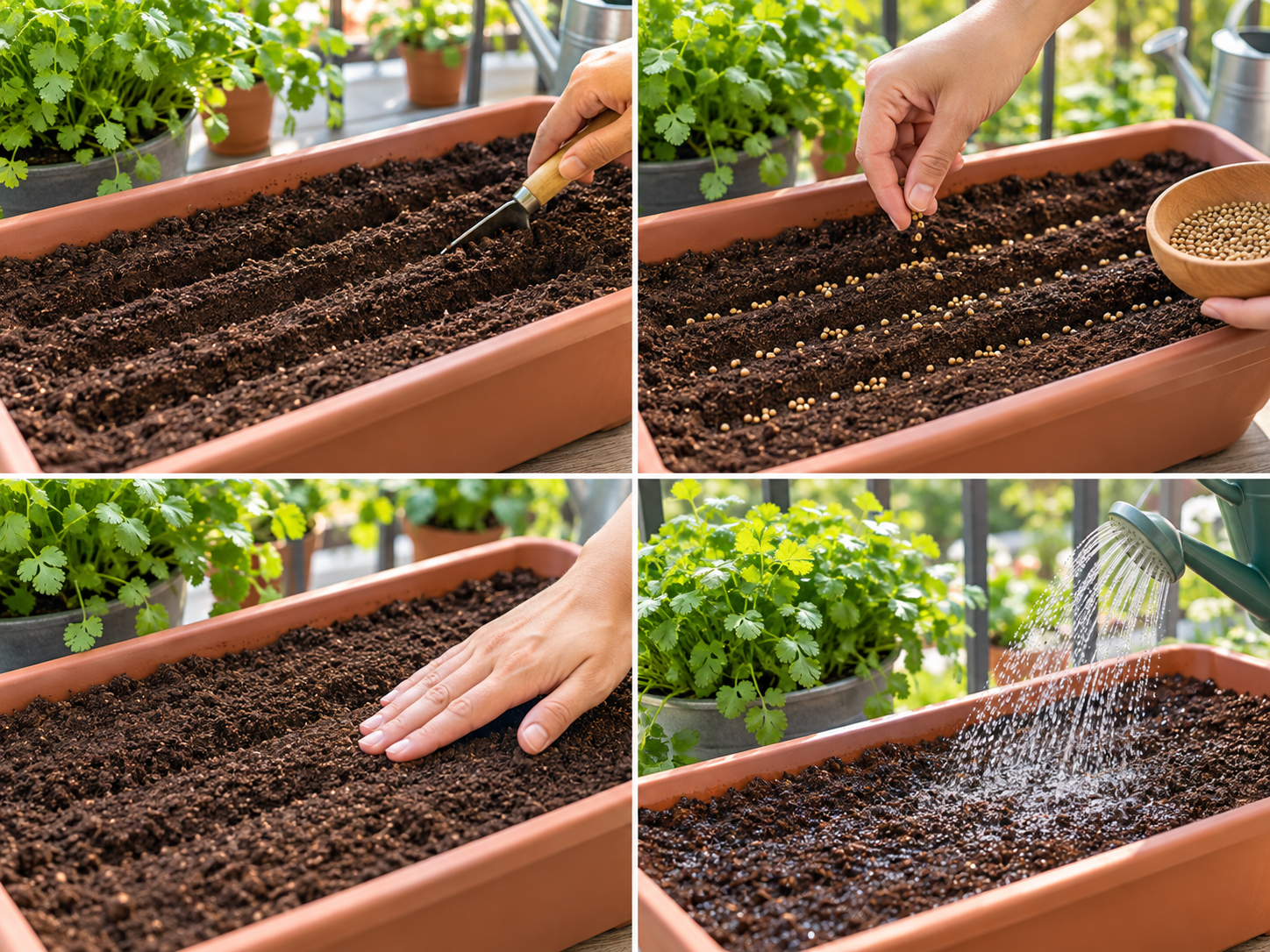
- Fill the container with prepared soil.
- Level the surface.
- Make shallow rows.
- Spread the coriander seeds.
- Cover them lightly with soil.
- Water gently.
How Deep Should You Plant Coriander Seeds?
Coriander seeds can generally be planted around 1–1.5 cm deep.
Step 5: Water Coriander Correctly

After sowing, water gently so that the seeds remain in place.
The soil should remain slightly moist but not waterlogged.
Coriander Germination Time

Under suitable conditions, coriander seeds usually germinate in around 7–14 days.
Factors That Affect Coriander Seed Germination
- seed freshness
- seed preparation
- soil moisture
- temperature
- sowing depth
- soil texture
- weather conditions
Why Are My Coriander Seeds Not Germinating?
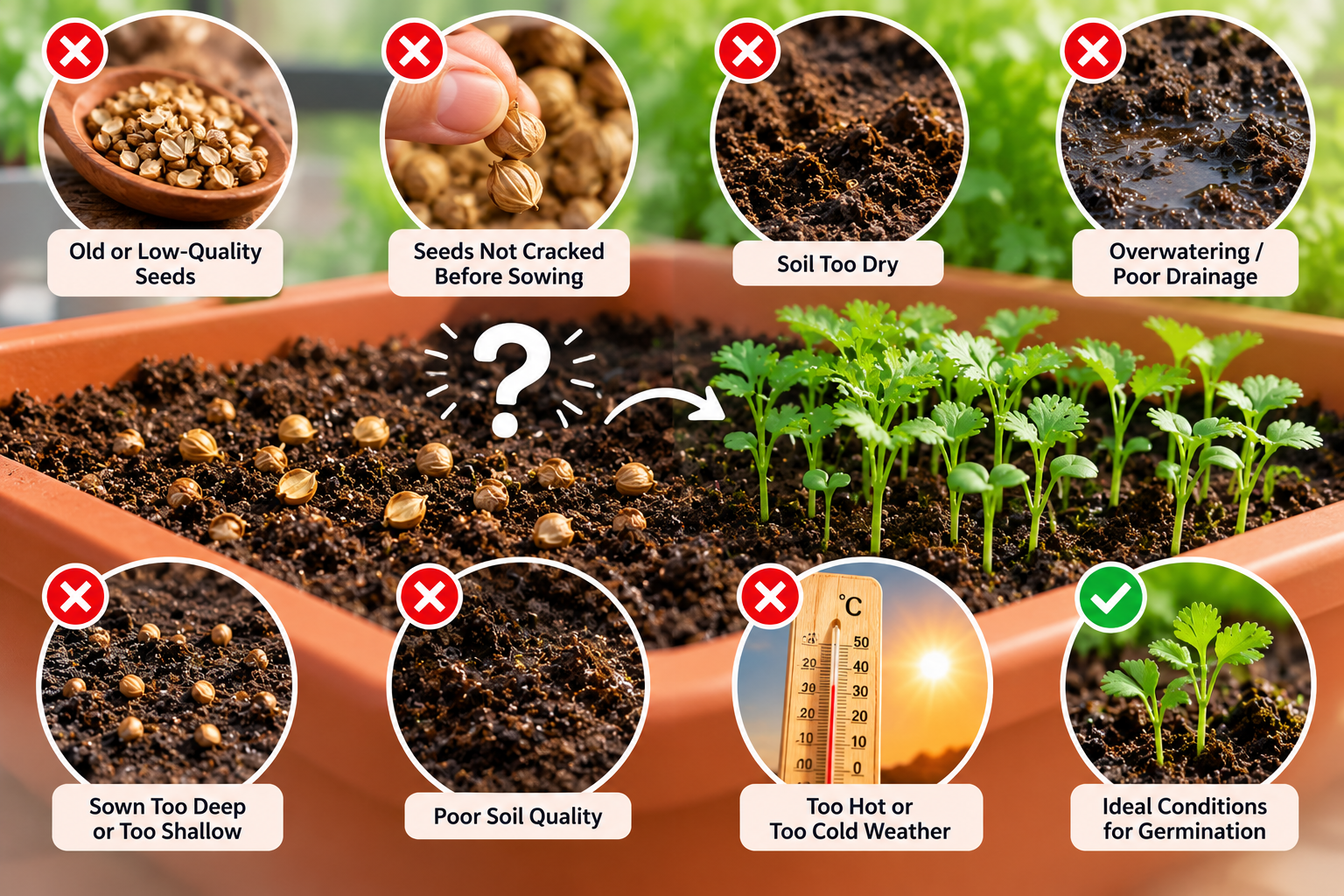
Old Seeds
Old or badly stored coriander seeds may have a low germination rate.
Soil Is Too Dry
Coriander seeds need consistent moisture while germinating.
Soil Is Too Wet
Constantly soggy soil can cause seeds to rot before they sprout.
Seeds Are Sown Too Deep
Deeply buried seeds may take longer to emerge or fail altogether.
Weather Is Too Hot
Very high temperatures can reduce germination and stress young plants.
Soil Is Too Compact
Hard soil makes it difficult for young roots and shoots to develop.
Step 6: Provide Enough Sunlight
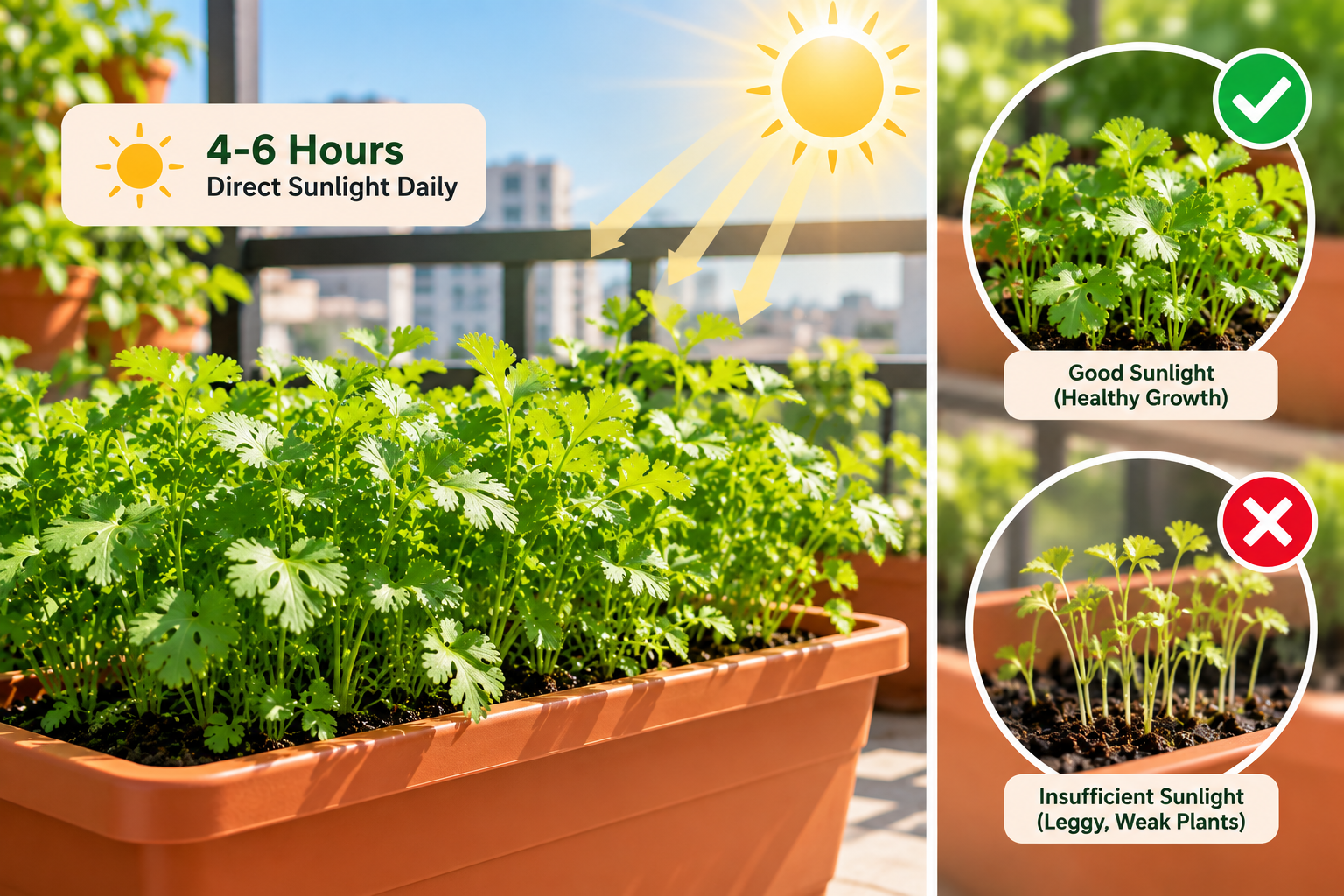
Coriander generally grows well with around 4–6 hours of sunlight per day.
Can Coriander Grow in Partial Shade?
Yes. Coriander can tolerate partial shade, particularly during hot weather. However, very low light may result in weak and leggy growth.
Step 7: Thin Crowded Seedlings
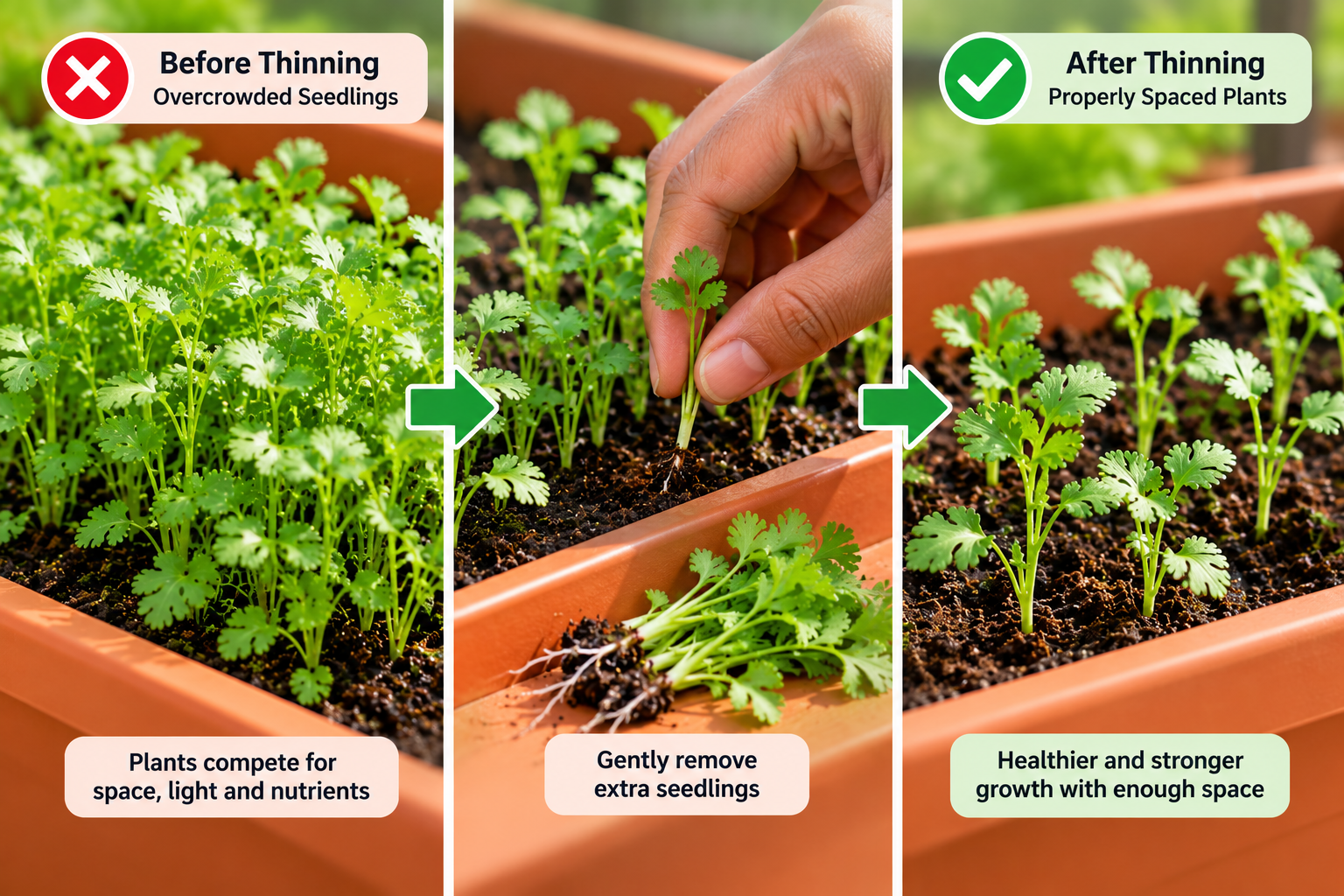
Crowded coriander seedlings compete for sunlight, nutrients, water, root space and airflow.
Step 8: Feed Coriander Lightly
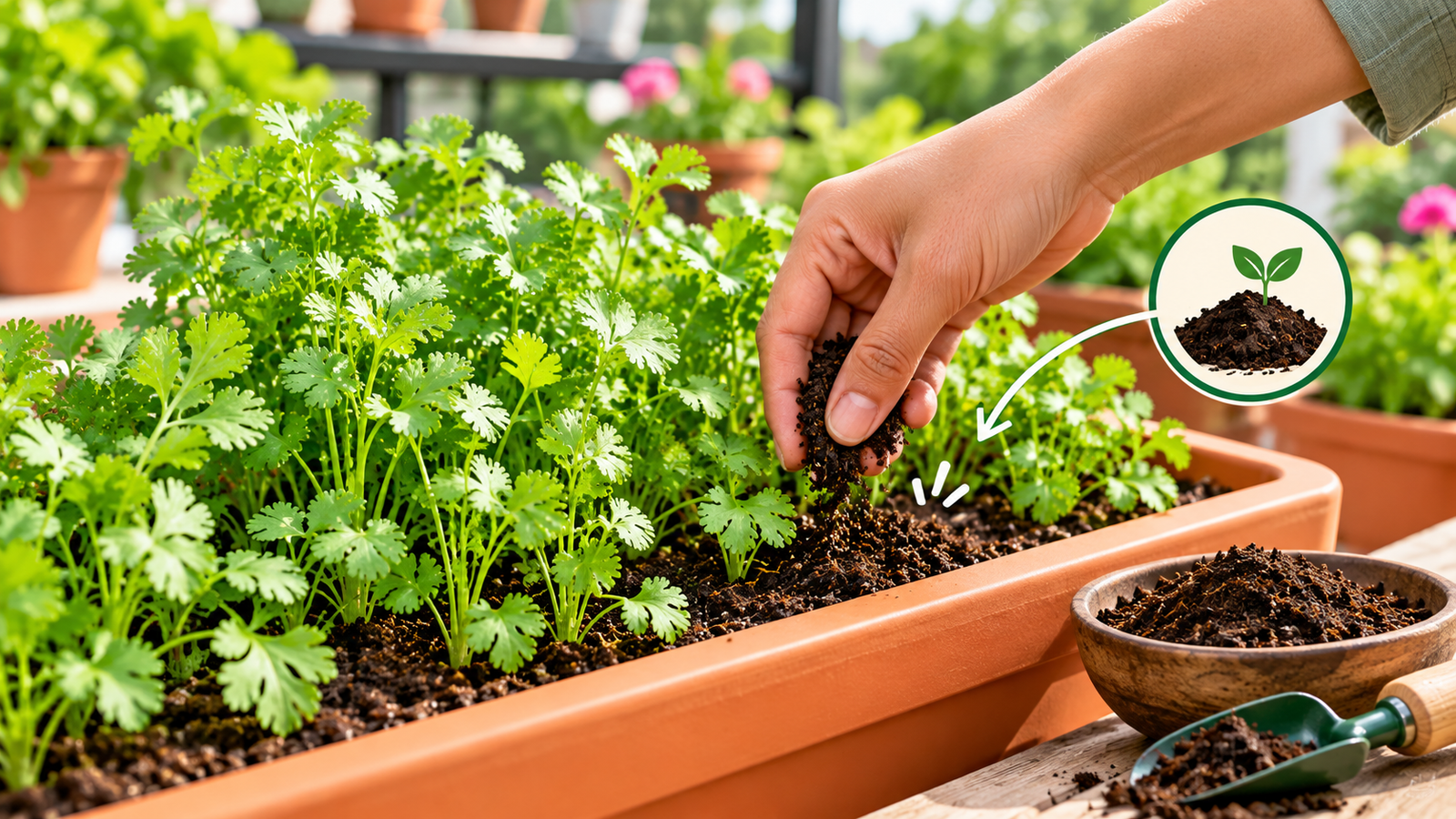
Coriander does not require very heavy feeding.
- compost
- vermicompost
- well-rotted manure
- mild organic liquid fertilizer
Best Fertilizer for Coriander Plant at Home
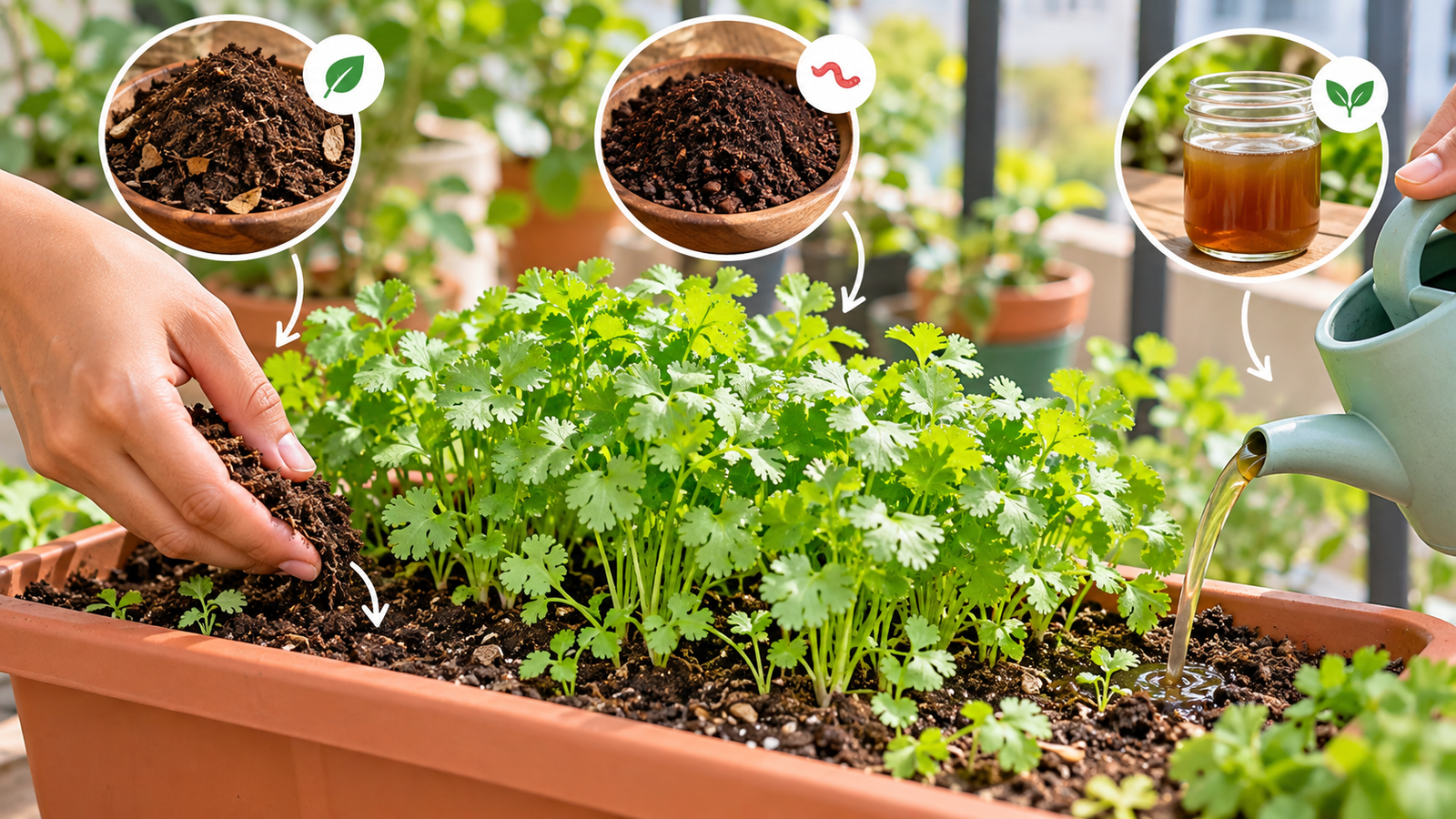
- mix compost into the soil before sowing
- add vermicompost after plants establish
- top-dress lightly during growth
- use mild liquid fertilizer when required
Coriander Growing Time
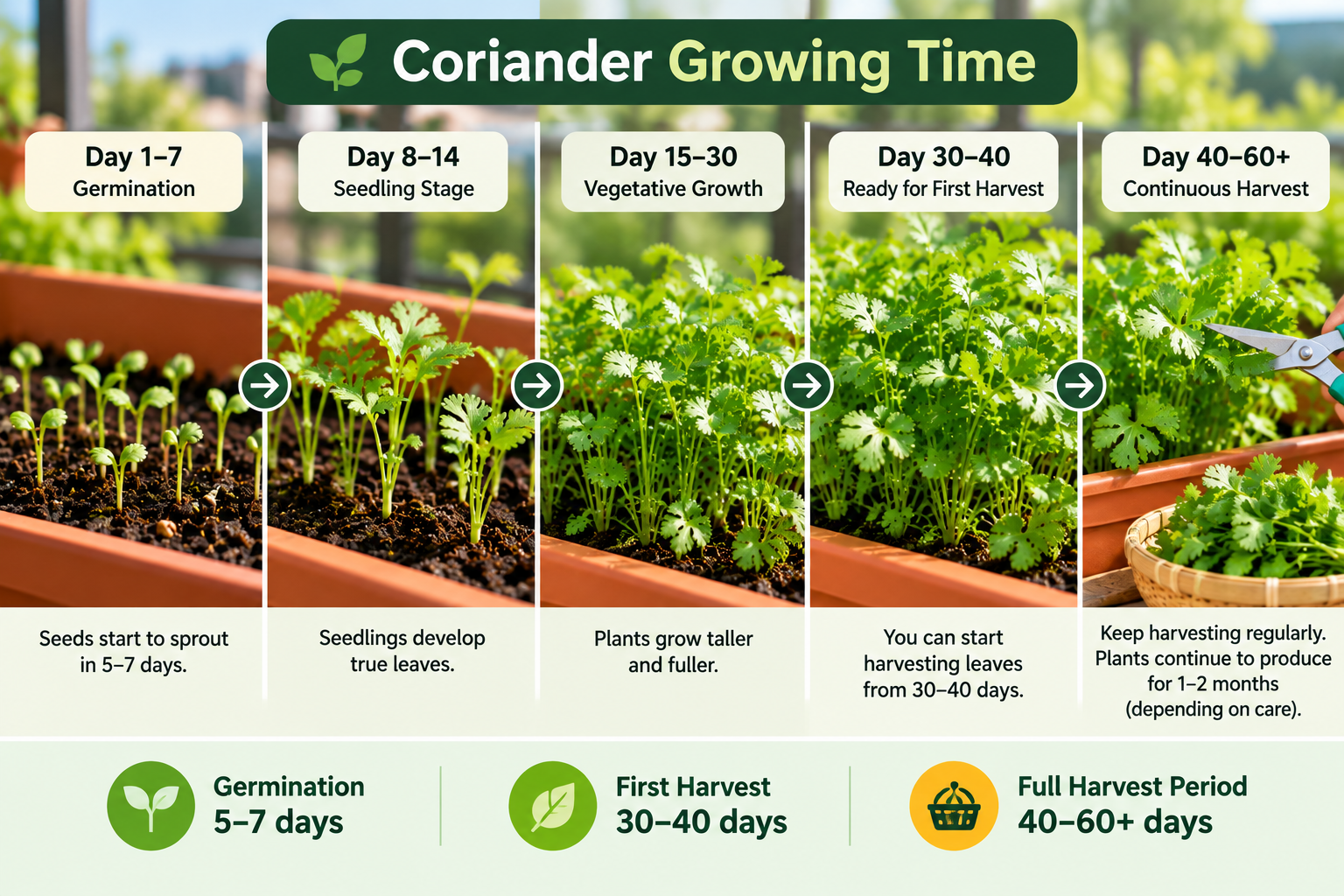
Fresh coriander leaves may often be ready for harvesting in approximately 30–45 days.
Coriander Plant Growth Stages
| Growth Stage | Approximate Time |
|---|---|
| Seed sowing | Day 0 |
| Germination | Around 7–14 days |
| Young seedlings | Around 14–25 days |
| Leafy growth | Around 25–40 days |
| First leaf harvest | Around 30–45 days |
| Flowering | Later depending on weather |
How Often Should You Water Coriander?
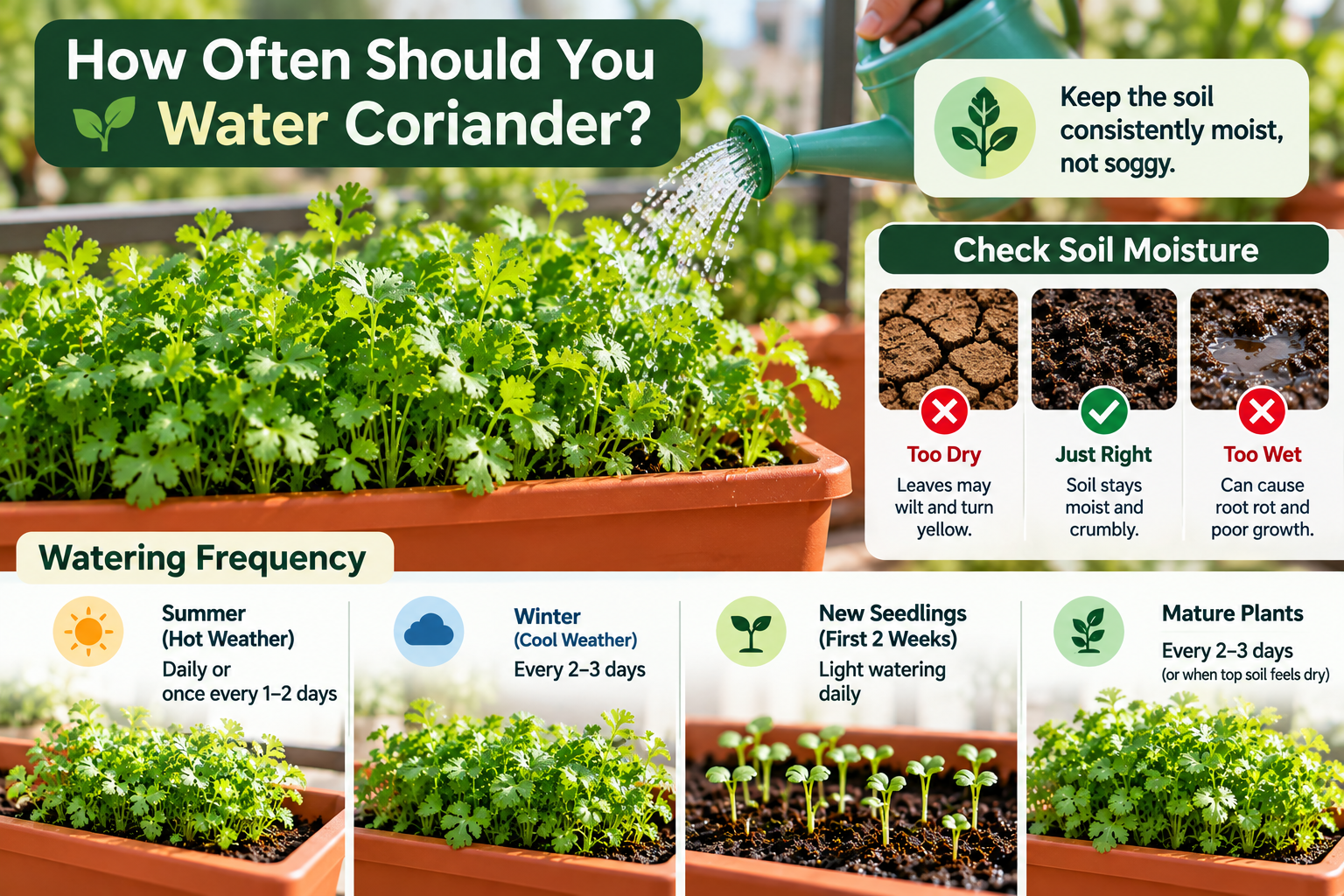
Water according to soil moisture rather than following a fixed schedule.
How to Harvest Coriander Leaves
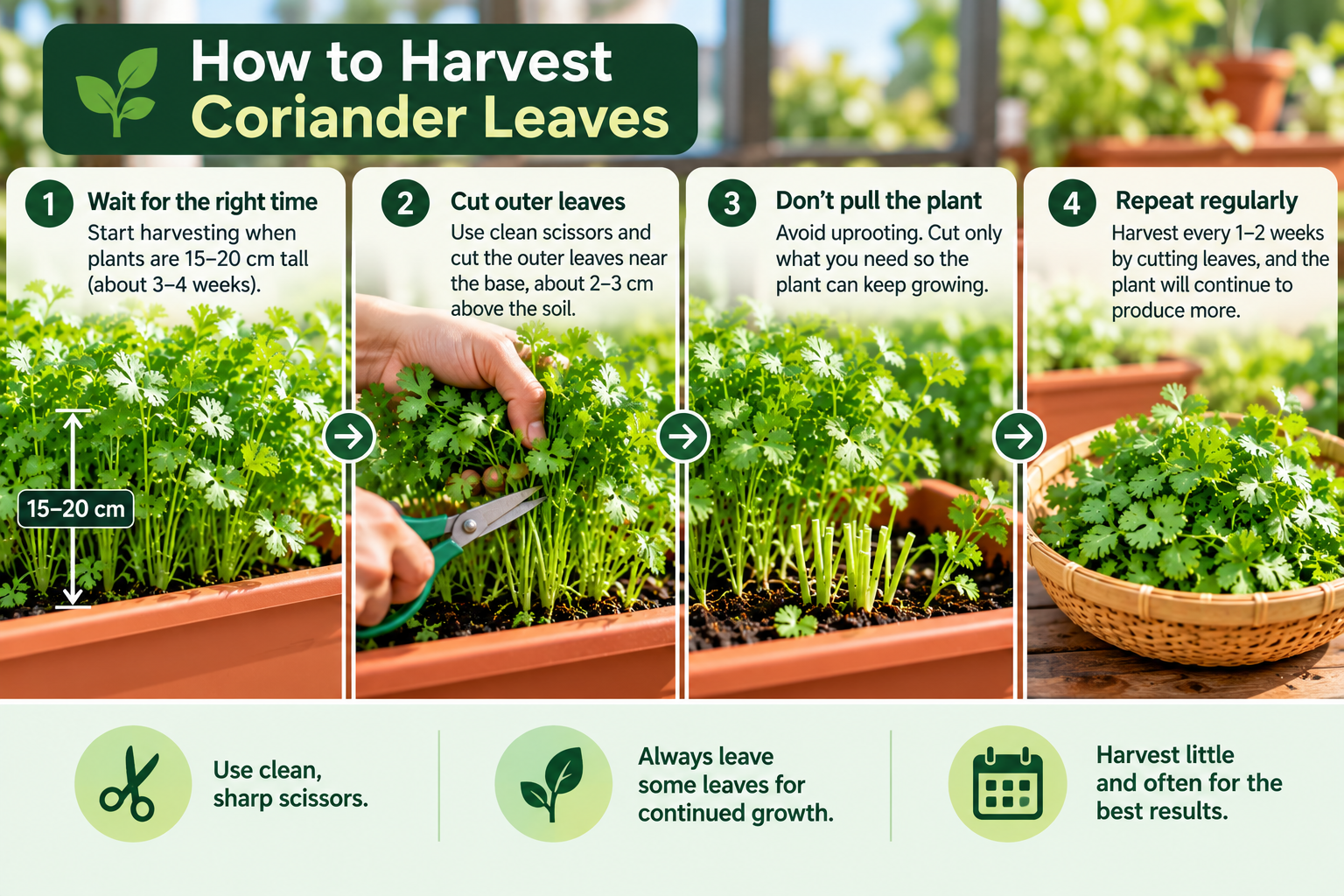
- Wait until healthy leafy growth develops.
- Harvest larger outer stems first.
- Use clean scissors.
- Leave central growth intact.
- Avoid removing the entire plant.
Does Coriander Grow Back After Cutting?
Coriander can produce additional leaves if enough healthy central growth remains after harvesting.
Why Is My Coriander Plant Turning Yellow?
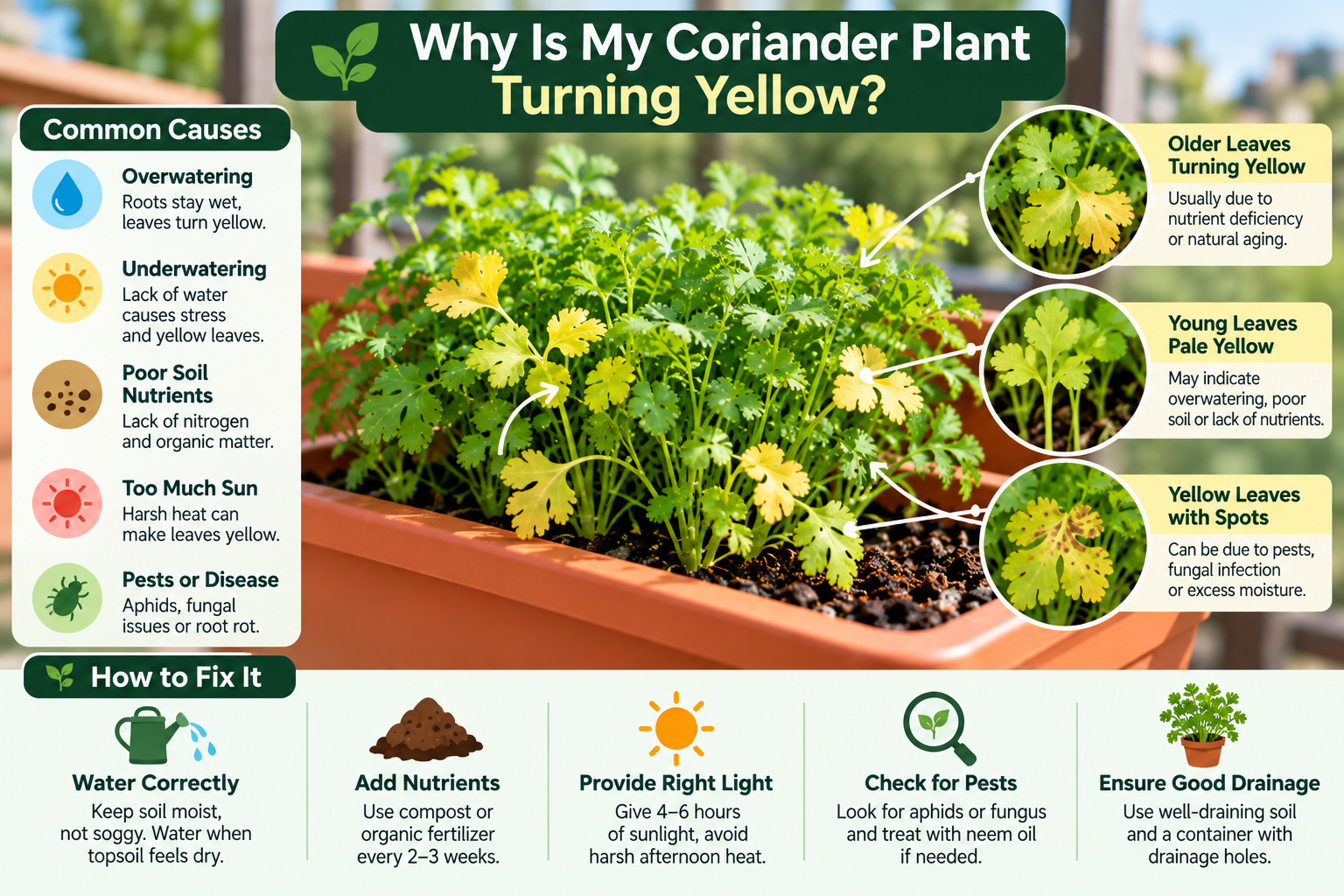
Overwatering
Constantly wet soil may weaken roots.
Poor Drainage
Water trapped around roots can cause stress.
Nutrient Problems
Pale leaves may indicate inadequate soil fertility.
Heat Stress
Strong heat can reduce leaf quality.
Why Is My Coriander Plant Growing Slowly?
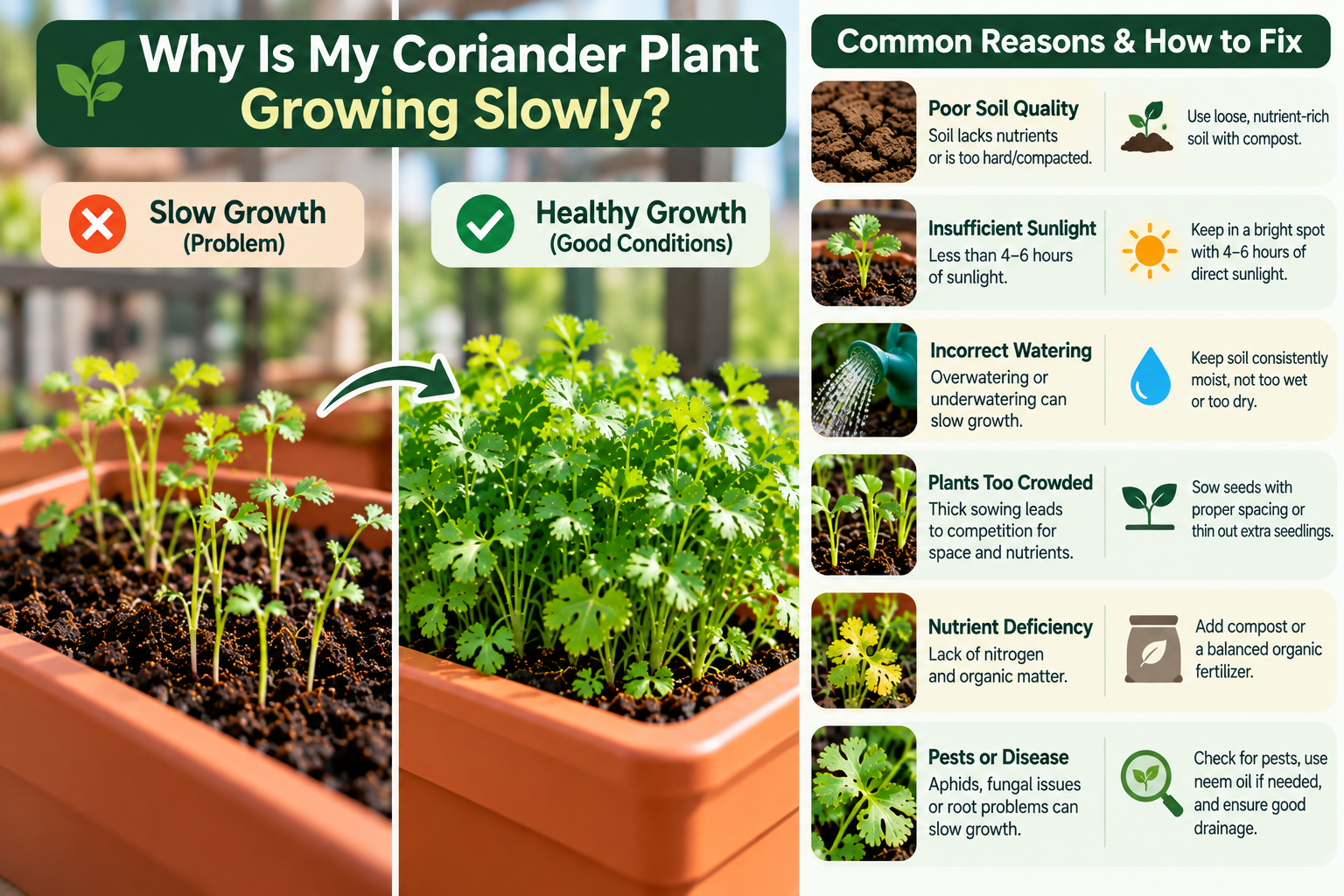
- low sunlight
- poor soil
- overcrowding
- incorrect watering
- high temperature
- lack of nutrients
- pest damage
Why Is My Coriander Plant Flowering Early?
Early flowering is commonly known as bolting.
- high temperatures
- hot and dry weather
- plant stress
- plant maturity
Can You Grow Coriander in Pots?
Yes. Coriander grows very well in pots, rectangular planters and grow bags.
Best Pot Size for Coriander
A pot around 15–20 cm deep is generally suitable.
Growing Coriander in Containers: Common Mistakes
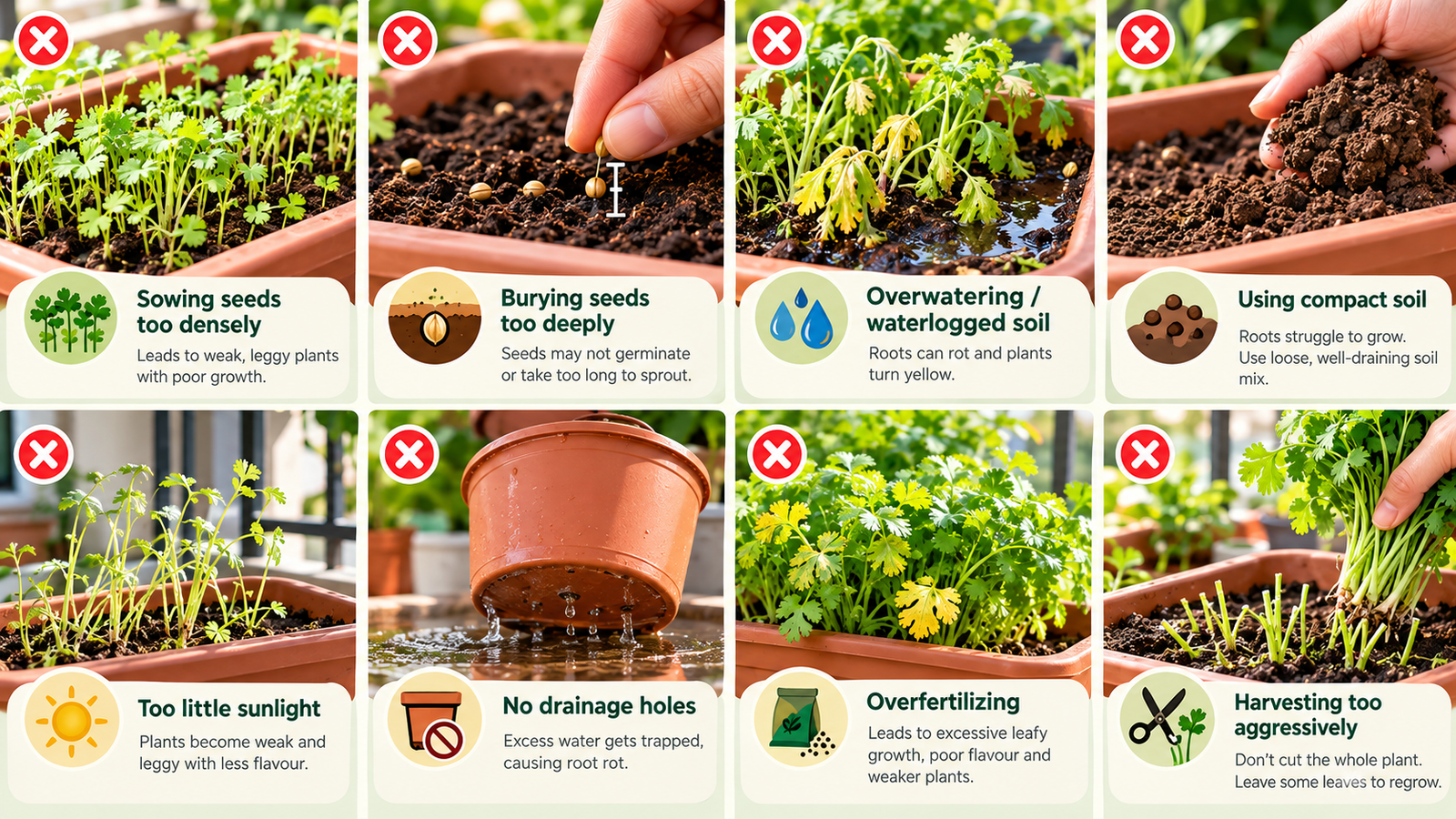
| Mistake | Possible Problem | Better Approach |
|---|---|---|
| Sowing too densely | Weak crowded plants | Thin seedlings |
| Sowing too deeply | Poor germination | Sow shallowly |
| Overwatering | Root problems | Keep soil moist, not soggy |
| Poor drainage | Waterlogging | Use drainage holes |
| Too little sunlight | Leggy plants | Provide adequate light |
| Compact soil | Poor root growth | Use loose soil |
| Overfertilizing | Plant stress | Feed lightly |
| Overharvesting | Poor regrowth | Leave central growth intact |
Coriander Growing Checklist for Beginners
Before Sowing
- fresh coriander seeds
- wide container
- good drainage holes
- loose fertile soil
- compost
- bright growing location
After Sowing
- keep soil moderately moist
- wait around 7–14 days for germination
- provide 4–6 hours of sunlight
- thin overcrowded seedlings
- feed lightly
- harvest outer stems first
Frequently Asked Questions
English FAQsUsually around 7–14 days under suitable conditions.
Gently splitting the seeds may help support more even germination.
Around 1–1.5 cm deep is generally sufficient.
It can regrow if enough healthy central growth remains.
धनिया उगाने से जुड़े सवाल
Hindi FAQsधनिया के लिए हल्की, भुरभुरी और अच्छी जल निकासी वाली मिट्टी बेहतर होती है। इसमें कम्पोस्ट या वर्मीकम्पोस्ट मिलाया जा सकता है।
बहुत ज्यादा भीड़ से पौधे कमजोर हो सकते हैं। अंकुर निकलने के बाद कमजोर पौधों को हटाकर बाकी पौधों को पर्याप्त जगह देना बेहतर रहता है।
ज्यादा गर्मी, सूखा मौसम या पौधे पर तनाव होने से धनिया जल्दी फूल देने लगता है। इसे bolting कहा जाता है।
हाँ। अच्छी धूप, जल निकासी वाला चौड़ा गमला और हल्की मिट्टी मिलने पर धनिया बालकनी में अच्छी तरह उग सकता है।
Dhania Growing FAQs in Hinglish
Hinglish FAQsSeeds ko bilkul ek jagah pile-up na karein. Thoda spacing rakhein aur germination ke baad extra seedlings ko thin kar dein.
Sunlight, overcrowding aur soil nutrition check karein. Kam light ya bahut crowded pot me leaves chhoti reh sakti hain.
Haan, agar window ke paas enough direct ya bright natural light aati ho. Dark indoor area me growth weak ho sakti hai.
Saara dhania ek saath harvest karne ke bajay outer stems cut karein aur har kuch hafton me naye seeds ka small batch sow karte rahein.