10 Best Winter Flowers in India: Names, Growing Season & Care Guide
September 30, 2026
How to Grow Mustard Plants in Winter in India: A Complete Guide
October 16, 2026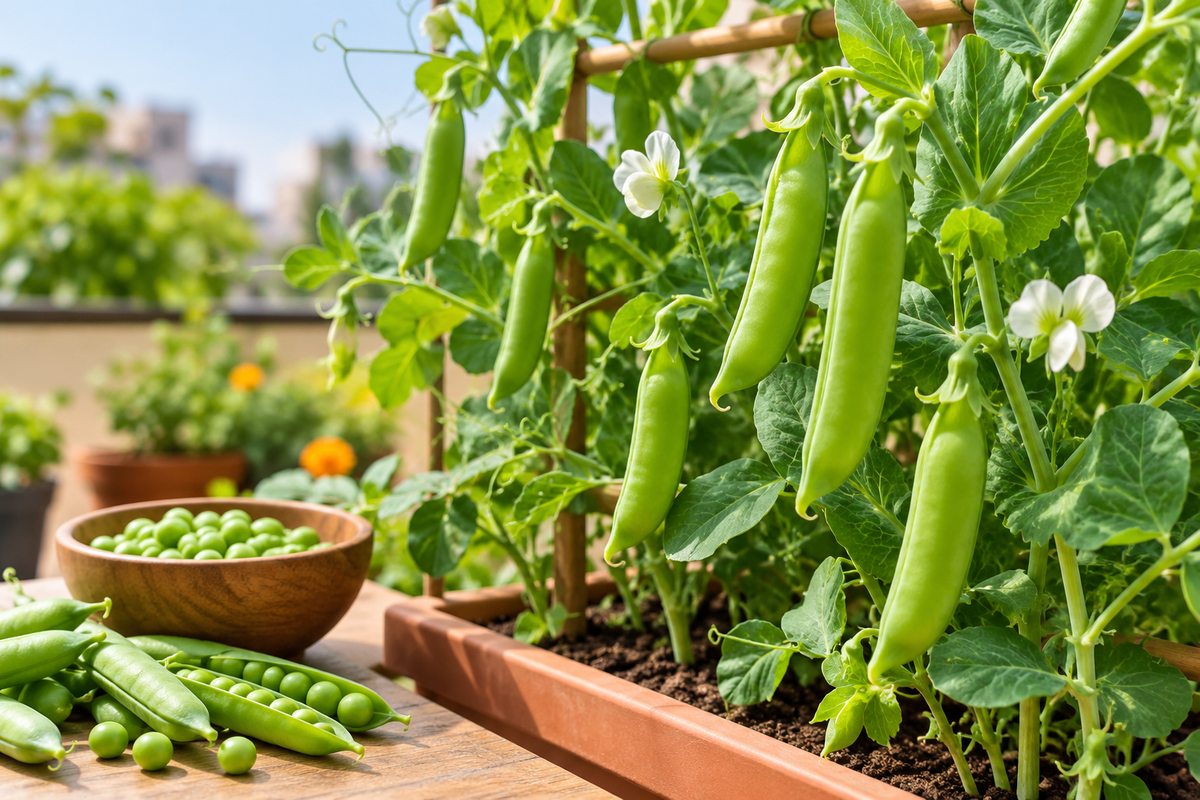
Growing fresh peas (मटर) at home is easy when you plant them during cool weather. A healthy green peas plant needs moderate sunlight, consistently moist but well-drained soil, and support to climb as it grows.
Garden peas are especially suitable for terrace gardens, balconies and kitchen gardens because they can be trained vertically and do not require a huge amount of floor space.
Peas Growing Season in India
Peas are primarily a cool-season crop. They perform best when temperatures are mild rather than during intense summer heat. For many Indian regions, the main pea sowing time begins after monsoon heat starts declining.
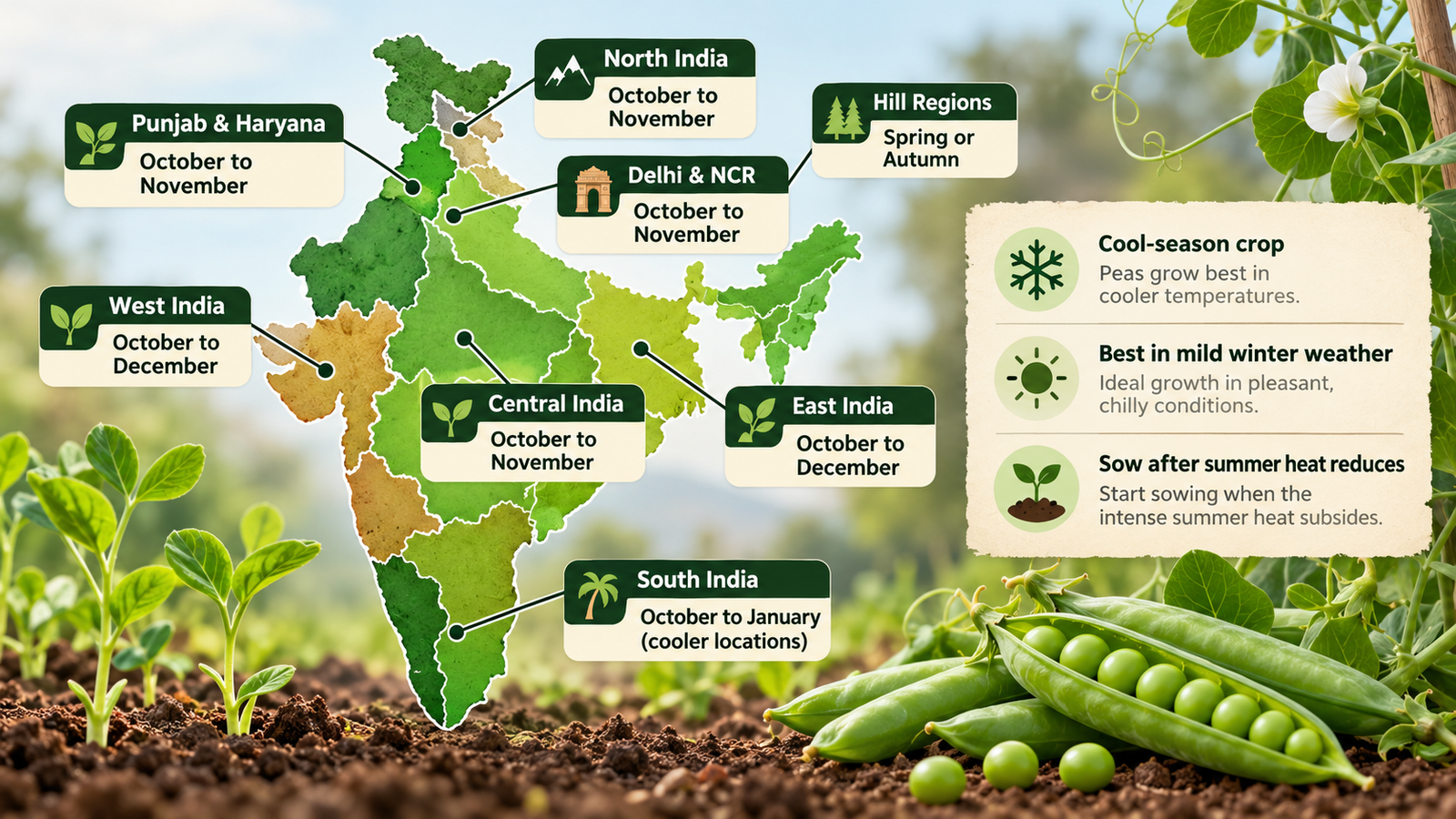
| Region | Best Time to Sow Peas | Growing Notes |
|---|---|---|
| North India | October to November | One of the most suitable winter growing windows. |
| Punjab & Haryana | October to November | Sow after strong summer heat has reduced. |
| Delhi & NCR | October to November | Suitable for winter pots, terraces and garden beds. |
| Central India | October to November | Early winter generally offers favourable conditions. |
| East India | October to December | Provide good airflow where humidity remains high. |
| West India | October to December | Exact timing varies between coastal and inland areas. |
| South India | October to January in cooler locations | Grow during the coolest part of the year. |
| Hill Regions | Spring or autumn depending on altitude | Avoid severe frost and unusually hot periods. |
Green Peas Season in India
The main green peas season in India generally falls between late autumn and winter in the plains. Cooler hill regions may also grow peas during spring when temperatures become favourable.
For home gardeners, the simplest rule is to sow peas after the hottest weather has passed and when local conditions have become comfortably cool.
Can You Grow Peas at Home?
Yes. Peas are an excellent crop for home gardeners and can be grown in:
- balcony containers
- terrace pots
- grow bags
- raised beds
- kitchen gardens
- small backyard spaces
Because many varieties grow upward with support, several plants can be grown without using too much floor space.
Garden Peas vs Green Peas
Garden peas are the familiar green peas grown for the sweet seeds inside their pods. Depending on variety, pea plants may be compact or climbing.
For beginners growing peas in containers, dwarf or medium-height varieties are usually easier to manage.
Best Pot Size for Growing Peas
Peas do not need extremely deep containers, but they need enough soil volume to maintain moisture and healthy root growth.
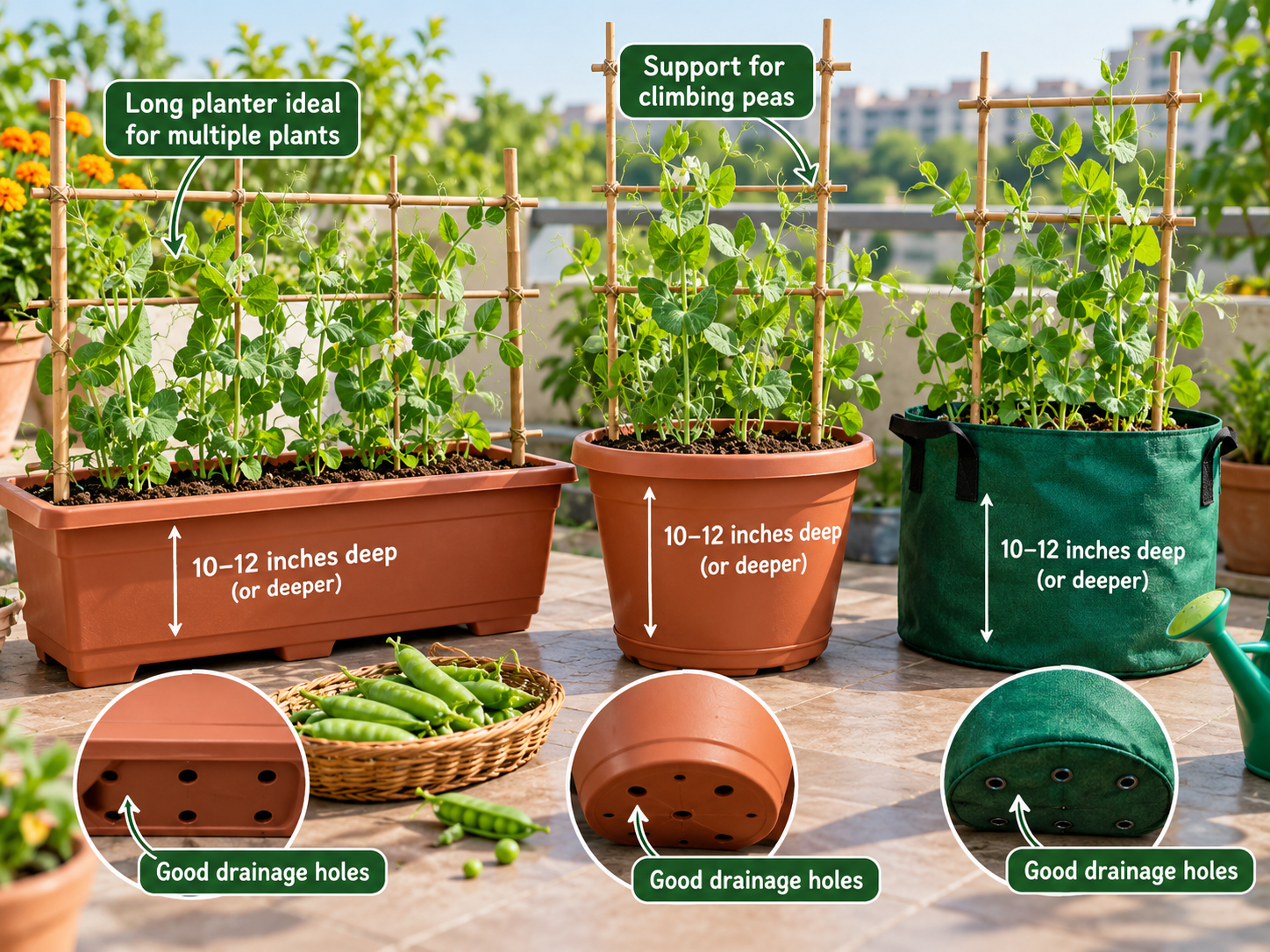
For most home gardens, choose a container approximately:
- 10–12 inches deep or deeper
- 12–18 inches wide or more
- equipped with several drainage holes
Long rectangular planters are particularly useful because multiple pea plants can be arranged in one row with support behind them.
How Many Pea Plants Can You Grow in One Pot?
The number depends on container size. For compact home growing, maintain roughly 5–8 cm spacing between plants while ensuring good airflow.
Avoid overcrowding just to fit more plants. Dense pea vines compete for light and moisture and may be more vulnerable to fungal problems.
Best Soil for Growing Pea Plants
Peas grow best in loose, fertile and well-drained soil. A simple container mix can contain:
- garden soil
- mature compost or vermicompost
- cocopeat or another moisture-retaining material
- coarse drainage material where the base soil is heavy
The finished mix should hold some moisture while still allowing excess water to drain freely.
Soil pH for Peas
Slightly acidic to neutral soil is generally suitable for peas. For most home gardeners, good drainage, suitable temperature and healthy organic matter are more important than repeatedly adjusting soil pH.
How to Grow Peas From Seed at Home
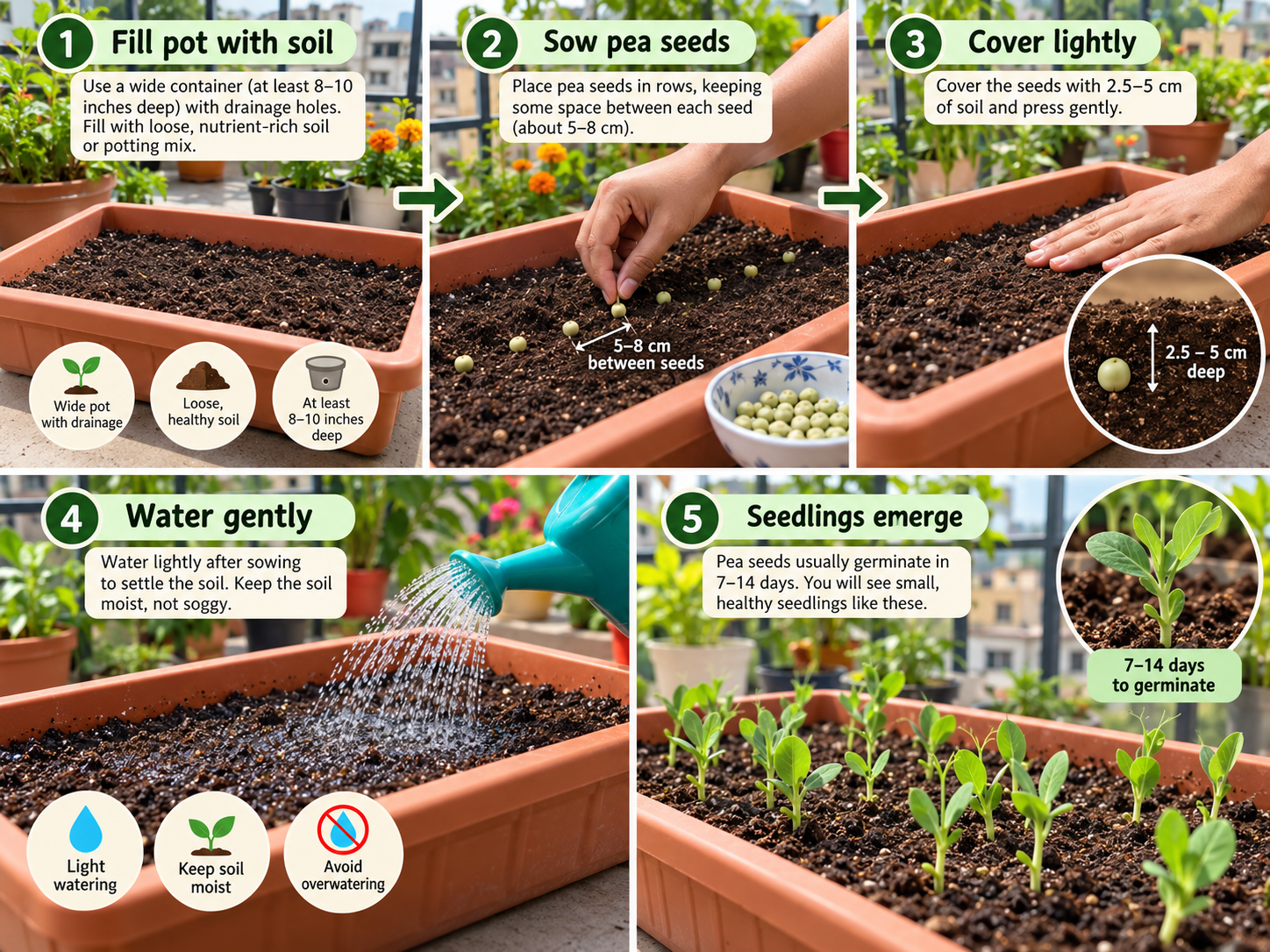
Growing peas from seed is simple because the seeds are large and easy to handle. Direct sowing also avoids unnecessary disturbance to young roots.
Should You Soak Pea Seeds Before Planting?
Soaking is optional. Good-quality pea seeds normally germinate without soaking when the soil has suitable moisture.
If seeds are exceptionally dry, some gardeners soak them briefly, but prolonged soaking can increase the risk of rotting.
How Long Do Pea Seeds Take to Germinate?
Pea seeds commonly germinate in about 7–14 days when temperature, moisture and seed quality are suitable.
Germination may become slower when:
- weather is too cold
- the soil remains waterlogged
- seeds are planted too deeply
- old or poorly stored seeds are used
- the soil repeatedly dries out
How Much Sunlight Do Pea Plants Need?
Pea plants generally perform best with around 5–6 or more hours of useful sunlight.
Good winter sunlight supports:
- stronger vines
- better flowering
- improved pod development
- healthier foliage
Can Peas Grow in Partial Shade?
Peas may survive with less sunlight, but flowering and pod production can be lower. If your balcony receives limited sun, place the pot in the brightest available position.
How Often Should You Water Pea Plants?
Avoid following a rigid “water every day” schedule. Check the soil first. Water when the upper layer begins to feel slightly dry.
Consistent moisture becomes especially important during flowering and pod development.
Do Pea Plants Need a Trellis?
Most medium and climbing pea varieties benefit from support. Their tendrils naturally wrap around nearby structures as the vines grow.
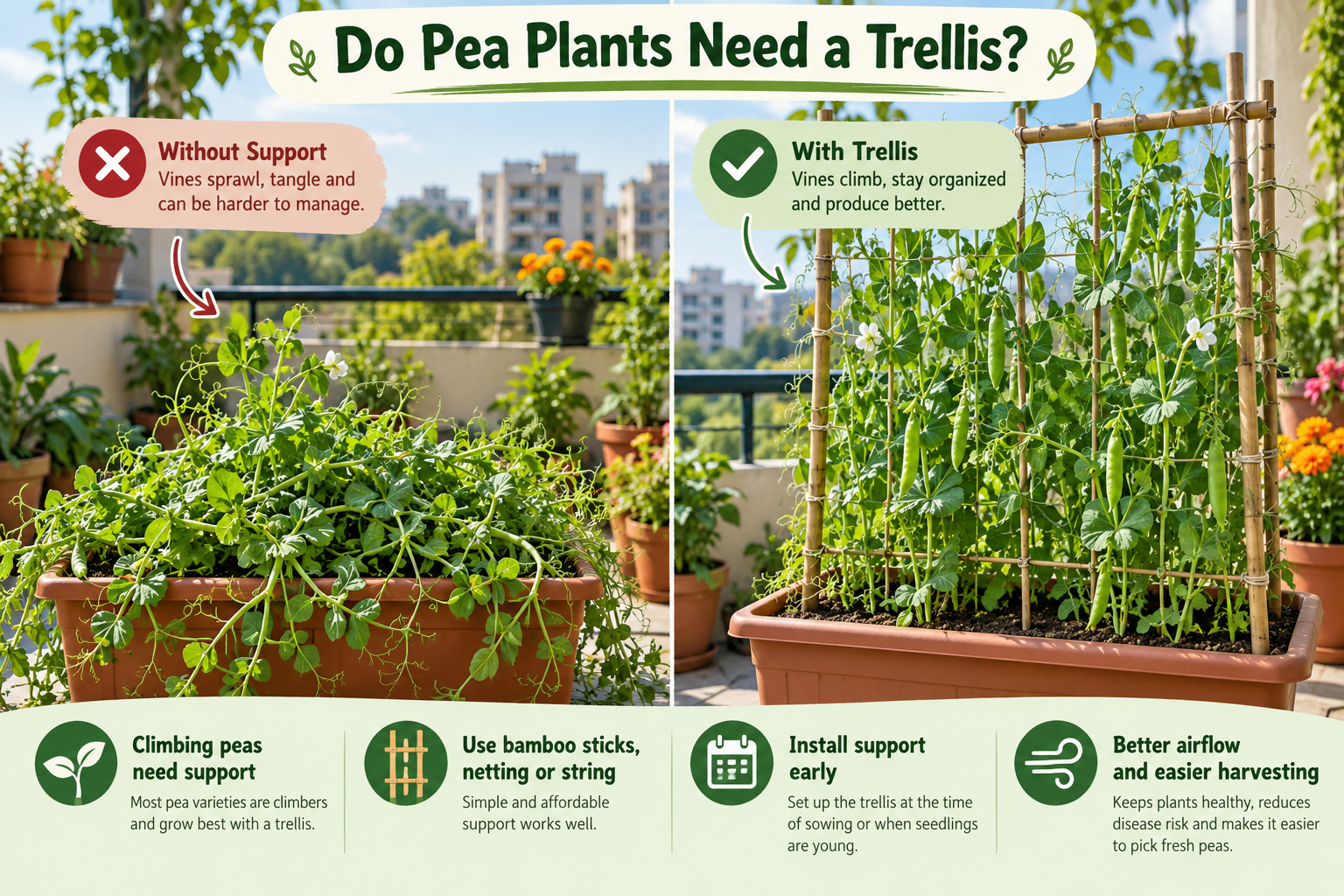
You can use:
- bamboo sticks
- garden netting
- wooden stakes
- string trellis
- wire frames
- a suitable balcony railing
How Tall Should Pea Support Be?
Support height depends on variety. Compact peas may need only short stakes, while vigorous climbing varieties require taller structures. Check the expected mature height of the seed variety where possible.
Fertilizer for Pea Plants
Peas generally do not require heavy nitrogen fertilization. Excess nitrogen may result in:
lots of leaves but fewer flowers and pods.
Mix mature compost or vermicompost into the growing medium before sowing. Once plants are established, moderate feeding is usually enough.
Peas are legumes and can form associations with beneficial soil bacteria that help make nitrogen available to the plant, which is another reason excessive nitrogen feeding is unnecessary.
When Do Pea Plants Start Flowering?
Flowering time varies with variety, temperature, sunlight and growing conditions. Once vines become established under favourable cool weather, flowers begin appearing along the stems.
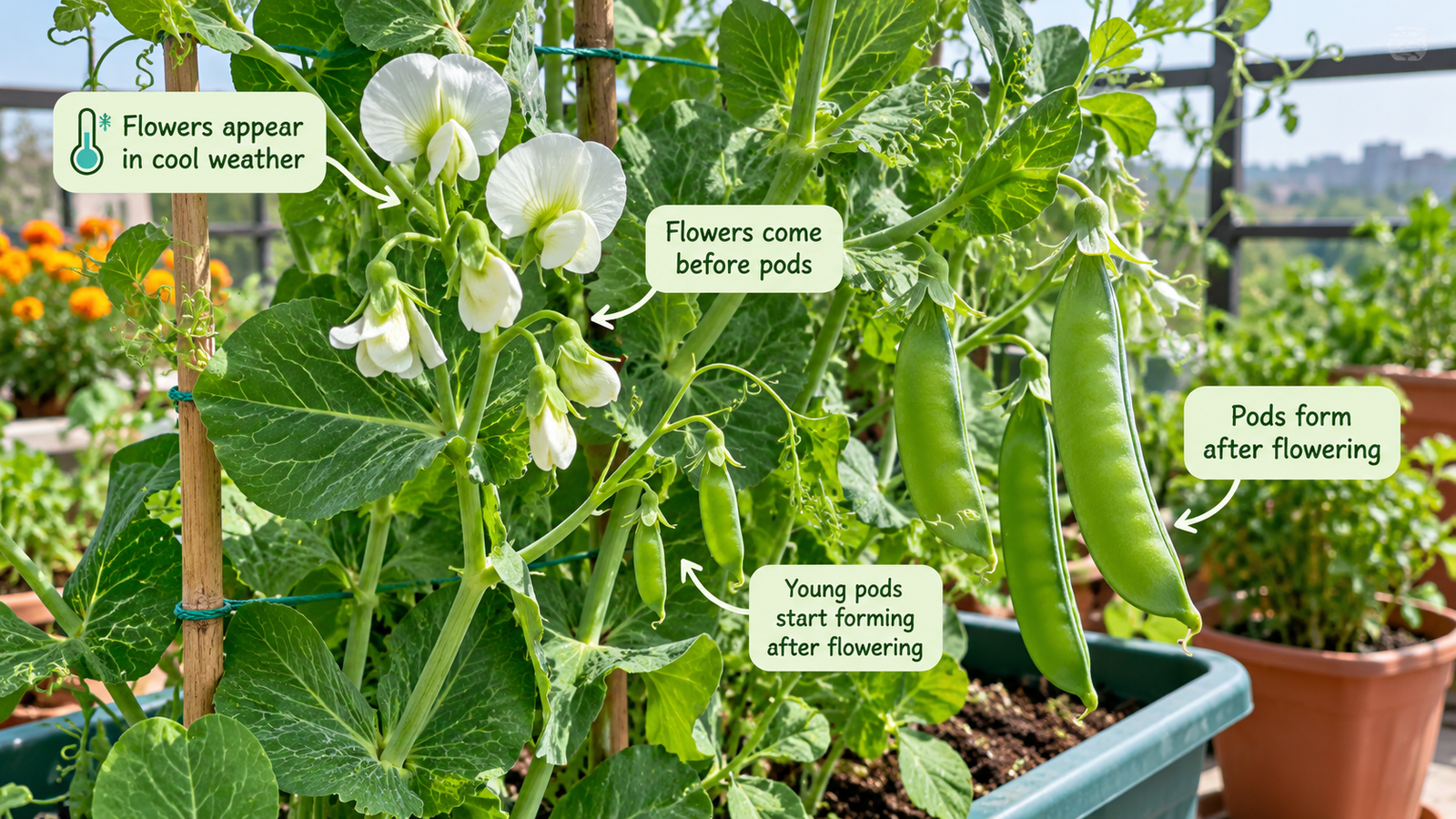
After successful pollination, small pods begin developing behind the flowers and gradually increase in size.
Pea Plant Is Growing but Not Flowering
Possible reasons include:
- too much nitrogen fertilizer
- insufficient sunlight
- temperatures that are too high
- an immature plant
- excessive vegetative growth
Improve sunlight where possible and avoid unnecessary nitrogen-rich feeding.
Why Are Pea Flowers Not Turning Into Pods?
Weather Is Too Hot
Peas prefer cooler conditions. High temperatures can reduce successful flowering and pod formation.
Soil Is Too Dry
Water stress during flowering may cause flowers to dry or drop.
Too Much Nitrogen
Excess nitrogen encourages leafy growth at the expense of pod production.
Poor Plant Health
Pest pressure, disease, overcrowding and weak plants can also reduce production.
How Long Do Peas Take to Grow?
Many garden peas begin producing harvestable pods approximately 60–90 days after sowing, depending on:
- variety
- temperature
- sunlight
- sowing time
- overall plant health
Some varieties mature earlier, while colder or less favourable conditions can slow growth.
When to Harvest Garden Peas
Harvest garden peas when the pods are green, fresh, well filled and still tender.
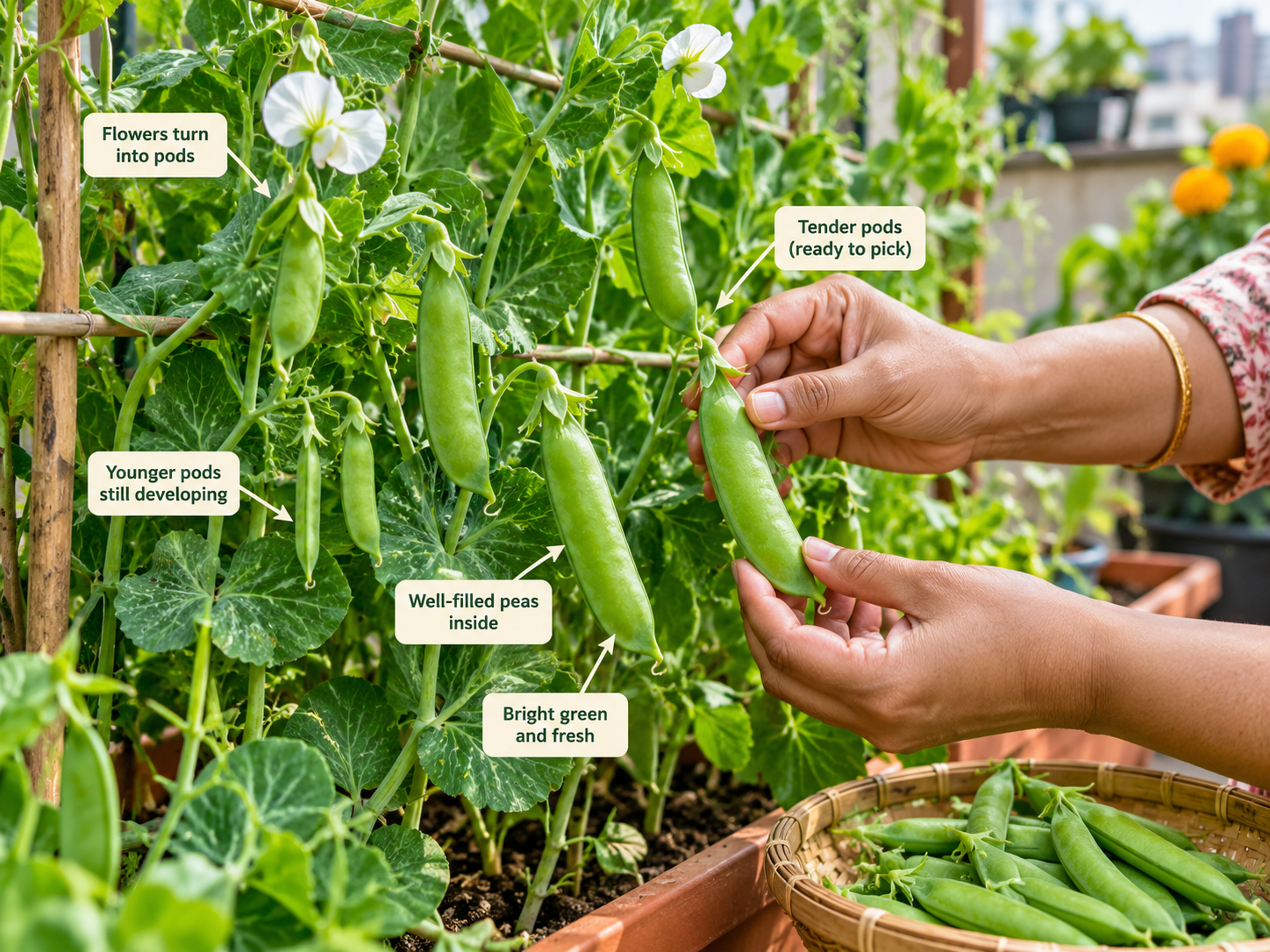
Avoid leaving every pod on the vine until it becomes oversized and hard if your goal is sweet green peas.
Regular harvesting may also encourage continued production while growing conditions remain suitable.
How to Harvest Peas
Hold the vine gently with one hand and remove the pod with the other. Avoid pulling aggressively because pea stems and vines can be fragile.
Growing Peas in a Balcony Garden
Peas are particularly useful for balcony gardening because they can grow vertically instead of occupying large amounts of floor space.
Give Them Enough Sunlight
Place the container where it receives the strongest useful winter sunlight.
Use a Container With Drainage
Never allow the root zone to remain permanently waterlogged or let the pot sit in collected water.
Provide Vertical Support
Use netting, bamboo, stakes or another secure structure to guide vines upward.
Do Not Overcrowd the Pot
Adequate spacing supports better sunlight exposure, airflow and plant health.
Common Problems When Growing Peas
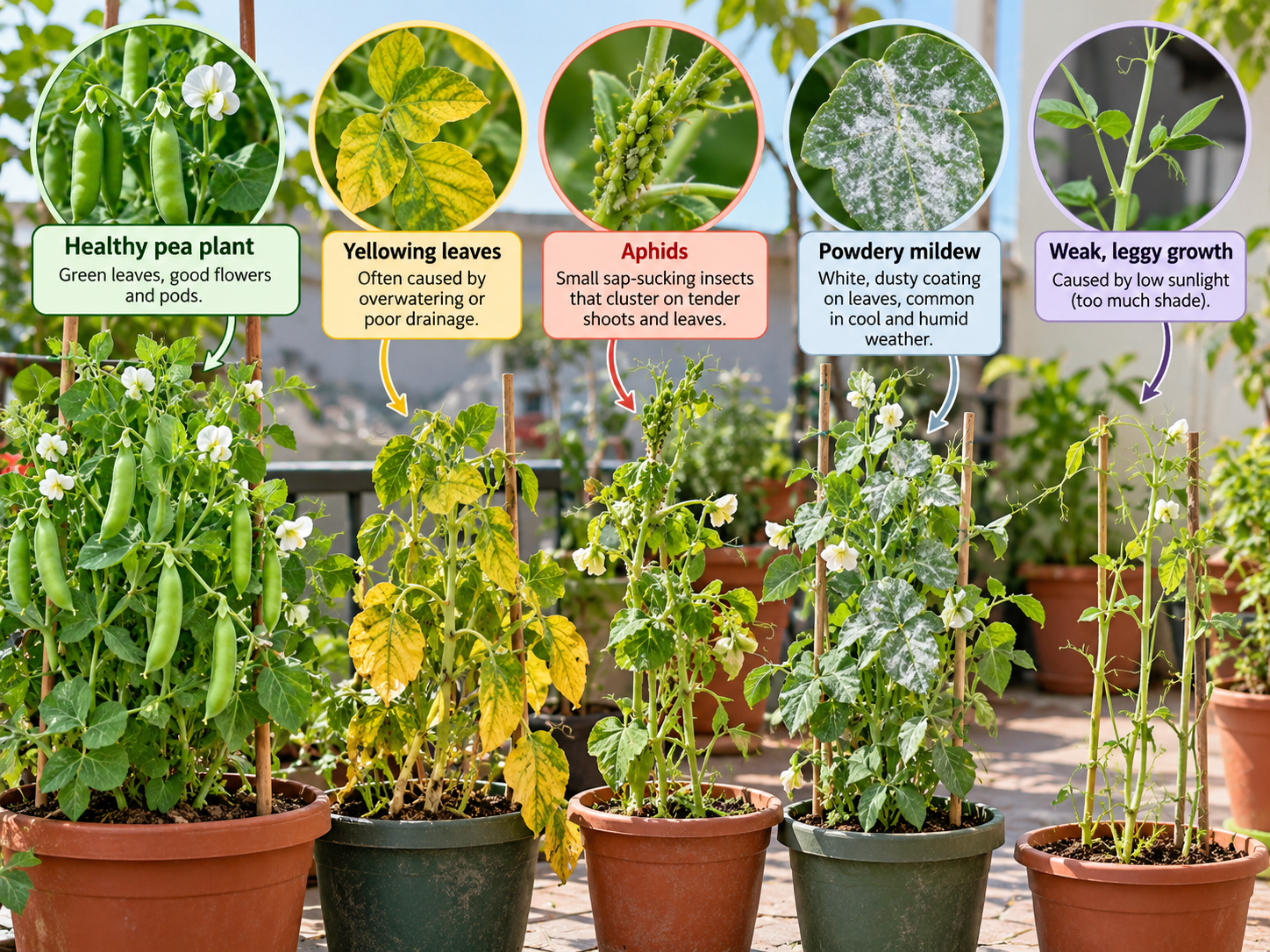
Yellow Leaves on Pea Plants
Possible causes include:
- overwatering
- poor drainage
- natural ageing of lower leaves
- nutrient imbalance
- root stress
Pea Plant Is Tall and Weak
Weak, stretched growth can be associated with:
- insufficient sunlight
- overcrowding
- lack of climbing support
Aphids on Pea Plants
Aphids may cluster around tender shoots, stems and young leaves. For light infestations, inspect plants regularly and remove pests manually or with a controlled stream of water.
Maintaining airflow and healthy plant spacing also helps reduce pest pressure.
Powdery Mildew
Powdery mildew appears as a white, dusty coating on foliage. Crowded plants and poor airflow may worsen the problem.
Improve spacing and airflow, and avoid unnecessarily wetting foliage late in the day.
Root Rot
Root problems become more likely when:
- drainage holes are blocked
- soil is heavy and compacted
- the container remains continuously wet
Use a free-draining soil mix and water according to soil condition rather than a fixed daily routine.
Common Mistakes When Growing Peas at Home
1. Planting During Very Hot Weather
Peas struggle in excessive heat. Better approach: Wait until local temperatures become cooler.
2. Using a Pot Without Drainage Holes
This increases the risk of root problems. Better approach: Use containers with several drainage holes.
3. Giving Too Much Nitrogen Fertilizer
Excess nitrogen can produce lots of foliage but fewer pods. Better approach: Use moderate feeding.
4. Not Providing Support
Climbing plants may collapse and become tangled. Better approach: Install a trellis while vines are young.
5. Watering Automatically Every Day
Cool-weather pots may remain moist longer than expected. Better approach: Check the soil before watering.
6. Overcrowding Plants
Dense growth reduces airflow and increases competition. Better approach: Maintain reasonable spacing.
7. Harvesting Too Late
Older peas can become less tender and sweet. Better approach: Harvest when pods are well filled but still fresh.
Pea Growing Checklist
| Requirement | Recommended Condition |
|---|---|
| Best season | Cool season |
| Main sowing time in North India | October–November |
| Pot depth | About 10–12 inches or deeper |
| Seed depth | About 2.5–5 cm |
| Plant spacing | About 5–8 cm for compact container growing |
| Sunlight | Around 5–6+ hours |
| Germination | Usually around 7–14 days |
| Support | Recommended for climbing varieties |
| Watering | Keep soil evenly moist, not soggy |
| Harvest | Often around 60–90 days depending on variety and climate |
Frequently Asked Questions About Growing Peas
What is the best month to grow peas in India?
In many North Indian plains, October and November are excellent months for sowing peas. Timing can differ elsewhere depending on local temperatures.
What is the peas growing season in India?
Peas are mainly grown during cooler months. The northern plains generally grow peas through autumn and winter, while hill and southern regions may follow different schedules.
Can I grow peas in pots?
Yes. Peas grow well in containers when the pot has enough depth, drainage, sunlight and support for climbing varieties.
What pot size is best for peas?
A container around 10–12 inches deep or deeper is generally suitable. Wider rectangular planters are convenient for several plants.
Do pea plants need full sun?
Around 5–6 or more hours of useful sunlight is ideal for strong growth, flowering and pod production.
Should I soak peas before sowing?
Soaking is not essential. Good-quality pea seeds usually germinate successfully when planted directly into evenly moist soil.
How many days do pea seeds take to germinate?
Pea seeds commonly germinate in approximately 7–14 days under suitable temperature and moisture conditions.
Do peas need a trellis?
Climbing pea varieties need support. Dwarf varieties may require only short stakes or minimal support.
How long do peas take to harvest?
Many varieties can be ready around 60–90 days after sowing, although variety, weather and growing conditions can change the timing.
Why is my pea plant flowering but not producing peas?
Excessive heat, dry soil, too much nitrogen, pests, poor plant health or unsuitable conditions can reduce pod formation.
Why are my pea plant leaves turning yellow?
Overwatering, poor drainage, natural ageing, nutrient imbalance or root stress can cause yellow leaves.
Can peas grow in South India?
Yes. Peas can be grown during the cooler part of the year where temperatures are suitable. Very warm conditions may shorten the season.
What is the pea growing season in Punjab?
October and November are generally among the most useful pea sowing months for home gardeners in Punjab, with growth continuing during cooler winter weather.
Can I grow peas in October or November?
Yes. October and November are important pea sowing months across many cooler regions of India once strong summer heat has declined.
मटर के बीज कब लगाएं?
उत्तर भारत में मटर के बीज आमतौर पर अक्टूबर से नवंबर के दौरान लगाए जा सकते हैं। सही समय चुनने के लिए अपने क्षेत्र के तापमान को भी देखें।
घर में गमले में मटर कैसे उगाएं?
लगभग 10–12 इंच या उससे गहरे drainage वाले गमले में अच्छी मिट्टी भरें, बीज बोएं, हल्की नमी बनाए रखें और पौधे के बढ़ने पर trellis या support दें।
Matar ke beej kitni depth par lagane chahiye?
Pea seeds ko approximately 2.5–5 cm deep sow karna suitable rehta hai. Bahut gehra sow karne se germination slow ho sakti hai.
Kya matar balcony mein grow ho sakti hai?
Haan. Agar balcony mein sufficient sunlight hai aur climbing support provide ki ja sakti hai, to peas balcony gardening ke liye achhi winter vegetable hain.