How to Grow Peas at Home in India: Season, Pot Size, Sowing & Harvest
October 11, 2026
How to Grow Carrots at Home in India: Season, Pot Depth, Sowing & Harvest
October 17, 2026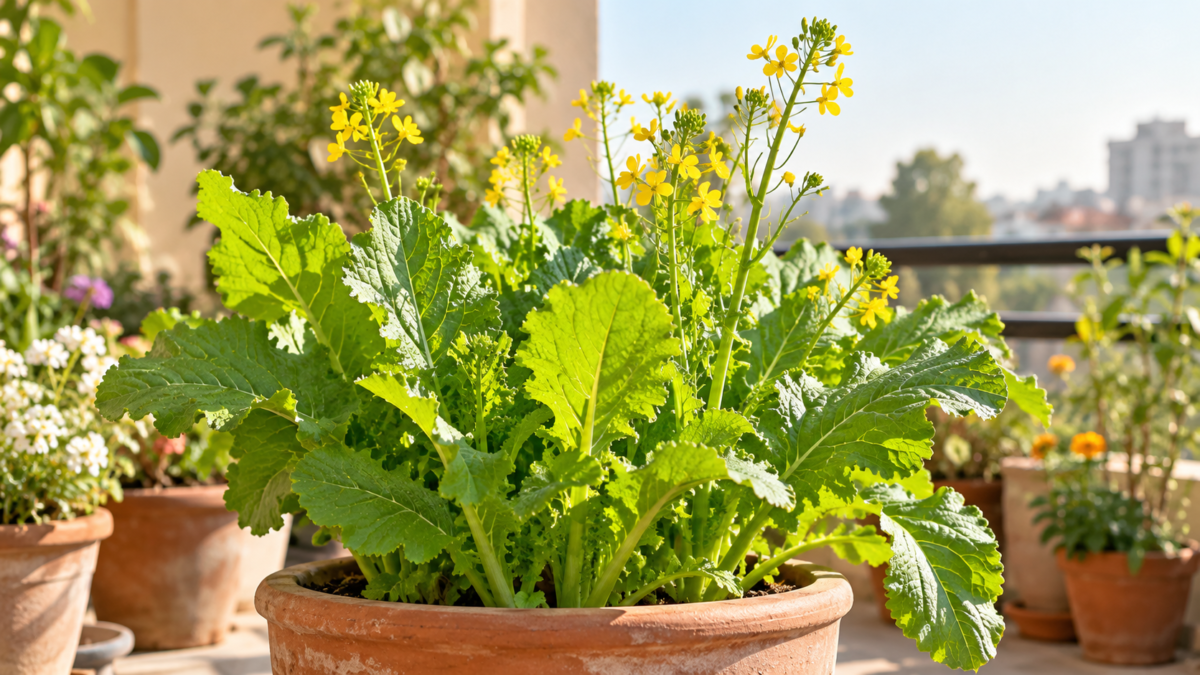
Mustard is one of the easiest plants to grow during the cool season. Known as sarso or sarson in Hindi, the mustard plant is widely grown in India for its seeds, mustard oil and edible green leaves. You can also grow a mustard plant at home in a pot, grow bag or small garden if you provide suitable soil, sunlight and water.
The best time to grow mustard depends on your location and the type of mustard you want to grow. In many parts of North India, mustard is planted during October and November as a rabi crop. Home gardeners can also sow suitable mustard greens varieties during the cooler months, provided local temperatures are favourable.
This guide explains how to grow mustard plants from seeds, when to sow them in winter, how to care for young plants and when to harvest their leaves or seeds.
What Is a Mustard Plant?
The mustard plant is an annual flowering plant belonging to the Brassicaceae family, which also includes cabbage, cauliflower and broccoli. Indian mustard is commonly identified as Brassica juncea.
The plant develops green leaves, a stem, yellow flowers and elongated seed pods as it matures. Its small seeds may be yellowish, brown or dark in colour, depending on the type.
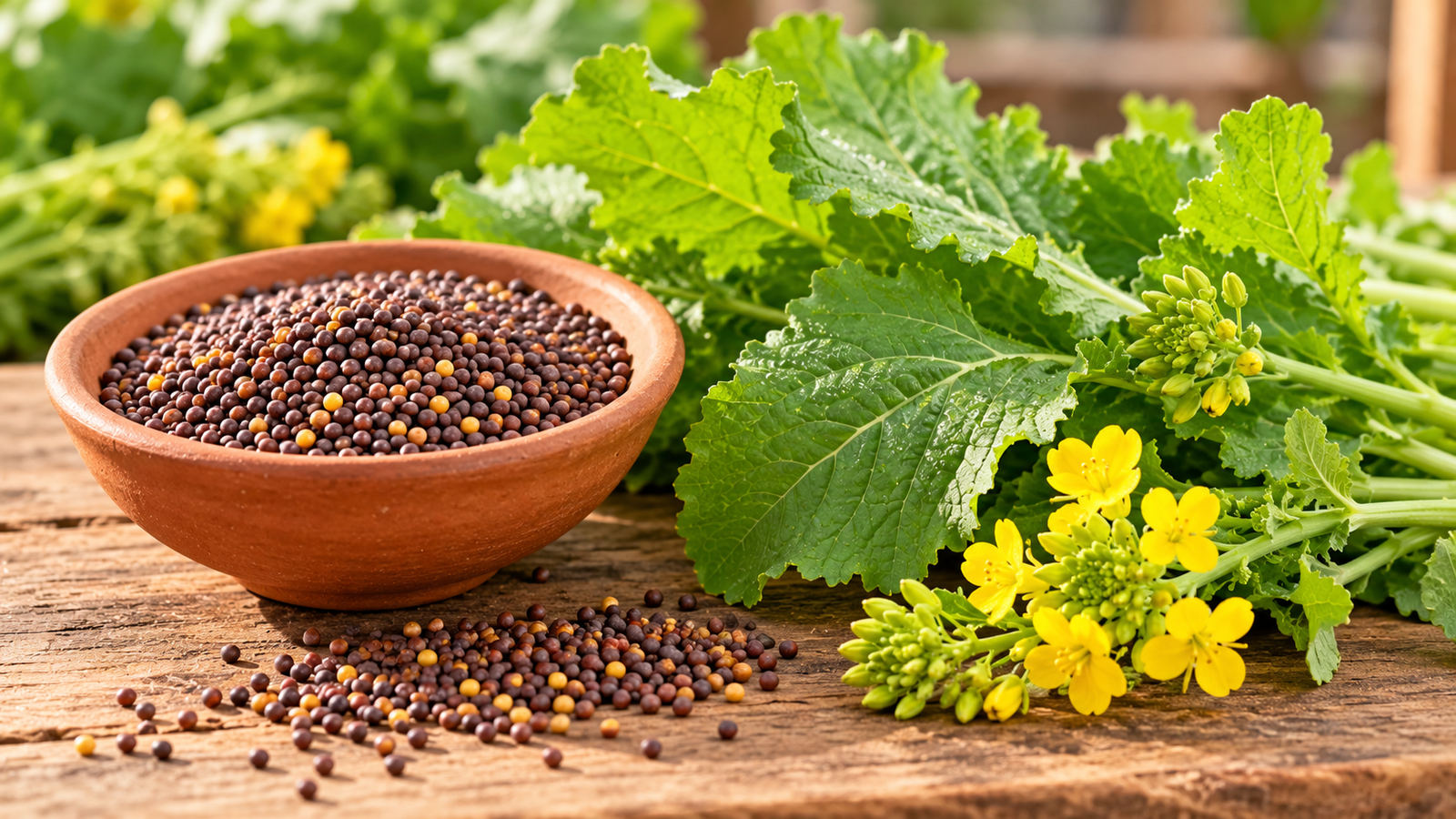
In India, mustard is grown mainly as a winter rabi crop. Farmers cultivate it for mustard seeds and oil, while home gardeners may grow it for its leaves, flowers or seeds.
The mustard plant is known by different names across India:
- Sarso or sarson: Common Hindi names for mustard.
- Rai: A name commonly used for certain mustard types.
- Lahi: A regional name used for mustard in some areas.
- Kadugu: The Tamil name for mustard.
Mustard is a herbaceous plant, not a tree. Although mature plants can grow quite tall, their soft stems and annual growth cycle distinguish them from woody trees.
What Is the Best Time to Grow Mustard in India?
Mustard is a cool-season crop, and the best sowing time depends on the region, variety and purpose of cultivation. For many mustard-growing areas in North India, October is an important sowing month. Some regions and varieties have suitable sowing windows extending into November.
For home gardening, consider whether the local weather is cool enough for healthy growth without exposing young plants to severe frost or unsuitable heat.
| Region | General planting guidance |
|---|---|
| Punjab, Haryana and Rajasthan | October to early November is a useful starting window for many traditional mustard crops. |
| Uttar Pradesh and Bihar | October to November may suit many varieties, depending on local recommendations. |
| Delhi and nearby areas | October and November are practical months to start a winter mustard garden. |
| Bangalore and other milder southern locations | Sow during a locally suitable cool period, avoiding excessive heat and waterlogging. |
| Colder hill regions | Adjust sowing according to elevation, frost risk and the recommended variety. |
How to Grow Mustard Plants from Seeds
Growing a mustard seed plant at home does not require a large garden. A pot, suitable growing medium and a sunny location are enough to get started.
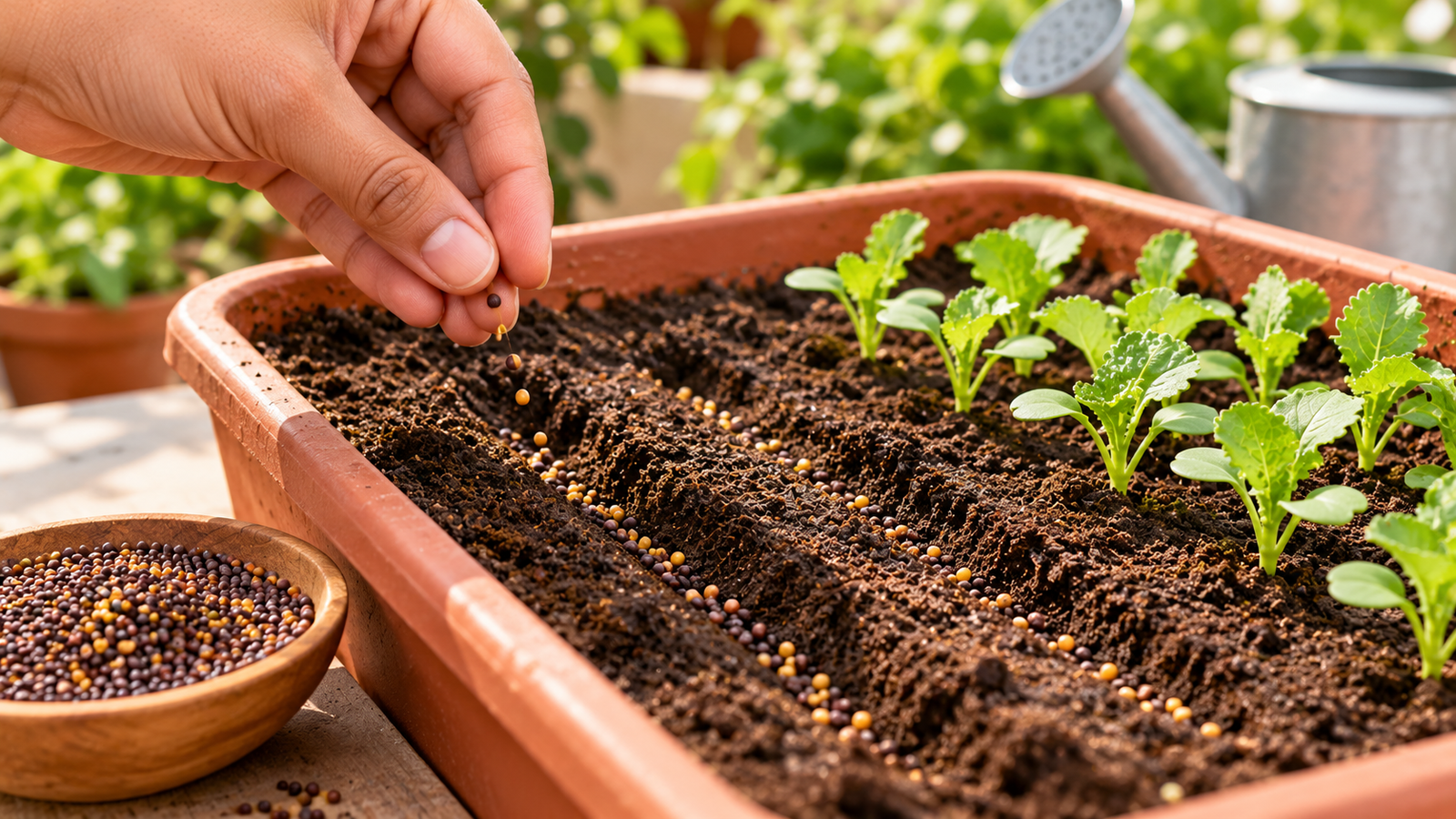

How to Care for a Mustard Plant in Winter
Once the seeds germinate, regular care helps the plants develop healthy leaves and roots.
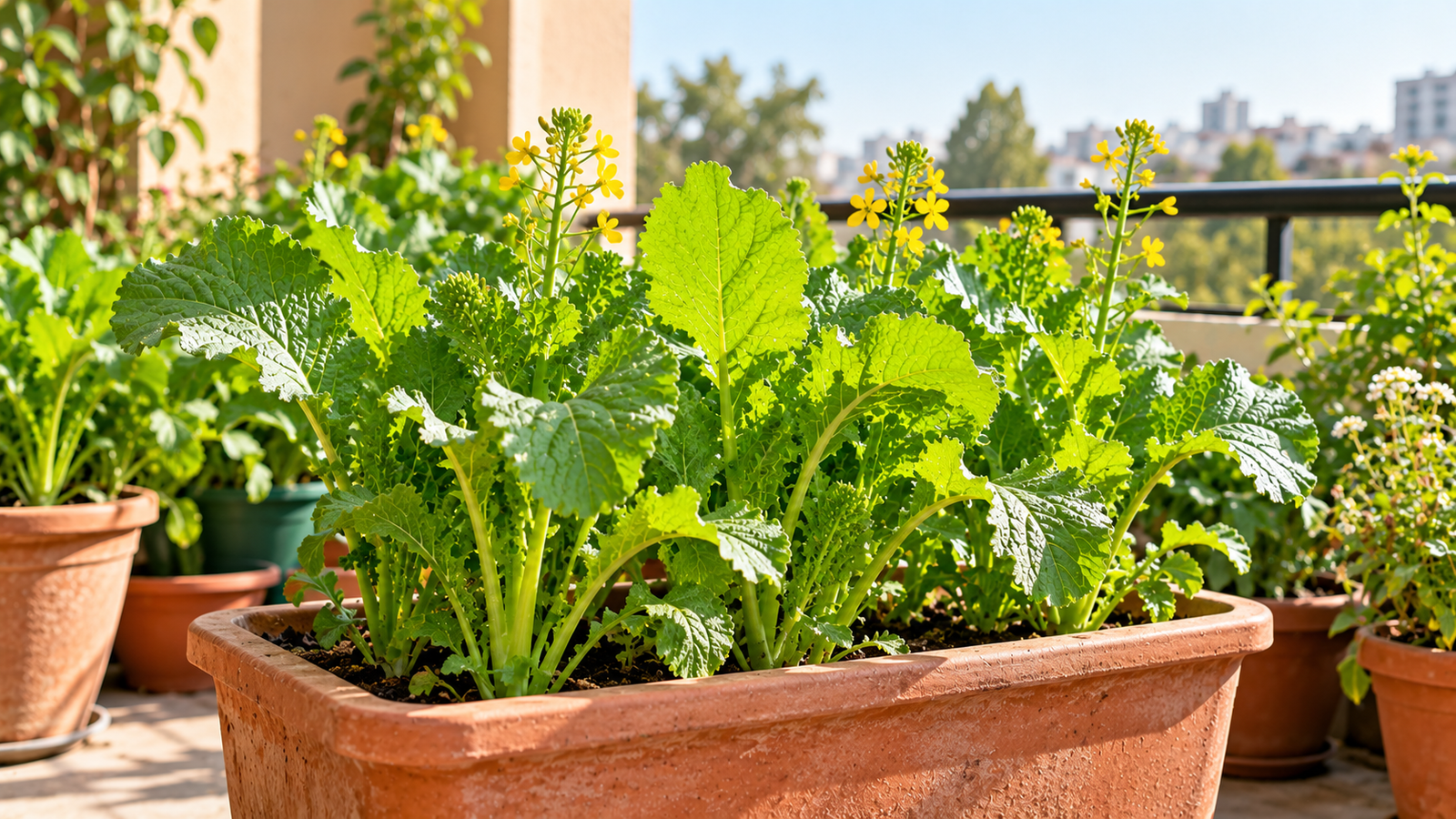
Sunlight Requirements
Mustard plants generally grow well in sunny locations. Aim for approximately 4–6 hours of direct sunlight daily for home-grown mustard, with more sunlight often beneficial when growing plants for mature seed production. In winter, place the pot where it receives good morning or midday sunlight.
Watering Requirements
Mustard plants need moisture, particularly during germination and early growth. However, waterlogged soil can damage roots and encourage disease. Check the top layer of soil before watering. If it begins to feel dry, water gently until excess water drains from the bottom. Smaller containers may dry out faster than garden beds.
Temperature and Winter Protection
Mustard generally prefers cool growing conditions, but suitable temperatures vary by variety and growth stage. Protect young plants from severe frost, particularly in colder parts of North India. During very cold nights, move container-grown plants to a sheltered, bright location if necessary. Warm weather can cause some varieties to flower early, affecting leaf quality.
Fertiliser and Nutrients
A growing medium containing mature compost can provide nutrients for a small home garden. If plants appear pale or grow slowly, first check sunlight, watering, drainage and root space. For prolonged growth or seed production in containers, use a suitable fertiliser according to the product instructions. Avoid excessive nitrogen.
Pruning and General Maintenance
Remove damaged or yellowing leaves when necessary. Keep the soil surface free of competing weeds and check the undersides of leaves for insects. For mustard greens, harvest outer leaves as they become large enough to use, leaving the growing centre intact. Plants intended for seed production should be allowed to flower and develop pods.
How to Grow Mustard Greens at Home
Mustard greens are the leafy part of the mustard plant and are commonly used in Indian cooking, including sarson ka saag. For home harvesting, choose a mustard greens variety and sow the seeds in a pot, planter or garden bed. Keep the soil moist, provide sufficient sunlight and thin seedlings to prevent overcrowding.
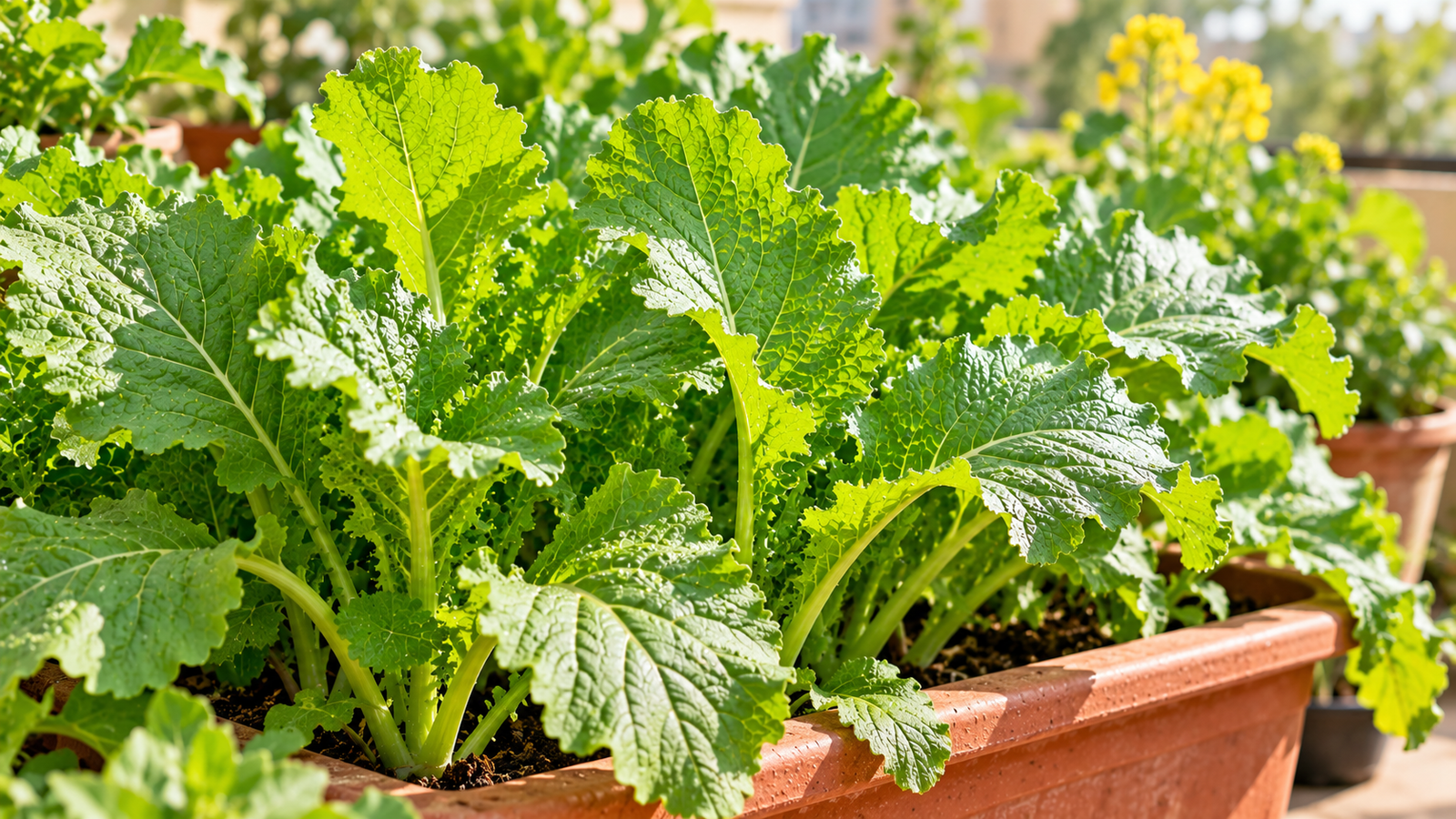
Young leaves can often be harvested in approximately 4–7 weeks, although timing depends on the variety and growing conditions. Harvest individual outer leaves when they are tender and large enough to use. Regular picking can encourage further leaf production, provided the plant remains healthy.
Mustard greens are different from growing a mustard crop for oilseed production. Although both involve mustard plants, the varieties, spacing and harvesting goals may differ.
Mustard Plant Growth Stages
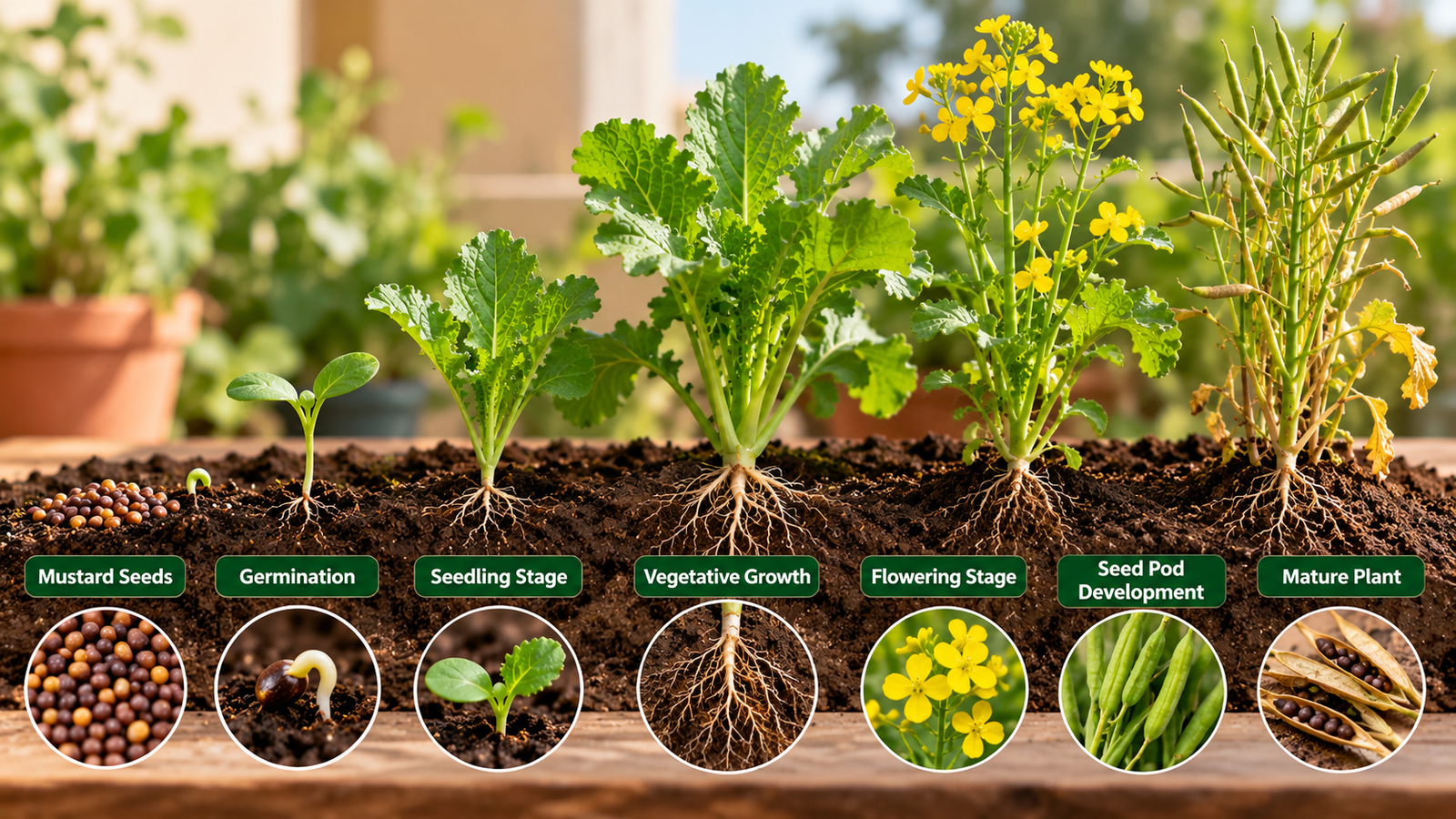
A mustard plant passes through several stages from seed germination to maturity.
| Growth stage | What happens |
|---|---|
| Seed germination | The seed absorbs moisture and begins developing a root and shoot. |
| Seedling stage | Seed leaves emerge, followed by the first true leaves. |
| Vegetative growth | The plant develops more leaves, a stronger stem and additional roots. |
| Flowering | Mature plants produce clusters of yellow flowers. |
| Pod formation | Flowers develop into elongated mustard pods containing seeds. |
| Seed maturity | Pods and plants begin to turn yellow or brown as seeds mature. |
The mustard plant root system develops as the plant grows. Root depth and spread depend on the variety, soil structure, moisture and container size. A plant grown in a small pot will generally have less room for root development than one grown in open soil.
How Long Does a Mustard Plant Take to Grow?
The mustard crop duration depends on the variety, weather, sowing date and intended harvest. For leafy mustard, a first harvest may be possible in approximately 4–7 weeks. Some varieties can be harvested earlier, while others need more time to develop suitable leaves.
For mustard grown for seeds, maturity often takes around 90–150 days, depending on the variety and growing conditions. Some rapeseed types, including toria, mature sooner than many traditional Indian mustard varieties. Do not use the crop duration of one mustard type as a fixed estimate for every variety.
When Is the Mustard Plant Ready for Harvesting?
The correct harvesting time depends on whether you want leaves or seeds.
Harvesting Mustard Greens
Harvest the outer leaves when they are young, tender and sufficiently developed. Regular harvesting can provide several rounds of greens. Wash the leaves thoroughly before cooking and discard any damaged or diseased parts.
Harvesting Mustard Seeds
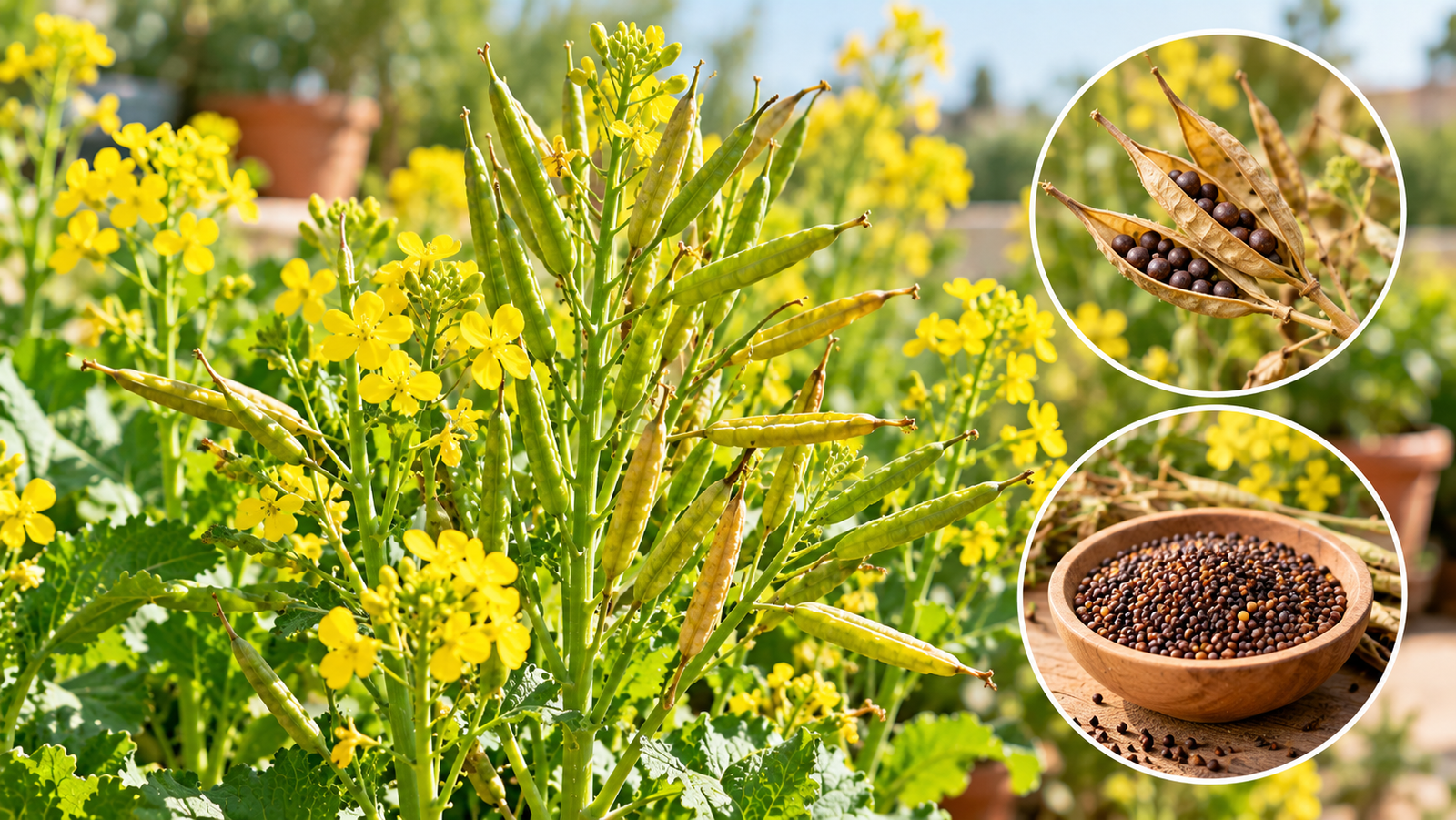
Mustard plants grown for seeds take longer to mature. As the crop approaches maturity, the pods and stems change colour and the seeds develop their characteristic appearance. Harvesting too early can result in immature seeds, while waiting too long can increase the risk of pod shattering and seed loss. For field-grown crops, follow maturity indicators and harvesting guidance for the particular variety and region.
Common Mustard Plant Problems and Their Solutions
Why Are Mustard Plant Leaves Turning Yellow?
Yellow leaves can result from overwatering, poor drainage, nutrient deficiencies, pests or natural ageing of older leaves. Check the soil before watering again, ensure that the pot drains properly and inspect leaves for signs of pests or disease.
Why Is My Mustard Plant Growing Slowly?
Slow growth can result from inadequate sunlight, poor soil, insufficient nutrients, overcrowding or unsuitable temperatures. Provide a sunny location, maintain consistent soil moisture and thin crowded seedlings.
Why Is My Mustard Plant Wilting?
Wilting may occur because the soil is too dry, the roots are damaged or the growing medium remains excessively wet. Check soil moisture before adding water. If the soil is already wet, improve drainage rather than watering again.
How Can I Protect Mustard Plants from Pests?
Inspect leaves regularly for aphids, caterpillars and other insects. Remove badly affected leaves when appropriate and use a suitable, locally approved treatment if needed. Follow product directions carefully, particularly when growing mustard greens for consumption.
Frequently Asked Questions About Mustard Plants
Is mustard a rabi crop?
Yes. Indian mustard is generally grown as a rabi crop during the winter agricultural season. The exact sowing period varies by region and variety.
Can I grow a mustard plant from mustard seeds bought from a shop?
Possibly. Cooking mustard seeds may germinate if they are viable and have not been processed in a way that prevents germination. Seeds sold specifically for planting are generally a more reliable option.
Can mustard plants grow in pots?
Yes. Mustard greens and smaller mustard plants can grow in containers with adequate sunlight, fertile soil, drainage and sufficient space. Larger plants grown for seeds need more room.
How long does it take mustard seeds to germinate?
Mustard seeds may germinate in approximately 3–10 days under suitable conditions. Temperature, moisture and seed quality affect the timing.
What is the best soil for a mustard plant?
Fertile, well-draining soil that holds some moisture is suitable. A good-quality potting mix enriched with mature compost works well for home gardening.
How often should I water mustard plants in winter?
Water when the soil begins to dry near the surface. Avoid both prolonged dryness and waterlogging, as watering needs change with the weather and container size.
Can mustard plants survive winter in North India?
Yes, many mustard varieties are grown during winter in North India. However, young container plants may need protection during severe frost, and suitable conditions depend on the variety.
What is the difference between a mustard greens plant and a mustard seed plant?
Both refer to mustard plants, but the terms describe different growing purposes. Mustard greens are grown mainly for their edible leaves, while mustard seed plants are grown to produce mature seed pods.
Is a mustard plant a tree?
No. Mustard is an annual herbaceous plant. It can develop a tall stem and branches, but it does not have the woody trunk characteristic of a tree.
When is mustard harvested in India?
The harvesting period varies by region and variety. Many Indian mustard crops are harvested during late winter or early spring, often from February to March, depending on when they were sown and how quickly they mature.