

How to Grow Coriander at Home in India: Dhania Germination, Season & Growing Guide
September 25, 2026
10 Sacred Plants You Can Grow in Your Home Courtyard: Names, Spiritual Meaning, Varieties & Benefits
September 27, 2026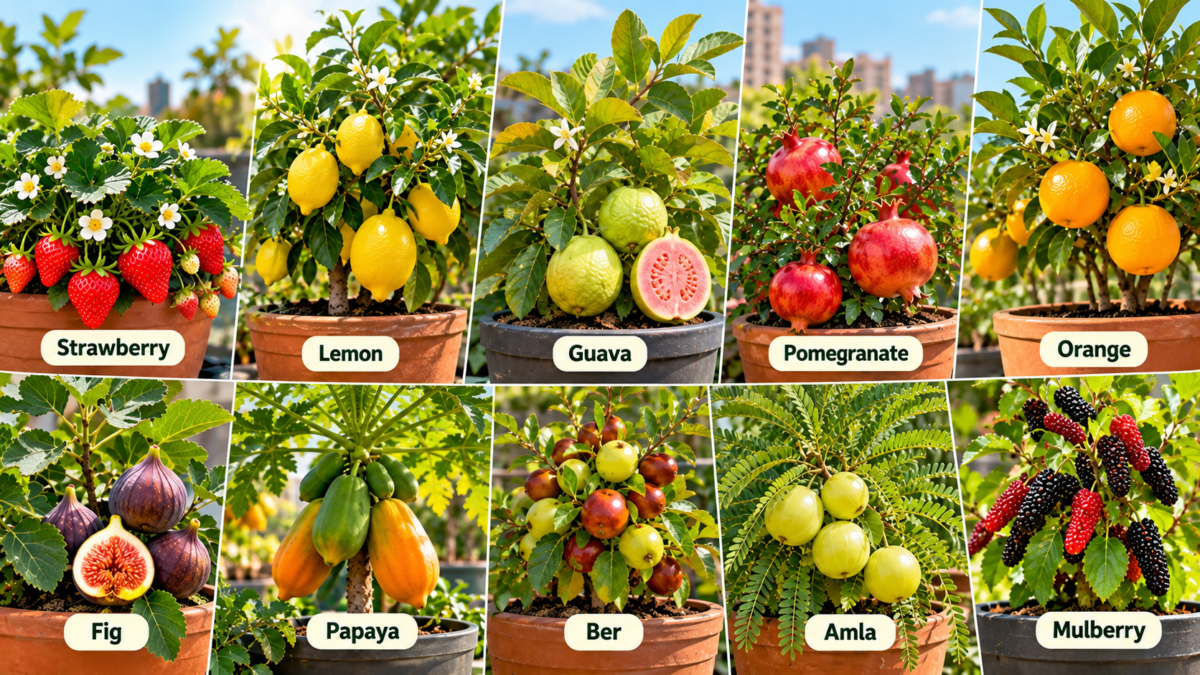
Winter is one of the most comfortable seasons for home gardening in many parts of India. Cooler temperatures can reduce heat stress, soil often stays moist for longer, and several fruit plants can establish well when planted at the right time.
However, there is an important difference between winter fruits that are available to eat and fruit plants that can be planted or grown during winter.
Oranges, strawberries, guava and several other fruits are commonly associated with the winter season in India, but that does not mean every winter fruit should be started from seed in October.
For home gardeners, the better approach is to choose a fruit according to local climate and understand whether it should be started from seeds, runners, cuttings, nursery saplings or grafted plants.
This guide covers some of the best winter fruits in India for home gardens, pots and terraces, along with planting methods, sunlight needs, climate considerations and common mistakes to avoid.
Winter Fruits in India: Quick List
If you are looking for winter fruits names for home gardening, the following fruit plants are useful options to consider depending on your climate and available space.
| Winter Fruit | Best Starting Method | Suitable for Pots? | General Difficulty |
|---|---|---|---|
| Strawberry | Runner / seedling | Yes | Easy–Moderate |
| Lemon | Grafted sapling | Yes | Easy |
| Orange / Mandarin | Grafted sapling | Large pots | Moderate |
| Guava | Grafted / air-layered sapling | Large pots | Easy–Moderate |
| Pomegranate | Sapling / cutting | Yes | Easy–Moderate |
| Fig | Cutting / sapling | Yes | Easy |
| Papaya | Seed / seedling | Large container | Easy in warm climates |
| Ber | Grafted sapling | Large pot possible | Moderate |
| Amla | Grafted / budded plant | Large container initially | Moderate |
| Mulberry | Cutting / sapling | Yes, with pruning | Easy–Moderate |
What Fruits Can You Plant in October in India?
October is a transition month in much of India. Monsoon humidity begins reducing in many regions, temperatures become milder and the winter gardening season begins.
Depending on local conditions, fruit plants that can be considered during this period include:
- strawberry
- lemon
- guava
- pomegranate
- fig
- mulberry
- amla
- ber
In warmer and frost-free regions, papaya may also be planted.
1. Strawberry
Strawberry is one of the most popular winter fruits in India for small-space home gardeners.
Unlike large fruit trees, strawberries can be grown in:
- balcony pots
- hanging planters
- grow bags
- terrace gardens
- raised beds
When to Plant Strawberries
In many cooler parts of India, strawberry planting can begin around October or November once temperatures become milder.
Best Way to Start
For beginners, nursery seedlings or runners are generally easier and faster than growing strawberries from seed.
Pot Requirement
Use a container with good drainage. Strawberry roots and crowns do not perform well in constantly waterlogged soil.
Common Problem: Leaves Grow but Few Flowers Appear
Possible causes include:
- insufficient sunlight
- too much nitrogen fertilizer
- immature plants
- unsuitable temperatures
2. Lemon
Lemon is one of the most practical fruit plants for Indian home gardens and can grow well in a sufficiently large container.
Should You Grow Lemon From Seed?
You can grow lemon from seed, but seed-grown plants may take much longer to fruit and may not produce fruit identical to the parent plant.
For home gardening, a healthy grafted nursery plant is generally a more practical option.
Best Container
Choose a large pot with proper drainage holes. As the plant develops, it may need to be shifted to a larger container.
Common Problem: Lemon Plant Flowers but Does Not Fruit
Possible reasons include:
- young plant age
- poor pollination
- insufficient sunlight
- nutrient imbalance
- water stress
- weather-related flower drop
3. Guava
Guava is a hardy fruit plant that adapts to many Indian growing conditions and can also be maintained in large containers.
Seed or Grafted Plant?
For more predictable fruit quality and earlier production, a grafted or air-layered plant from a reliable nursery is generally preferable to starting from seed.
Can Guava Grow in Pots?
Yes. Compact or suitable container varieties can be grown in large pots with proper pruning.
Common Problem: Guava Plant Grows but Does Not Fruit
Possible causes include:
- plant is still young
- too much nitrogen
- insufficient sunlight
- pruning at an unsuitable time
- poor flowering conditions
4. Pomegranate
Pomegranate is well suited to sunny conditions and can be grown in containers when given enough root space.
Best Starting Method
A healthy nursery plant or established cutting is generally more predictable than starting from seed.
Sunlight
Pomegranate prefers strong sunlight. Low light may result in weak growth, fewer flowers and reduced fruit development.
Common Problem: Pomegranate Flowers Falling
Flower drop may happen because of:
- irregular watering
- heat stress
- pollination issues
- nutrient imbalance
- natural flower drop
5. Fig
Fig can be a useful fruit plant for terraces and large containers because it responds well to pruning and can be kept at a manageable size.
Why Fig Works for Home Gardens
- can grow in containers
- responds well to pruning
- likes good sunlight
- can be propagated through cuttings
- does not always require a large garden
Common Mistake
Avoid keeping the soil permanently soggy. Good drainage is important for healthy fig roots.
6. Orange and Mandarin
Citrus fruits are strongly associated with the winter season fruits in India, but growing a productive citrus plant at home requires patience.
Best Method
For home gardening, a grafted nursery plant is usually more practical than starting an orange tree from supermarket seeds.
Can Orange Grow in Pots?
Dwarf or compact citrus varieties can be maintained in large containers.
They generally need:
- good sunlight
- well-draining soil
- regular but controlled watering
- appropriate feeding
Common Problem: Citrus Leaves Turning Yellow
Possible causes include overwatering, poor drainage, nutrient problems, root stress or unsuitable growing conditions.
7. Papaya
Papaya grows much faster than many tree fruits, but it prefers warm weather and is sensitive to severe frost.
October planting is more practical in:
- South India
- coastal areas
- warm central regions
- other frost-free locations
Can Papaya Grow in Pots?
It can be attempted in large containers, but papaya needs significant root space, sunlight and good drainage.
Important Pain Point: Papaya Is Growing but Not Fruiting
Papaya plants can produce different flower types, and seed-grown plants may not all behave the same way. Plant selection therefore matters when fruit production is the goal.
8. Ber / Indian Jujube
Ber is a hardy fruit plant that is suited to several Indian climates and can tolerate relatively dry conditions after it becomes established.
Best Starting Method
For home fruit production, a grafted nursery plant is generally more useful than a random seed-grown plant.
Why Grow Ber?
- suited to many Indian conditions
- prefers good sunlight
- becomes relatively drought tolerant after establishment
- can be easier to manage than some delicate fruit species
9. Amla / Indian Gooseberry
Amla is a long-lived fruit tree widely grown in India.
Best Method
If fruit quality and earlier production are important, use a grafted or budded nursery plant instead of relying only on seed propagation.
Can Amla Grow in a Pot?
Young plants can be maintained in large containers, but amla naturally develops into a tree. Ground planting is usually more suitable for long-term growth when space is available.
10. Mulberry
Mulberry is a relatively hardy fruit plant that can be trained and pruned for home gardens.
Best Starting Method
Mulberry can commonly be established from cuttings or nursery saplings.
Can Mulberry Grow in Containers?
Yes, provided the container is sufficiently large and the plant is pruned to control size.
Best Winter Fruits for Pots and Terrace Gardens
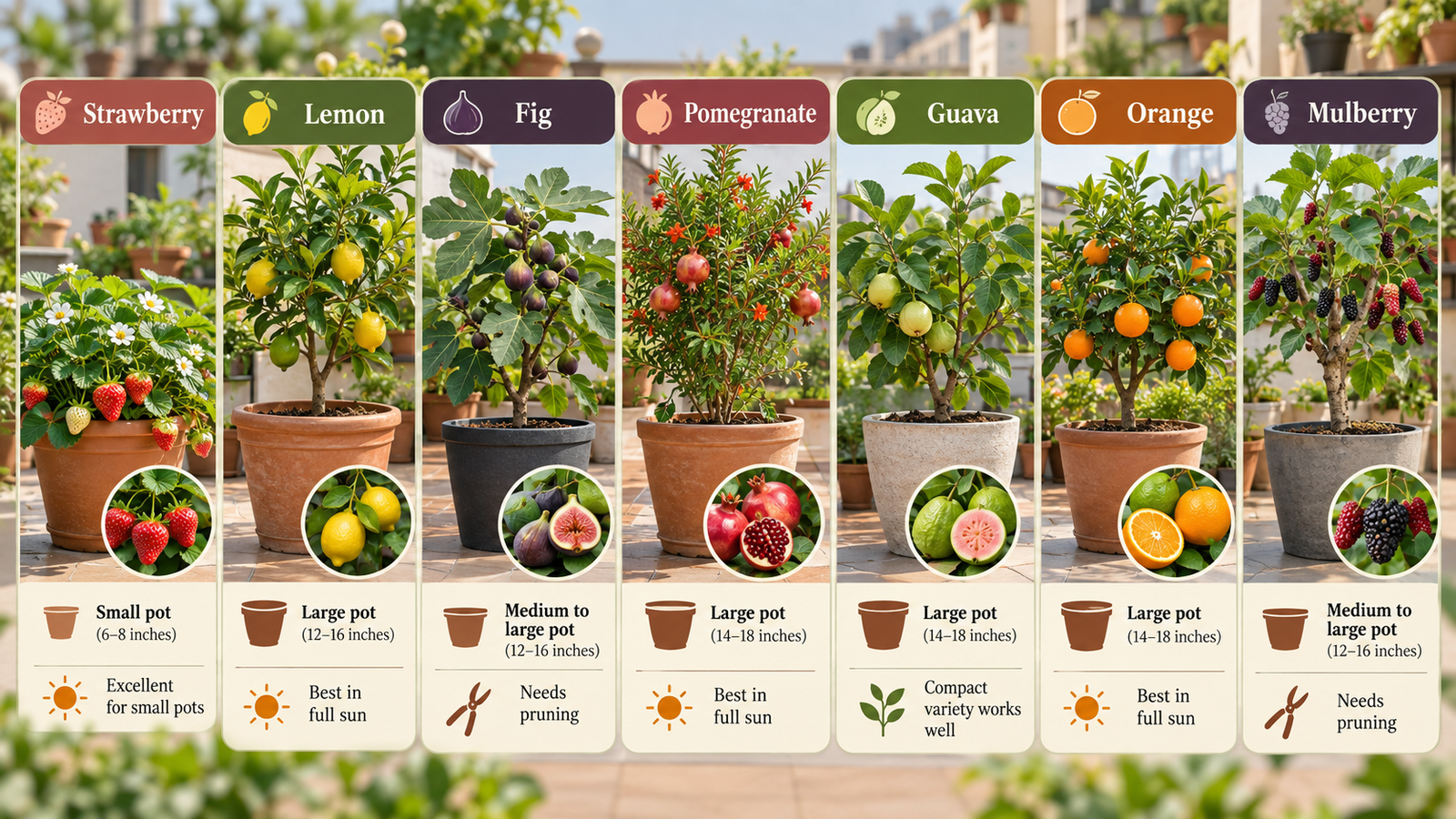
If you have limited space, fruit gardening is still possible. The main requirement is to match the plant with an appropriate container and manage its size through pruning where necessary.
| Fruit | Container Suitability | Space Required |
|---|---|---|
| Strawberry | Excellent | Very low |
| Lemon | Excellent | Medium |
| Fig | Excellent | Medium |
| Pomegranate | Very good | Medium |
| Mulberry | Good with pruning | Medium |
| Guava | Good with suitable variety | Medium–High |
| Orange / Mandarin | Good with compact varieties | Medium |
| Papaya | Possible in large containers | High vertical space |
For a small balcony, strawberry is one of the easiest starting points. For a larger terrace, lemon, fig and pomegranate can be more practical long-term options.
Winter Fruits for North India vs South India
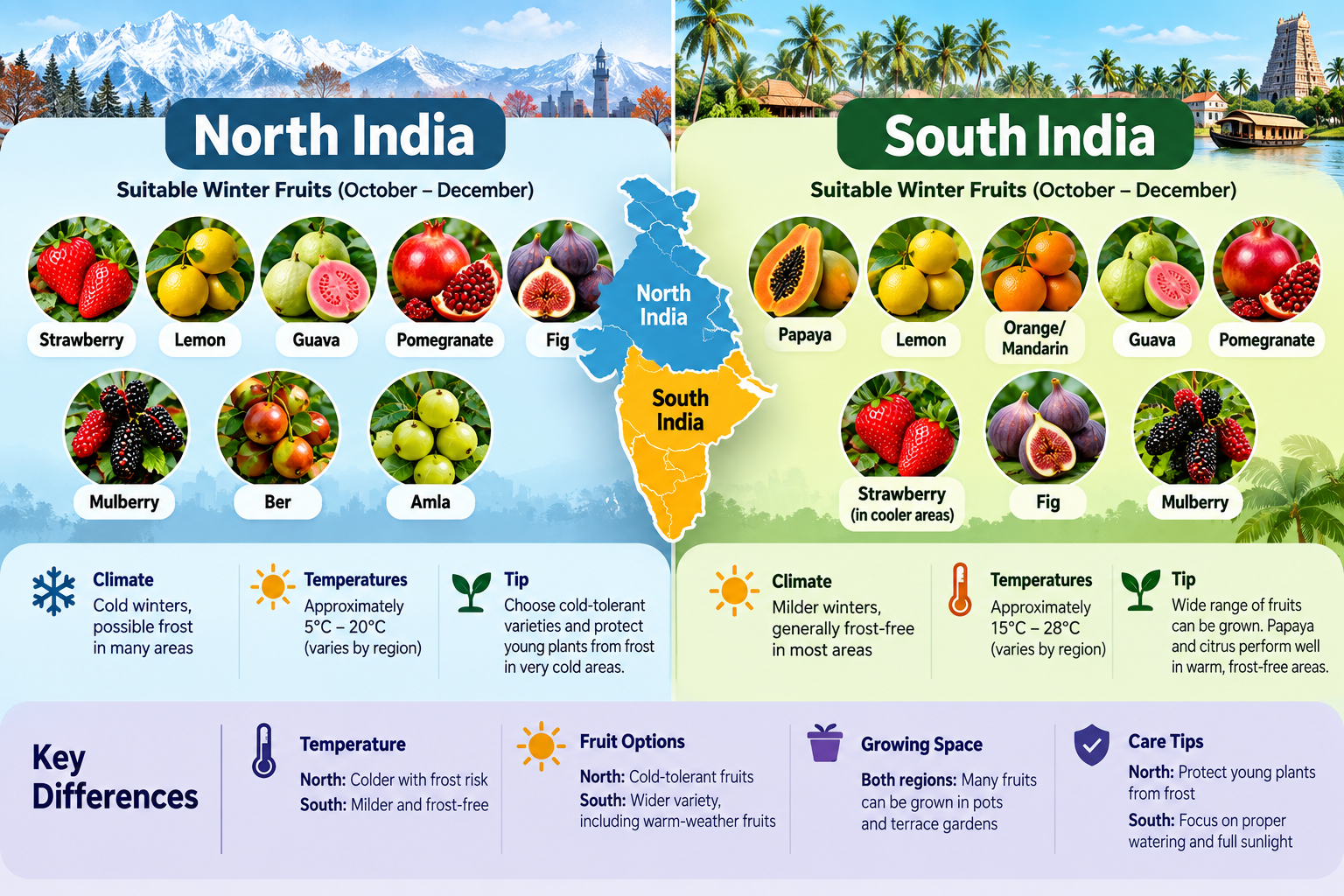
India does not have one uniform winter climate. Fruit selection should therefore be based on the conditions in your region.
Winter Fruits for North India
October and November can be useful months for establishing several fruit plants before colder weather arrives.
Possible choices include:
- strawberry
- lemon
- guava
- pomegranate
- fig
- mulberry
- ber
- amla
In areas where winter temperatures become very low or frost occurs, cold-sensitive young plants may require protection.
Winter Fruits for South India
Winters are milder in many southern regions, which allows a wider range of warm-climate fruit plants to continue growing.
Depending on local conditions, options may include:
- papaya
- citrus
- guava
- pomegranate
- fig
- mulberry
- strawberry in suitable cooler areas
What About Hill Regions?
Temperate fruit trees such as apple, pear, plum and peach require different climatic conditions and should not be treated as suitable for every Indian home garden.
Should You Grow Winter Fruits From Seeds or Saplings?
This is one of the most common areas of confusion for beginner fruit gardeners.
Growing from seed may seem cheaper, but it is not always the best option when your goal is predictable fruit production.
Seeds Can Be Suitable When
- the fruit commonly grows well from seed
- you are experimenting
- you do not mind waiting longer
- exact fruit quality is not important
Grafted Plants Are Often Better When
- you want earlier fruiting
- variety quality matters
- you want predictable fruit characteristics
- you are growing citrus, guava, amla or similar fruit trees
Runners or Cuttings Are Useful For
- strawberries
- figs
- mulberries
- some pomegranate plants
How Long Do Winter Fruit Plants Take to Produce Fruit?
Fruit gardening requires more patience than growing fast vegetables or herbs such as coriander, spinach or fenugreek.
The time required before fruiting depends on:
- fruit species
- variety
- plant age
- whether the plant is seed-grown or grafted
- sunlight
- climate
- container size
- soil fertility
- pruning
- overall plant health
Best Soil for Winter Fruit Plants
Most fruit plants grown in containers need soil that drains excess water but still holds enough moisture to support healthy roots.
A general potting mix can include:
- garden soil
- compost or vermicompost
- cocopeat or another moisture-retaining component
- coarse material to improve drainage when necessary
Avoid filling large containers with heavy, compact garden soil alone because it may drain poorly after repeated watering.
How Much Sunlight Do Winter Fruit Plants Need?
Most fruit-bearing plants perform better in strong sunlight.
For many fruit plants, a location receiving around 6 or more hours of direct sunlight can support healthier flowering and fruit development.
Too little sunlight may result in:
- weak growth
- fewer flowers
- poor fruit development
- slower growth
Individual requirements vary, so the needs of each plant should still be considered separately.
Common Mistakes When Growing Winter Fruits
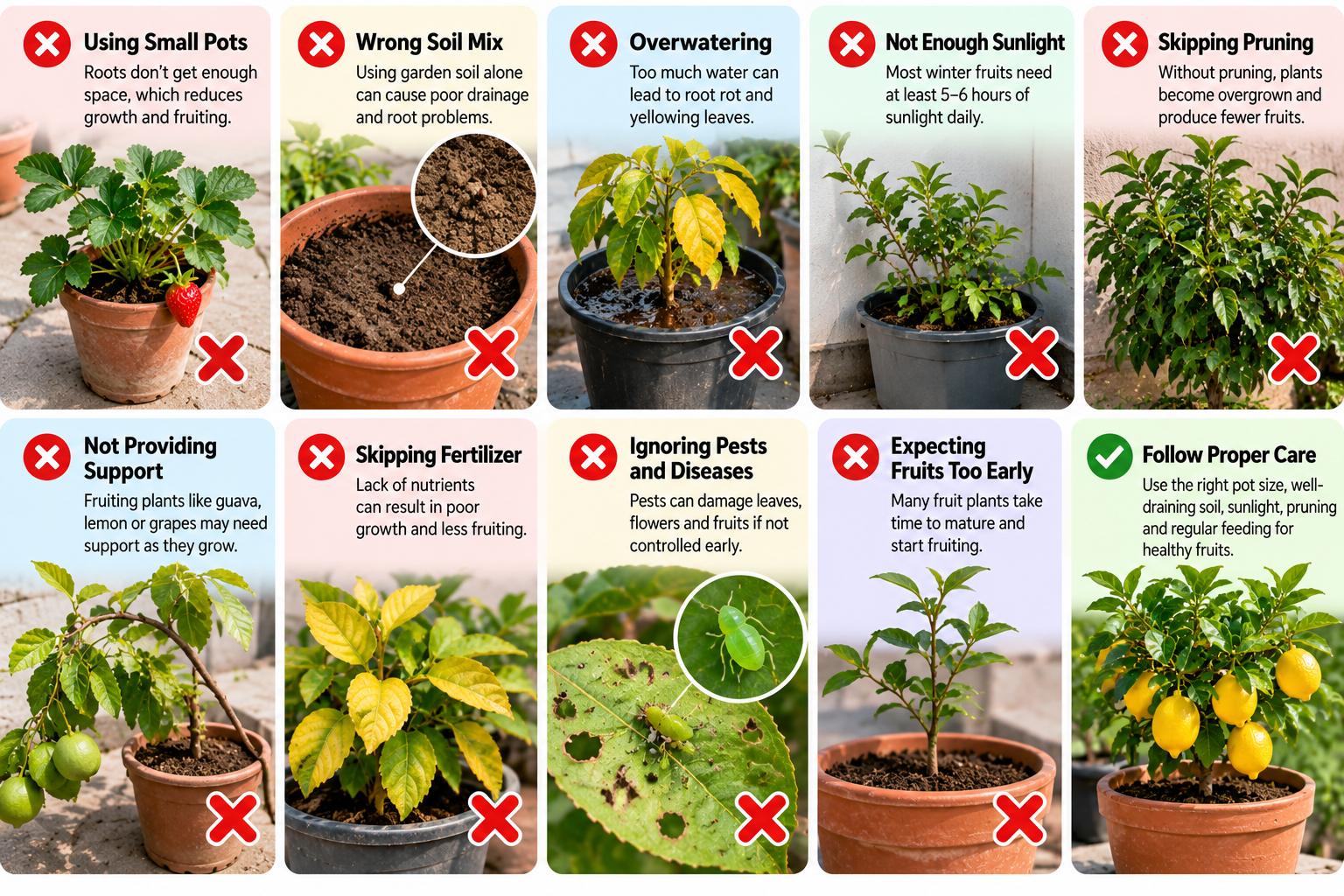
| Common Mistake | Possible Problem | Better Approach |
|---|---|---|
| Growing every fruit from seed | Long wait and unpredictable fruit quality | Use grafted plants or suitable propagation methods when appropriate |
| Choosing the wrong climate | Cold or heat damage | Match the fruit to local winter temperatures |
| Using a very small pot | Restricted roots and weak growth | Increase pot size as the plant matures |
| Poor drainage | Root stress or rot | Use drainage holes and well-draining soil |
| Too little sunlight | Weak flowering and poor fruiting | Use the brightest suitable growing position |
| Expecting fruit too quickly | Unnecessary concern or overfeeding | Check plant age and normal fruiting cycle |
| Overfertilizing | Excess leafy growth or root stress | Feed according to plant requirements |
| Ignoring pests | Damaged leaves, flowers and fruit | Inspect plants regularly and act early |
Which Winter Fruit Is Best for Beginners?
If you are starting with limited space, practical options include:
- Strawberry – good for small pots and balconies.
- Lemon – suitable for sunny terraces and larger containers.
- Fig – responds well to pruning and container growing.
- Pomegranate – useful for sunny terraces.
- Guava – suitable where enough root space is available.
The easiest choice for you depends more on your available space, climate and sunlight than on the fruit name alone.
Winter Fruits List by Gardening Space
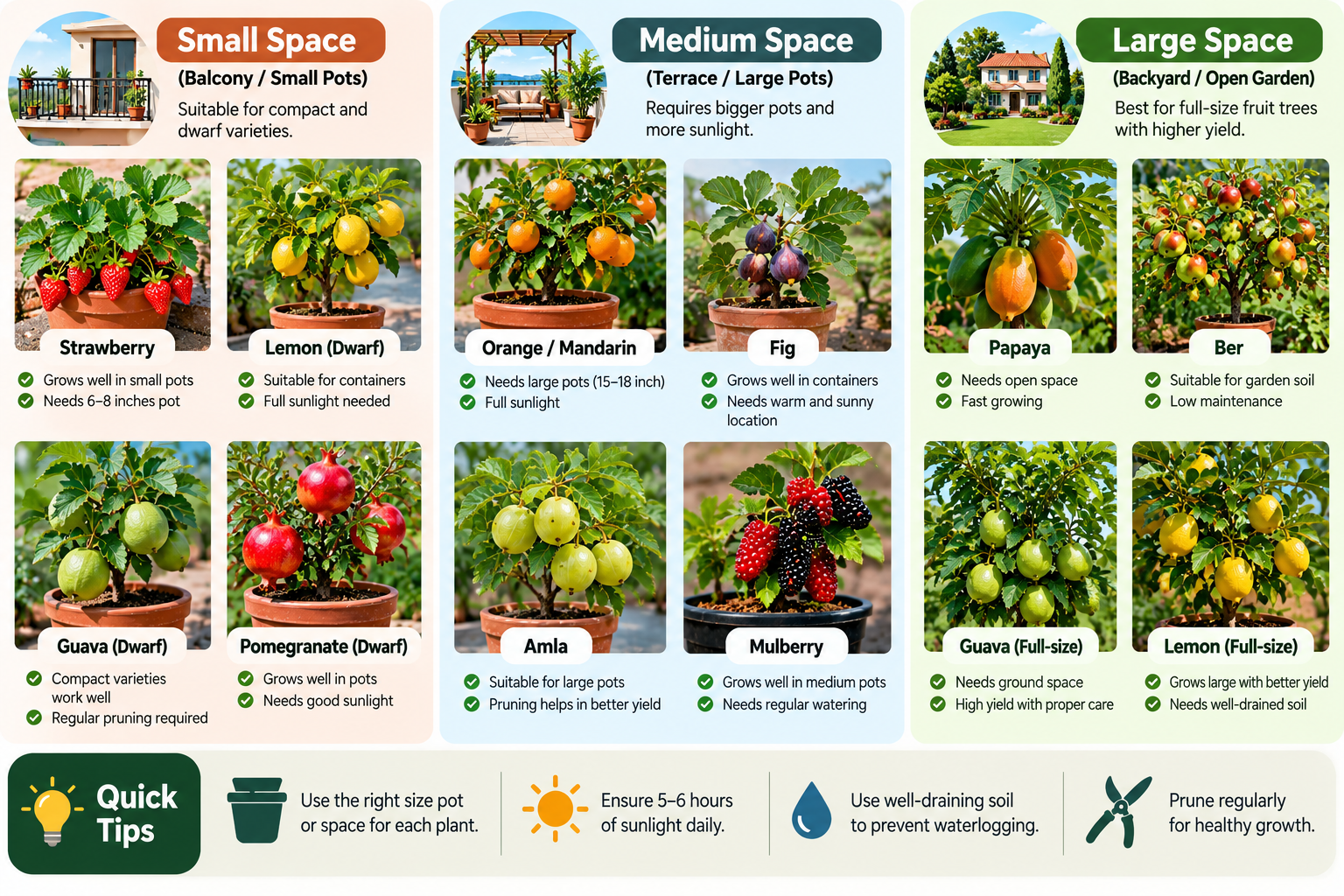
Small Balcony
- strawberry
- dwarf lemon
- compact citrus varieties
Medium Terrace
- fig
- pomegranate
- lemon
- suitable guava varieties
- mulberry with pruning
Large Terrace or Garden
- amla
- ber
- guava
- citrus
- mulberry
- pomegranate
Warm Frost-Free Garden
- papaya
- guava
- lemon
- pomegranate
Fruits to Plant in October, November and December
The exact month depends on location, but the following can be used as a general planning framework.
October
October is often useful for establishing plants as extreme summer heat begins reducing in many regions.
- strawberry
- lemon
- guava
- fig
- pomegranate
- mulberry
November
Cool-season planting can continue where temperatures remain suitable. Strawberry planting becomes particularly relevant in many suitable regions.
December
Planting may continue in mild-winter locations, but newly planted sensitive fruit plants need protection in frost-prone areas.
Are Winter Fruits and Fruits That Grow in Winter the Same Thing?
No. These phrases can refer to two different things.
A winter fruit may simply mean a fruit that is commonly harvested, available or eaten during winter.
A fruit that can be planted in winter means the plant itself can be established during the cooler months.
For example, a fruit may be widely available in December even though the tree producing it was planted several years earlier.
Winter Fruit Growing Checklist
Before buying a fruit plant, ask these questions:
- Is this fruit plant suitable for my city or region?
- Does my area experience frost?
- How many hours of sunlight does the plant need?
- Can the plant remain productive in a pot?
- How large will the mature plant become?
- Is the nursery plant seed-grown, grafted or propagated from a cutting?
- How old is the plant?
- How long may it take before fruiting?
- Does the plant require another compatible plant for pollination?
- Is my container large enough?
- Does the soil drain properly?
Frequently Asked Questions
Popular winter-season fruits include oranges, strawberries and guava. For home gardening, suitable fruit plants may include strawberry, lemon, guava, pomegranate, fig, mulberry, ber and amla depending on local climate.
Depending on local conditions, strawberries, citrus, guava, fig, pomegranate, mulberry and several hardy fruit plants can be grown or established during cooler months.
Depending on your region, October can be suitable for strawberries and nursery plants such as lemon, guava, pomegranate, fig and mulberry.
Useful options include strawberry, lemon, orange or mandarin, guava, pomegranate, fig, papaya in warm climates, ber, amla and mulberry.
Strawberry is one of the most practical options for small pots. Lemon, fig and pomegranate can also be grown in larger containers.
Yes. Many fruit plants can grow on terraces in sufficiently large containers when they receive suitable sunlight, drainage and care.
Most fruit-bearing plants perform better with strong sunlight. Many benefit from approximately six or more hours of direct sunlight, although requirements vary by plant.
Sometimes, but seed-grown plants may take longer to fruit and may differ from the parent fruit. Grafted or propagated nursery plants are often more predictable for home fruit production.
Local climate ke according October me strawberry, lemon, guava, pomegranate, fig aur mulberry jaise fruit plants consider kiye ja sakte hain. Frost-prone areas me cold-sensitive plants carefully choose karein.
Small balcony ke liye strawberry practical option hai. Agar large pot aur achhi sunlight available hai to dwarf lemon ya compact citrus plant bhi grow kiya ja sakta hai.
Mild-winter regions me possible hai. Lekin frost-prone areas me sensitive young fruit plants ko cold damage se protection ki zarurat ho sakti hai.
Fast aur predictable results ke liye lemon, guava, amla aur citrus jaise fruits ke grafted nursery plants generally more practical hote hain. Strawberry ke liye runners ya nursery seedlings useful hote hain.
Final Thoughts
There are many winter fruits in India, but choosing a fruit to eat in winter and choosing a fruit plant to start in winter are two different decisions.
For home gardeners planning their garden from October onward, practical options may include strawberry, lemon, guava, pomegranate, fig, mulberry, amla and ber, while papaya is more suitable for warmer, frost-free regions.
The most important step is to match the plant with your local climate, available sunlight, growing space and container size.
Instead of growing every fruit from seed, choose the correct propagation method and give the plant enough time to establish. With proper planning, the cooler months can be an excellent time to start building a productive home fruit garden.
