
15 Vegetables to Grow in October in India: Winter Gardening Guide
September 22, 2026
How to Grow Coriander at Home in India: Dhania Germination, Season & Growing Guide
September 25, 2026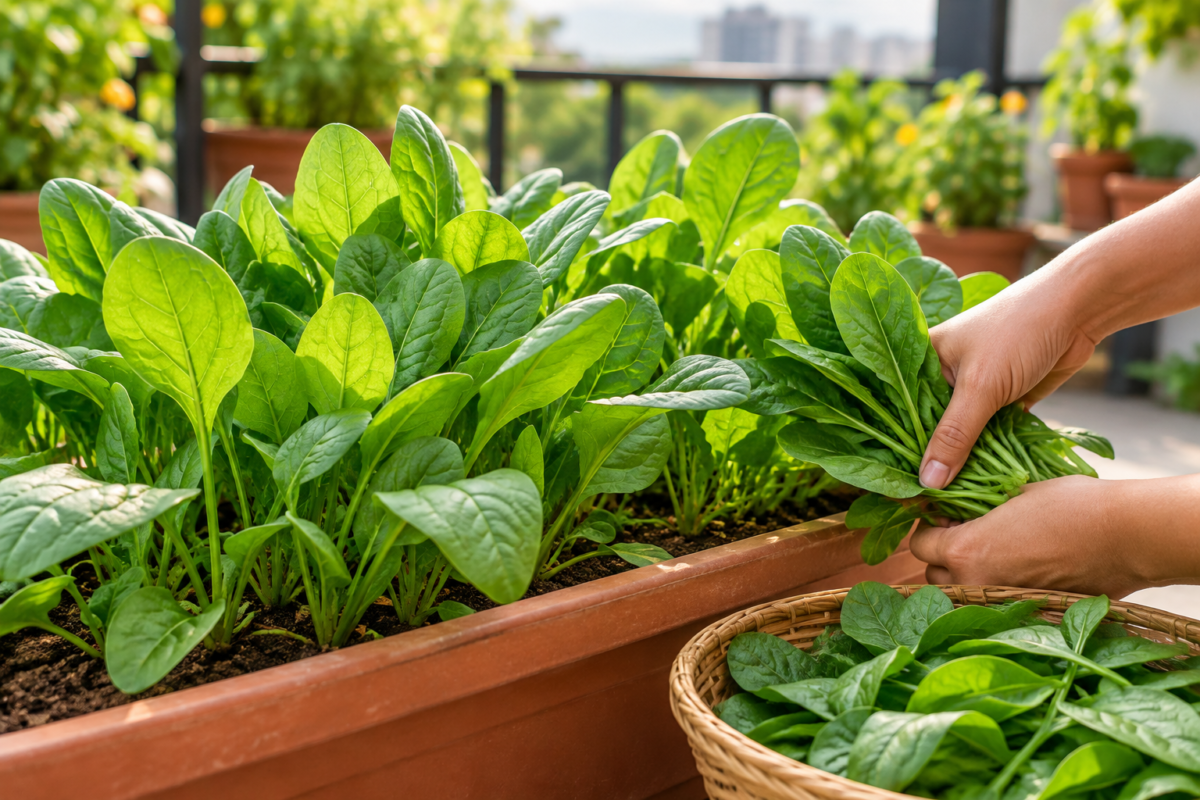
Palak, or spinach, is one of the easiest leafy vegetables to grow at home in India. It grows quickly, needs relatively little space, and can be planted in pots, grow bags, raised beds, or directly in garden soil.
Beginners may still face problems such as poor seed germination, yellow leaves, slow growth, overcrowded seedlings, or a palak plant that starts flowering too early.
Most of these problems can be avoided by choosing the right season, using loose and fertile soil, maintaining consistent moisture, and giving the plant enough sunlight.
This guide explains how to grow palak at home, the best palak season in India, spinach germination time, ideal pot size, soil preparation, watering, fertilizing, harvesting, and common spinach-growing problems.
Palak Plant at a Glance
| Growing Factor | Requirement |
|---|---|
| Common Name | Palak / Spinach |
| Botanical Name | Spinacia oleracea |
| Best Growing Season | Cool season |
| Sunlight | Around 4–6 hours daily |
| Germination Time | Usually around 5–10 days |
| First Harvest | Often around 25–35 days |
| Soil Type | Loose, fertile and well-draining |
| Watering | Light and regular |
| Best Container | Wide pot, planter or grow bag |
| Growing Difficulty | Beginner-friendly |
These are general guidelines. Growth can vary according to variety, temperature, soil, sunlight and watering.
Best Palak Season in India
Choosing the right palak season is one of the most important factors for healthy spinach growth.
Spinach prefers cool to mild weather. High temperatures can reduce leaf quality and may encourage the plant to produce flowers instead of fresh leaves.
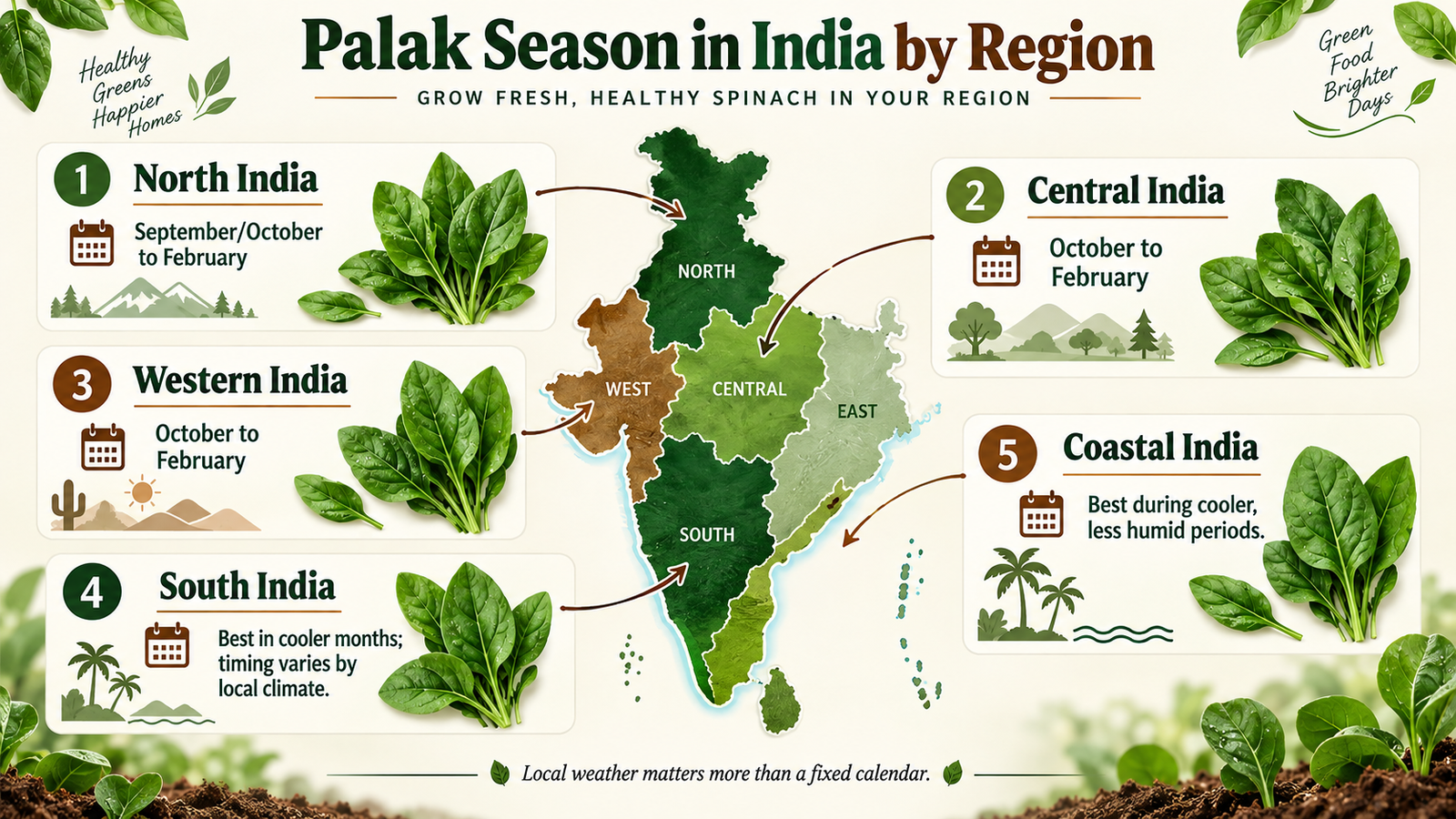
Palak Season in India by Region
| Region | General Palak Growing Period |
|---|---|
| North India | September/October to February |
| Central India | October to February |
| Western India | October to February |
| South India | Cooler months depending on local climate |
| Coastal India | Cooler and less humid periods |
What Is the Best Temperature for Growing Spinach?
Spinach is a cool-season leafy vegetable and generally grows better in mild weather than in extreme heat.
When temperatures become too high, you may notice:
- slower leaf development
- smaller leaves
- bitter or tougher leaves
- early flowering
- faster soil drying
In warmer regions, morning sunlight is usually more comfortable for palak than intense afternoon heat.
Can You Grow Palak at Home?
Yes. Palak is particularly suitable for home gardening because it requires relatively little space.
You can grow it in:
- balcony pots
- terrace grow bags
- rectangular planters
- raised beds
- kitchen gardens
- backyard soil
- sunny window-side containers
How to Grow Palak at Home From Seeds
Growing palak from seeds is usually the easiest and most affordable method. Spinach can generally be sown directly into the final container.
Step 1: Choose the Right Pot for Palak
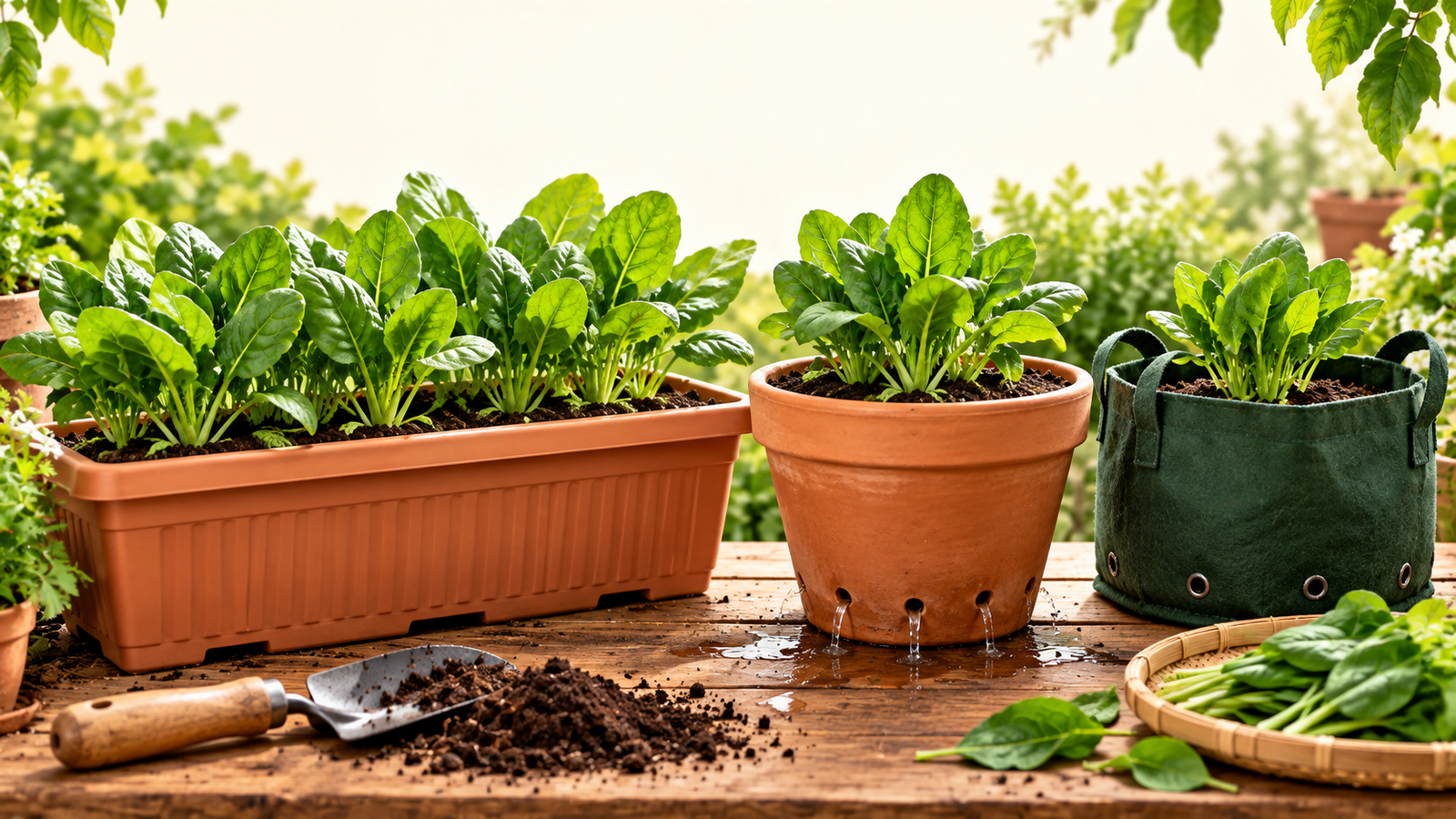
Spinach does not require an extremely deep container because its roots are relatively shallow.
A container around 15–20 cm deep is suitable for many home-growing setups.
Good options include:
- rectangular planters
- wide round pots
- fabric grow bags
- balcony railing planters
- raised beds
Step 2: Prepare the Best Soil for Palak
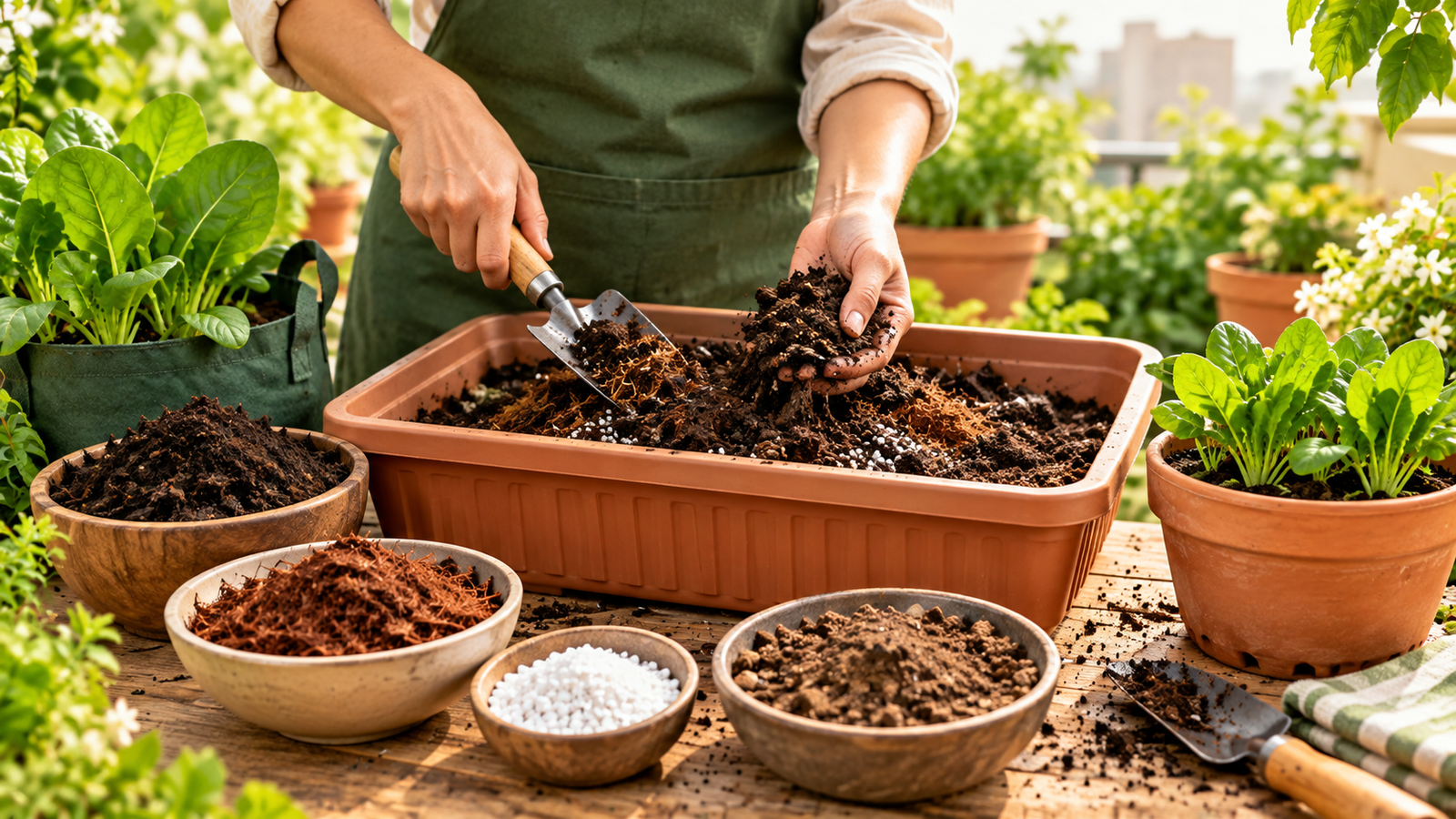
The best soil for palak should be loose, fertile and well-draining while retaining enough moisture for healthy growth.
A simple potting mixture may include:
- garden soil
- compost or vermicompost
- cocopeat
- coarse sand or another drainage material if required
Avoid using very hard or compact soil because poor aeration and drainage can affect root health.
Step 3: Sow Palak Seeds
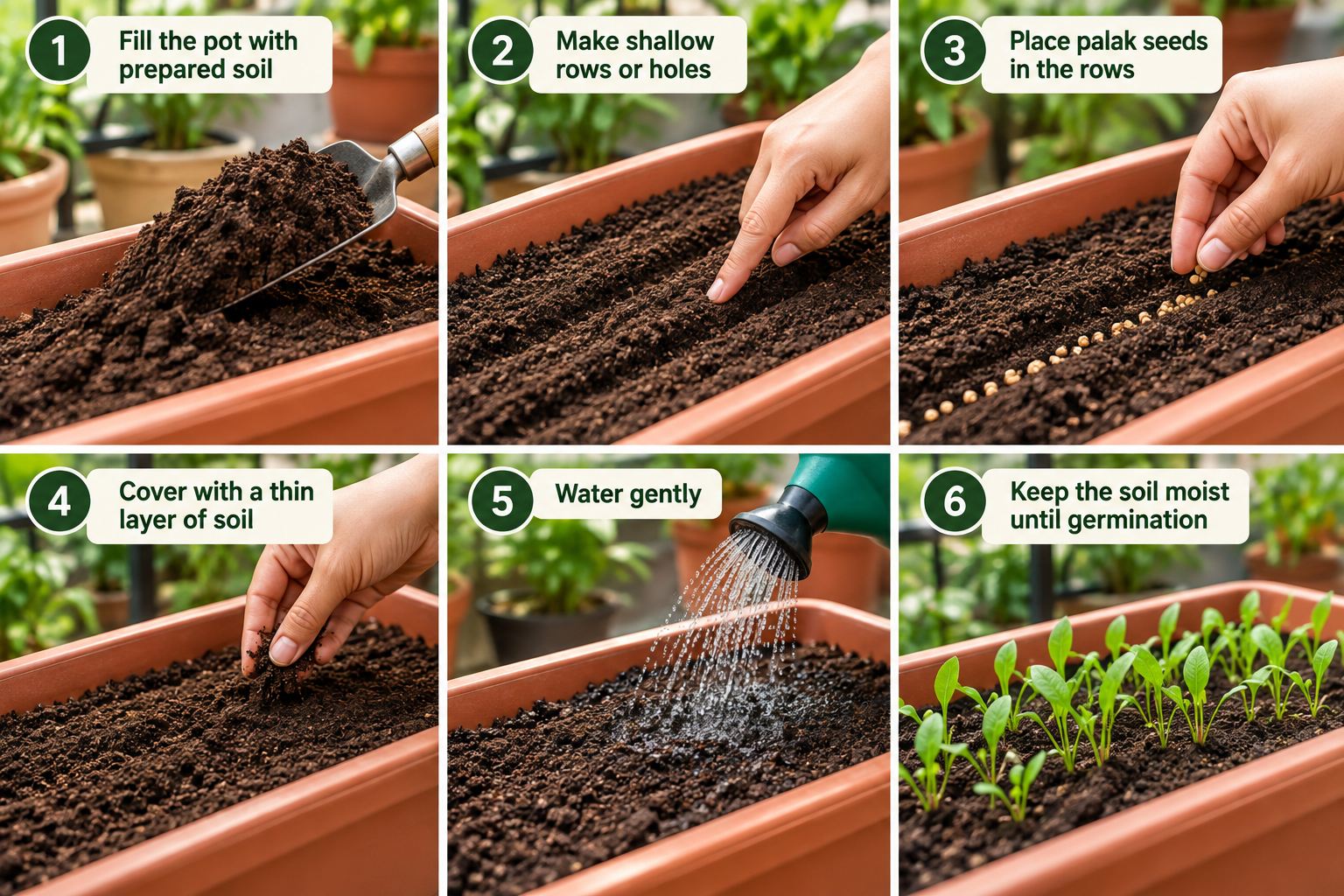
- Fill the container with prepared soil.
- Level the soil surface.
- Make shallow rows or planting holes.
- Place palak seeds in the soil.
- Cover them lightly with soil.
- Water gently.
How Deep Should You Sow Spinach Seeds?
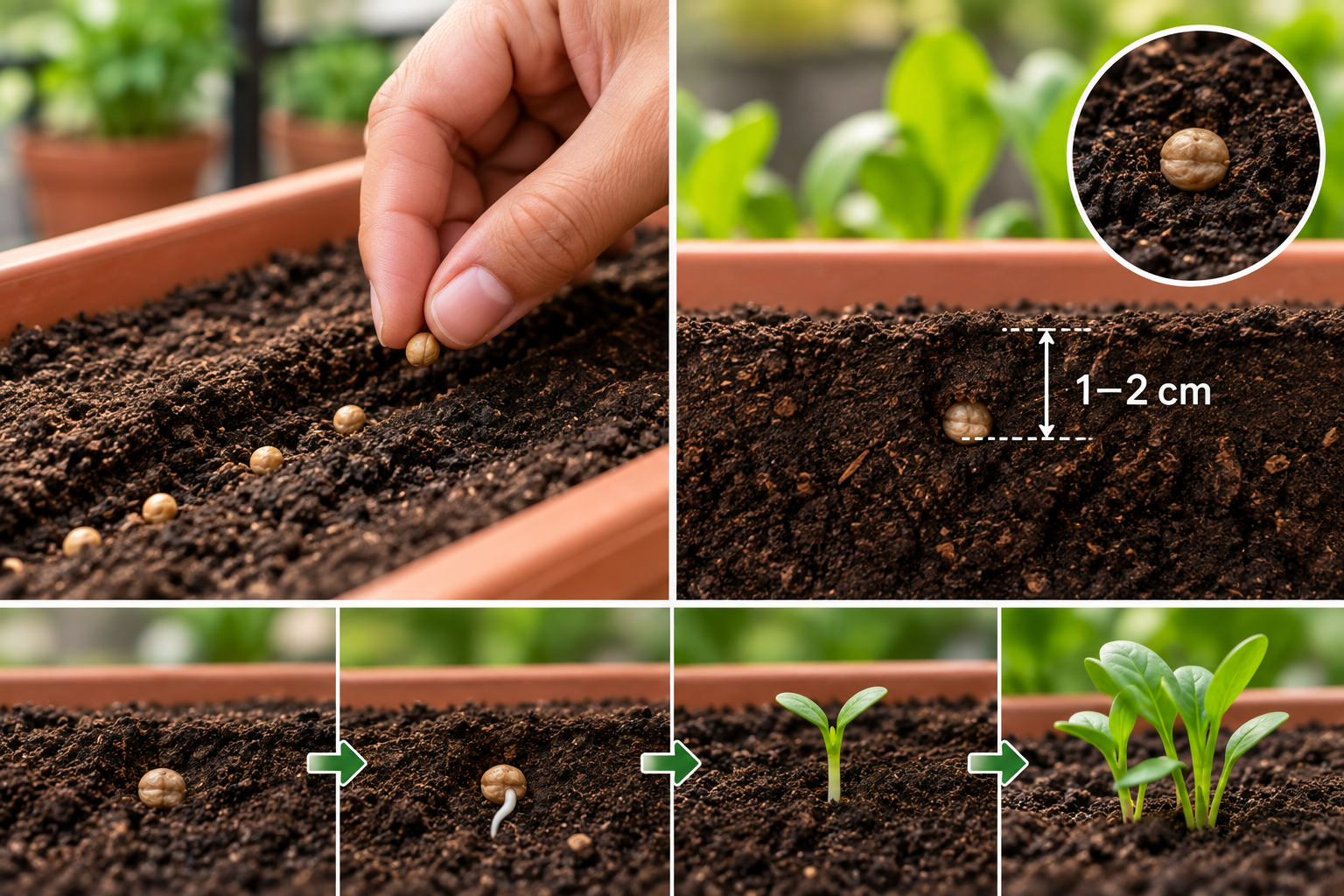
Spinach seeds can generally be planted around 1–2 cm deep.
The seeds should remain:
- lightly covered
- evenly moist
- protected from drying out
Step 4: Water the Seeds Properly
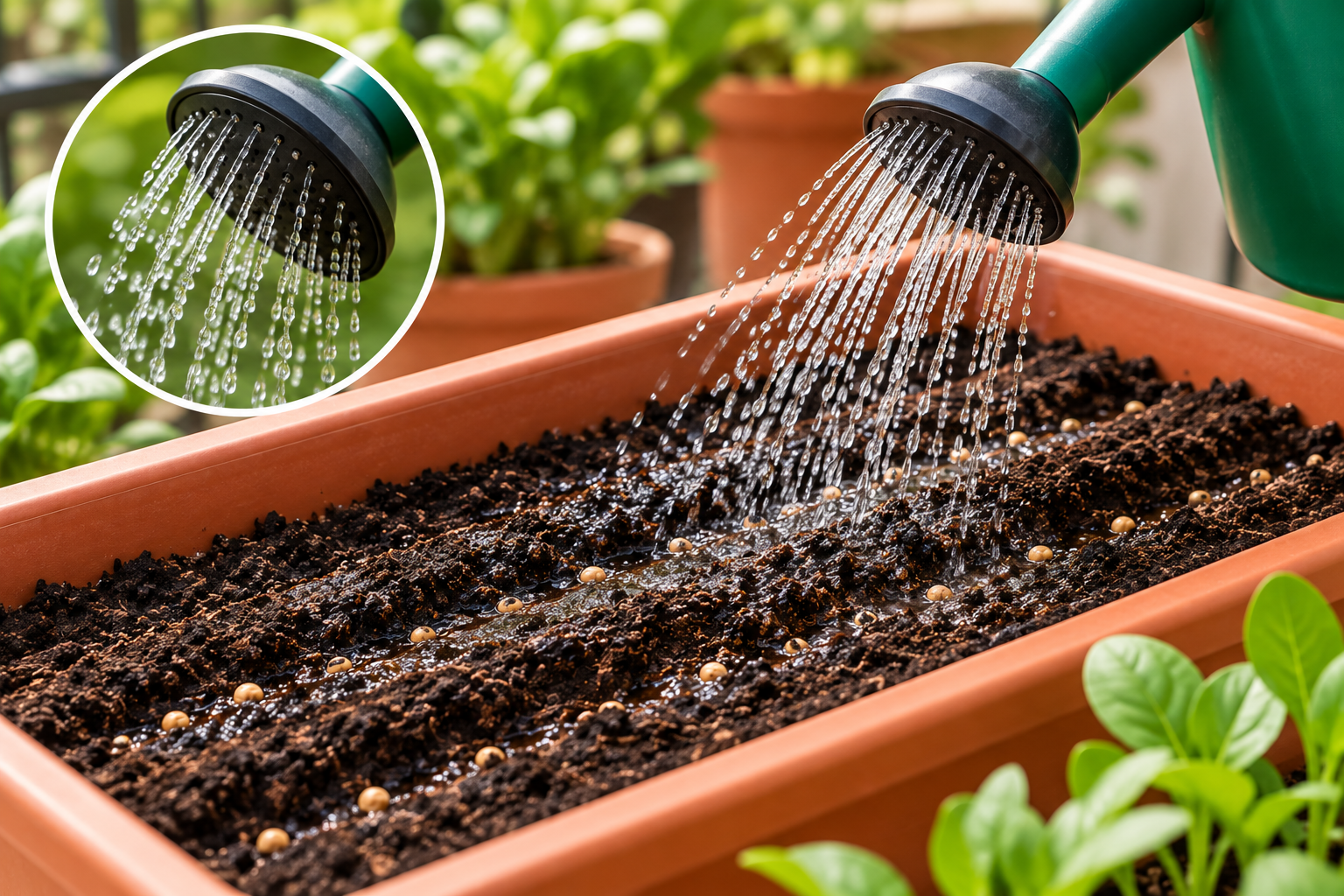
After sowing, water gently so that the seeds remain in place.
During germination, the soil should stay moist but not waterlogged.
Too Little Water
Dry soil can reduce germination and cause young seedlings to dry out.
Too Much Water
Soggy soil can encourage seed rot, fungal problems and weak roots.
Spinach Germination Time
Under suitable conditions, spinach seeds usually begin germinating in approximately 5–10 days.
Factors That Affect Spinach Germination Time
- seed freshness
- soil temperature
- moisture level
- sowing depth
- soil quality
- spinach variety
- local weather
Why Are My Palak Seeds Not Germinating?
Soil Is Too Dry
Seeds need steady moisture while germinating.
Too Much Water
Constantly saturated soil can cause seeds to rot.
Seeds Are Too Deep
Deeply buried seedlings may struggle to reach the surface.
Old Seeds
Old or poorly stored seeds may have lower germination rates.
Weather Is Too Hot
Spinach generally germinates more comfortably in cooler conditions.
Step 5: Provide Enough Sunlight
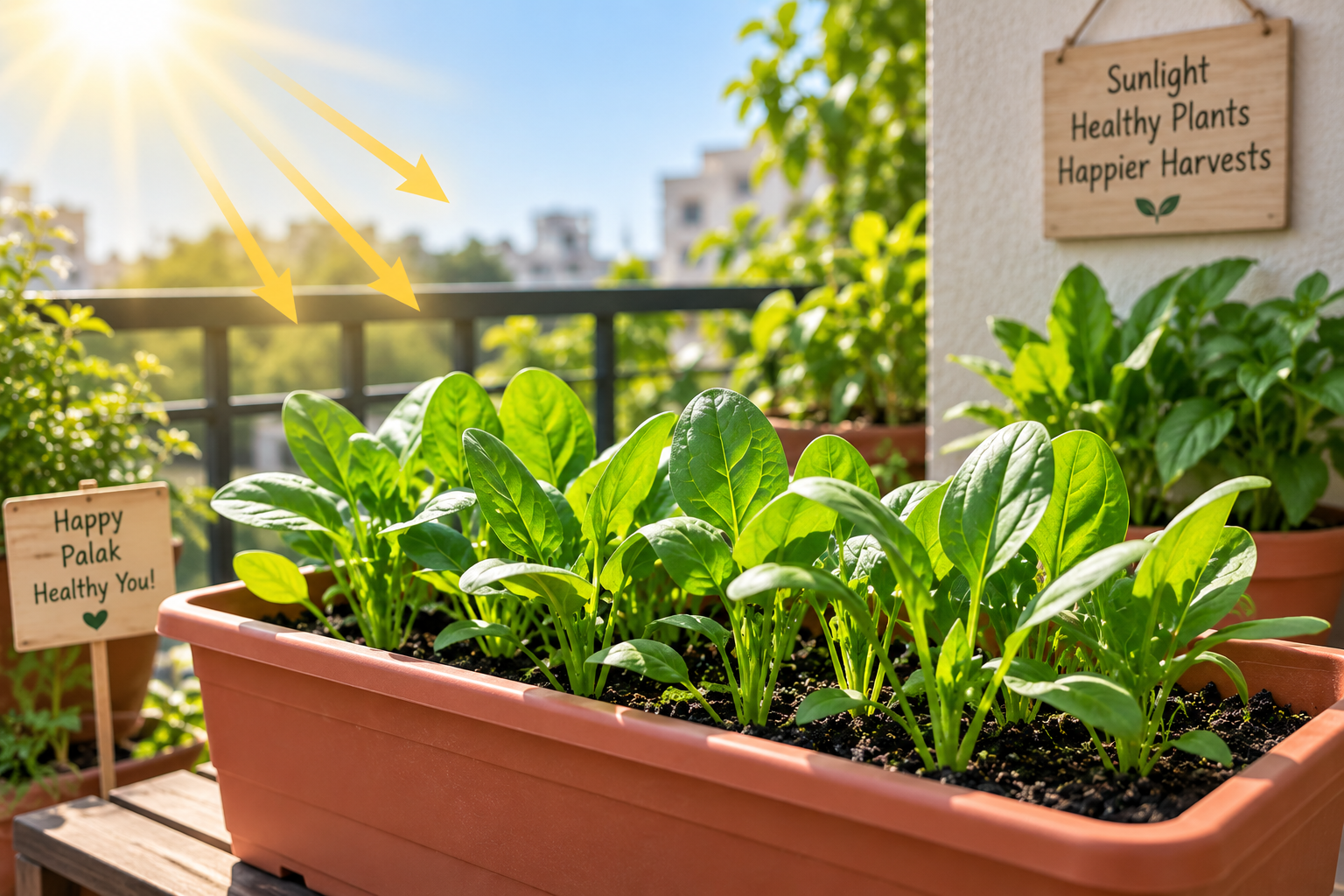
A healthy palak plant generally benefits from around 4–6 hours of sunlight per day.
Very low light may cause:
- slow growth
- thin stems
- smaller leaves
- weak plants
How Much Sunlight Does a Palak Plant Need?
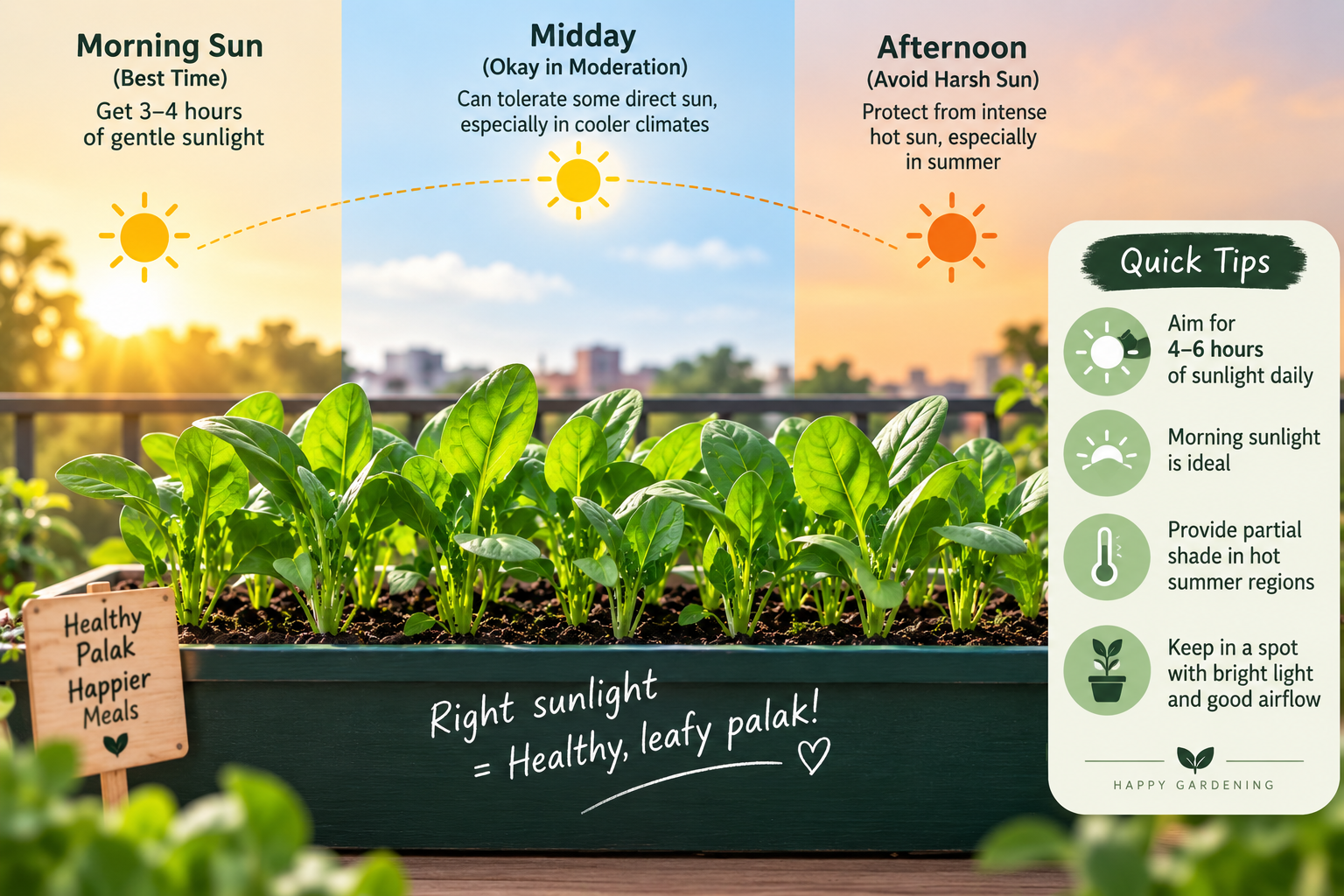
| Growing Condition | Expected Result |
|---|---|
| 4–6 hours sunlight | Suitable for most home gardens |
| Morning sunlight | Especially useful in warmer climates |
| Partial shade | Possible, but growth may be slower |
| Very low light | May produce weak growth |
| Strong afternoon heat | Can increase heat stress and bolting |
Step 6: Thin Crowded Seedlings
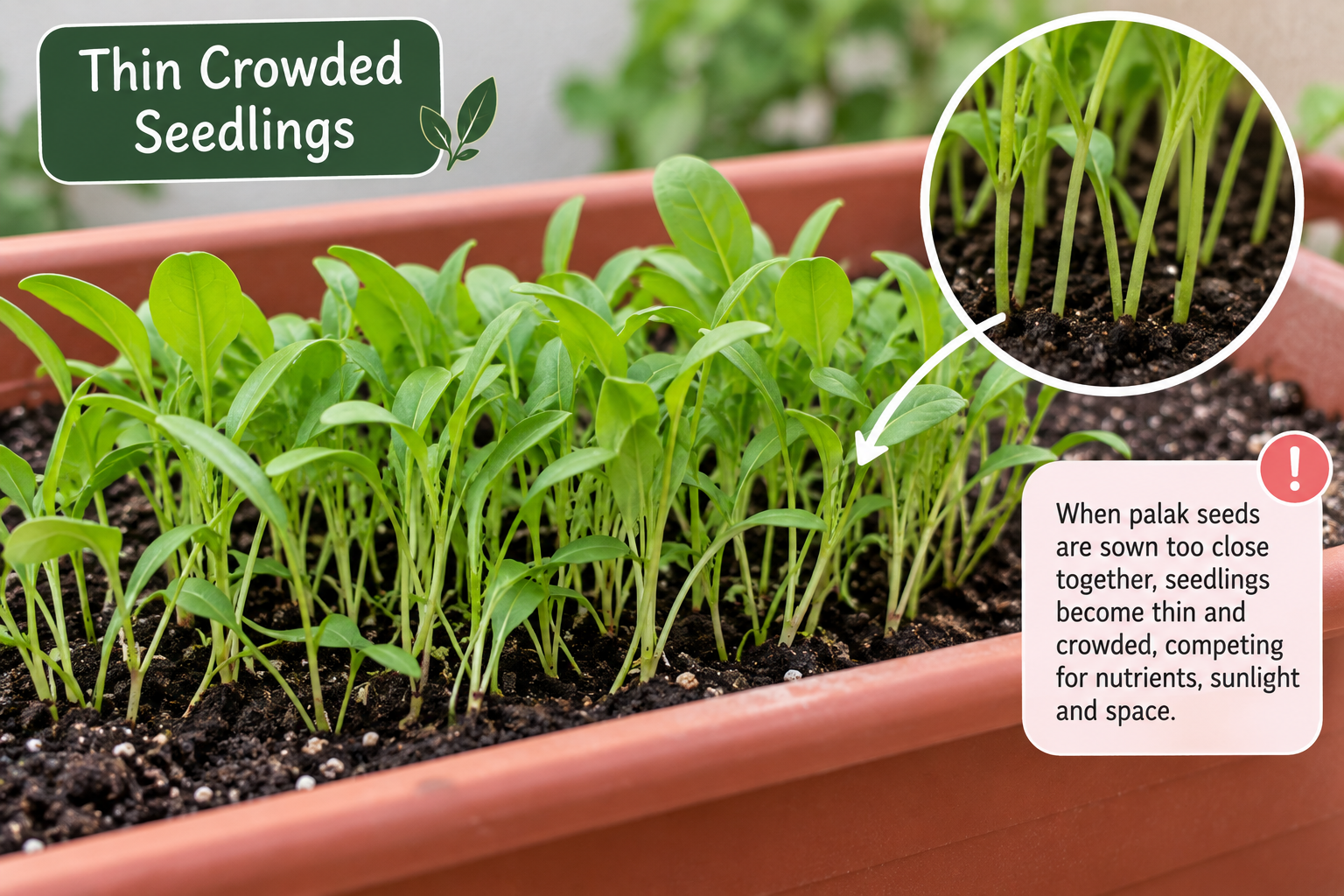
Crowded seedlings compete for:
- sunlight
- nutrients
- water
- root space
- air circulation
Remove weaker seedlings and leave healthier plants enough room to develop.
Step 7: Feed the Palak Plant
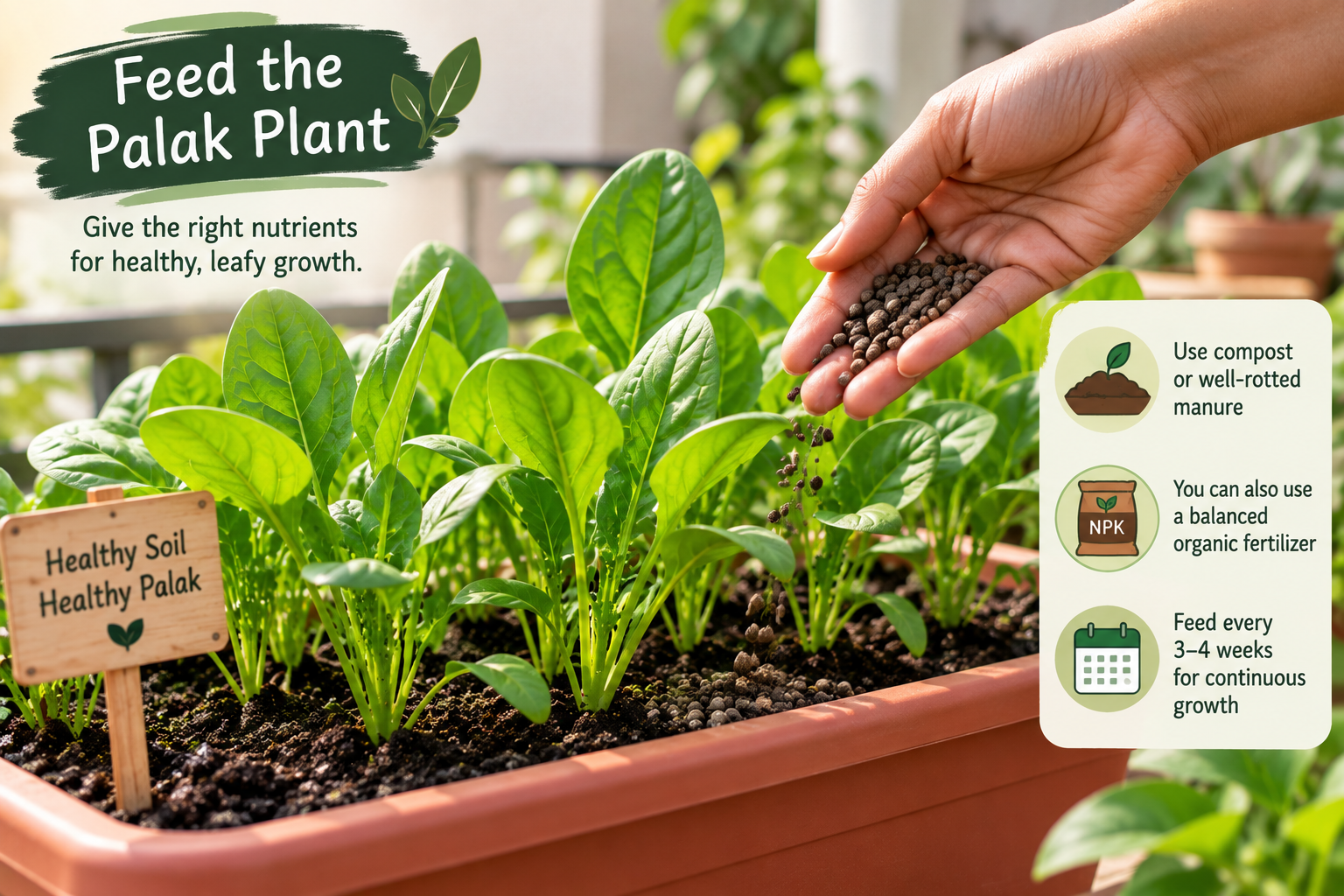
Healthy soil fertility supports good leafy growth.
Common organic options include:
- well-decomposed compost
- vermicompost
- well-rotted manure
- mild organic liquid fertilizer
Best Fertilizer for Palak at Home
For most home gardens, moderate organic feeding is sufficient.
- mix compost into the potting soil before sowing
- add a small amount of vermicompost after plants establish
- top-dress lightly during growth
- use mild organic liquid feed when required
How Often Should You Water Spinach?
Watering frequency depends on pot size, soil, temperature, sunlight, humidity and plant size.
Instead of using a fixed timetable, check the soil and water when the upper layer begins to feel slightly dry.
Signs of Overwatering
- yellow leaves
- soggy soil
- slow growth
- weak stems
- root rot
Signs of Underwatering
- drooping leaves
- dry soil
- crispy leaf edges
- wilting
Spinach Growing Time: How Long Does Palak Take to Grow?
Under favourable conditions, tender spinach leaves may be ready in approximately 25–35 days.
Palak Growing Timeline
| Growth Stage | Approximate Time |
|---|---|
| Seed sowing | Day 0 |
| Germination | Around 5–10 days |
| Young seedlings | Around 10–20 days |
| Baby leaf harvest | Around 25–35 days |
| Larger mature leaves | Around 35–50 days |
| Repeat harvesting | Depends on plant health |
How to Harvest Palak So It Grows Again
- Allow the plant to establish properly.
- Harvest larger outer leaves first.
- Leave the central growing point intact.
- Avoid cutting every leaf at once.
- Continue watering and light feeding.
Can Spinach Grow Back After Cutting?
Yes. Palak can often produce more leaves if the roots remain healthy and the central growing point is not damaged.
Baby Spinach vs Full-Grown Spinach Plant
| Baby Spinach | Mature Spinach |
|---|---|
| Harvested young | Harvested later |
| Smaller leaves | Larger leaves |
| Tender texture | Firmer texture |
| Earlier harvest | Longer growing time |
| Often used fresh | Commonly used for cooking |
Common Palak Growing Problems and Solutions
| Problem | Possible Cause | What You Can Do |
|---|---|---|
| Seeds not germinating | Dry soil, excessive heat or old seeds | Maintain even moisture and use fresh seeds |
| Yellow leaves | Overwatering or nutrient problem | Improve drainage and review feeding |
| Slow growth | Low light or poor soil | Improve sunlight and soil fertility |
| Thin stems | Insufficient sunlight | Move plants to a brighter location |
| Small leaves | Crowding or poor nutrition | Thin plants and improve soil |
| Early flowering | High temperature or stress | Grow during cooler conditions |
| Root rot | Excess moisture | Improve drainage and reduce watering |
Why Are My Palak Leaves Turning Yellow?
Overwatering
Constantly wet soil can reduce oxygen around the roots.
Poor Drainage
Even moderate watering can become a problem if excess water cannot escape.
Nutrient Problems
Pale leaves may sometimes indicate poor soil fertility.
Natural Ageing
A few older outer leaves turning yellow may be normal.
Why Is My Spinach Plant Growing Slowly?
- insufficient sunlight
- unsuitable temperature
- poor soil
- overcrowding
- overwatering
- underwatering
- low nutrients
- pest damage
Why Is My Palak Plant Flowering?
Spinach flowering is commonly known as bolting.
Common causes include:
- high temperatures
- longer hot days
- plant stress
- plant maturity
What Does a Palak Flower Look Like?
A mature spinach plant may develop small flowers when it enters its reproductive stage. For leaf production, gardeners usually prefer harvesting before heavy flowering starts.
Can You Grow Palak on a Balcony?
Yes. Palak works especially well for balcony gardening because it:
- grows well in containers
- does not become very tall
- needs moderate root depth
- can tolerate partial shade
- offers relatively fast harvests
Best Pot Size for Growing Palak on a Balcony
Choose a container that is approximately 15–20 cm deep or deeper, wide enough for several plants and equipped with drainage holes.
Can Palak Be Grown Indoors?
Palak can grow indoors when it receives sufficient natural light.
Suitable places may include:
- a sunny window
- an enclosed balcony
- a bright utility area
- another indoor spot receiving several hours of light
Can You Grow Palak All Year in India?
Some regions may allow spinach cultivation through much of the year, but palak generally performs better in cooler conditions.
How Much Space Does a Spinach Plant Need?
Baby spinach can grow relatively closely, while larger mature plants benefit from extra spacing for airflow, sunlight and root development.
Can I Grow Spinach From Kitchen Seeds?
You can experiment with whole food-grade spinach seeds, but seeds sold specifically for gardening generally provide more reliable germination.
Palak Growing Checklist for Beginners
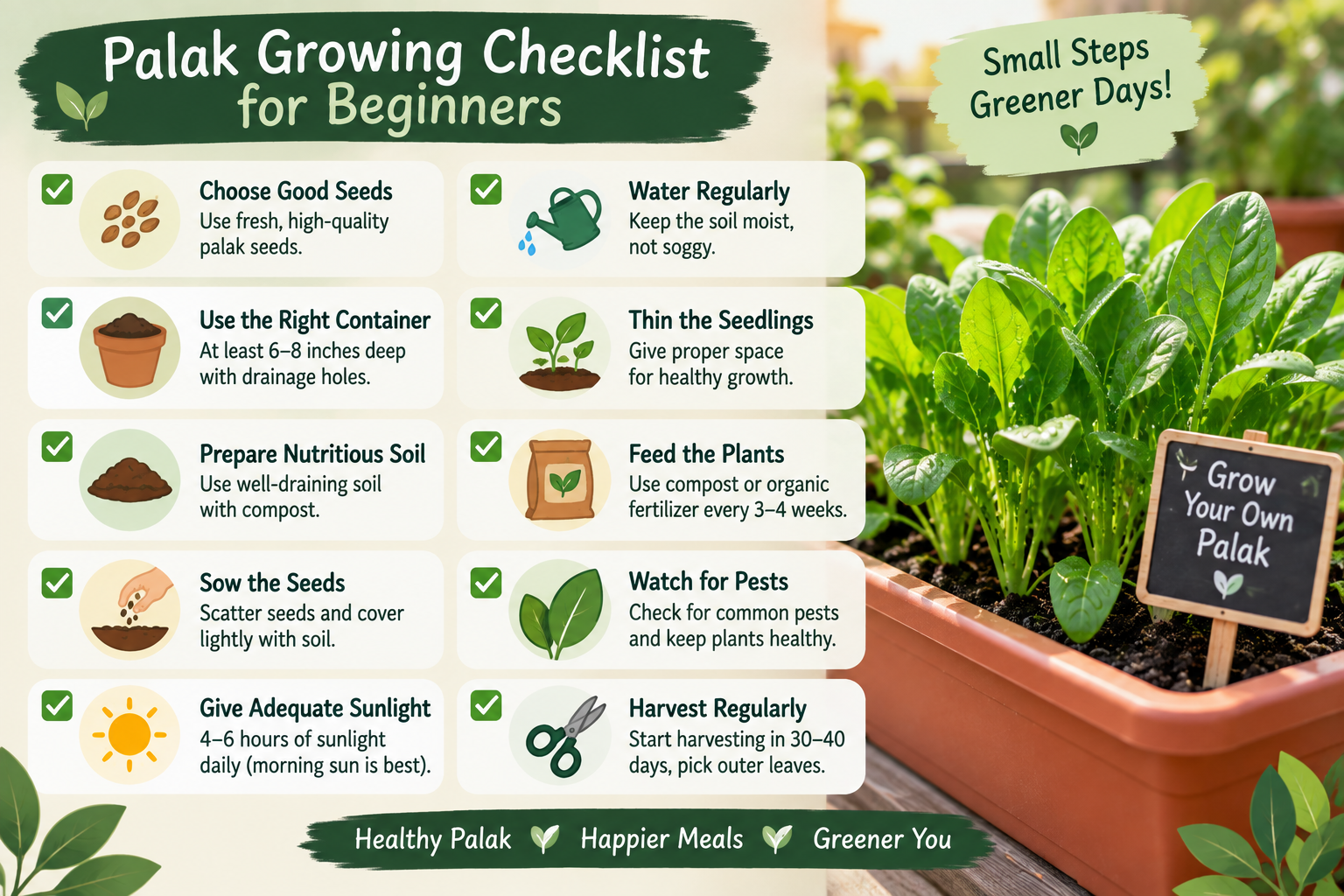
Before Sowing
- fresh spinach seeds
- a wide container
- drainage holes
- loose potting soil
- compost or vermicompost
- a sunny location
- a gentle watering method
After Sowing
- keep the soil moderately moist
- wait for germination
- provide adequate sunlight
- thin crowded seedlings
- check for pests
- avoid overwatering
- harvest outer leaves first
Frequently Asked Questions
Palak generally grows best during cooler months. In many northern and central regions, sowing commonly begins around September or October and continues through winter depending on local weather.
Spinach seeds commonly germinate in around 5–10 days when moisture, temperature and soil conditions are suitable.
Baby spinach may be ready in approximately 25–35 days, while larger mature leaves may take around 35–50 days.
Palak generally benefits from around 4–6 hours of sunlight per day and can tolerate some partial shade.
Yes. Palak grows well in pots, rectangular containers and grow bags.
A wide container approximately 15–20 cm deep or deeper is generally suitable.
Water according to soil moisture rather than a fixed timetable. Keep the soil moderately moist but not waterlogged.
Common reasons include overwatering, poor drainage, nutrient issues, root stress or natural ageing.
Early flowering or bolting is commonly associated with heat, longer days or plant stress.
Yes. Harvesting outer leaves while preserving the centre can allow the plant to continue growing.
Yes, although growth may be slower in very low light.
Palak is a leafy herbaceous plant, not a tree.