
10 Best Air Purifying Plants for Home: Names, Benefits and Care Tips
October 20, 2026
How to Grow Rosemary at Home: A Complete Guide for Beginners
October 24, 2026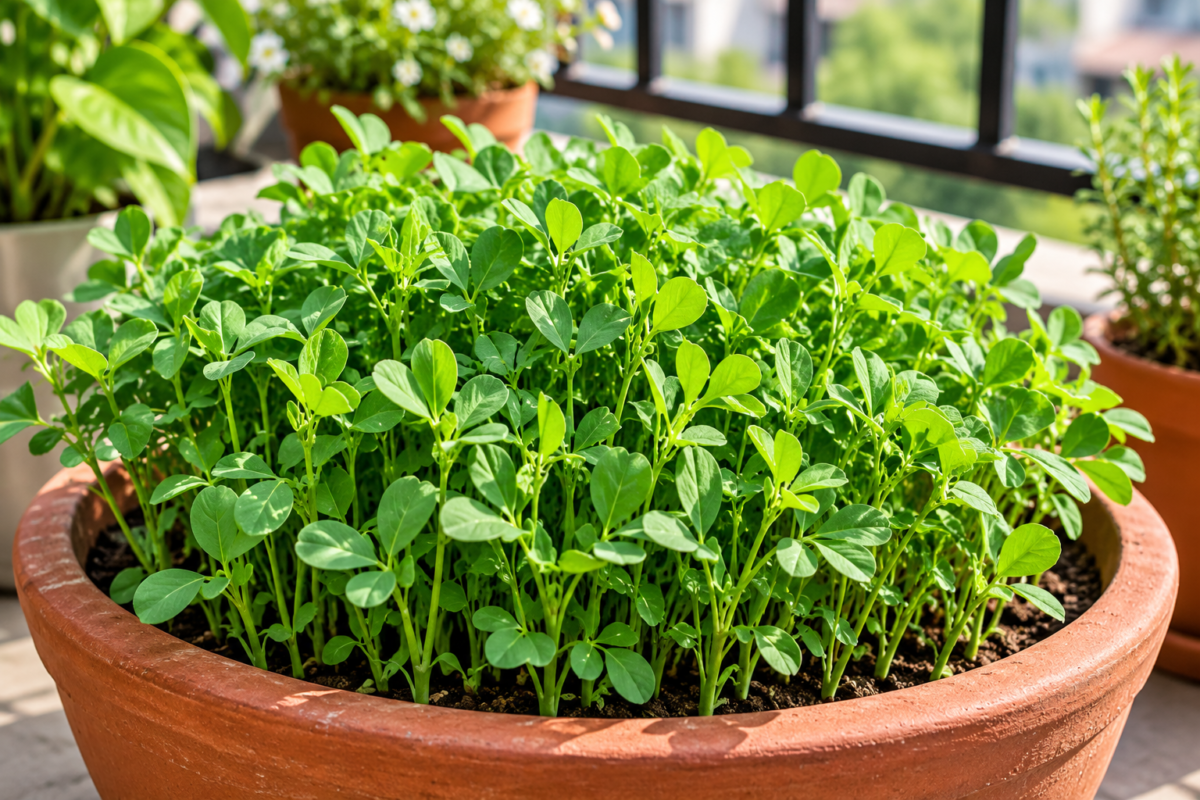
Growing methi at home is easy, even if you do not have a garden. With a few seeds, a suitable pot, good soil and regular care, you can grow fresh green leaves on your balcony, terrace or sunny windowsill.
Methi, also known as fenugreek (मेथी), is a popular leafy vegetable used in Indian dishes such as methi paratha, aloo methi and methi saag. The plant grows quickly and does not need much space, making it a good choice for beginners.
If you want to learn how to grow methi at home, this guide explains everything from choosing seeds and preparing the soil to watering, plant care and harvesting. You will also learn how to grow methi in a pot, when to plant fenugreek seeds and how to cut methi leaves so the plant may grow again.
What Is a Methi Plant?
The methi plant, scientifically known as Trigonella foenum-graecum, is an annual herb grown for its leaves and seeds. Its fresh green leaves are called fenugreek leaves, while the dried seeds are commonly known as methi dana.
In Hindi, the methi plant is called मेथी का पौधा. Its leaves are used in everyday cooking, and its seeds are used as a spice.
Here are some common names you may see when looking for methi seeds or gardening advice:
What Is the Best Season to Grow Methi in India?
Methi generally grows best in cool to mild weather. In many parts of North India, including Delhi, Punjab and nearby regions, October to February is a suitable period for growing methi at home. The exact timing depends on your local weather.
In places with milder winters, you may be able to grow methi over a longer period. During very hot weather, plants can grow quickly, become stressed or start flowering early.
For the best results:
- Choose a cool or mild period for sowing.
- Give the plants around 4 to 6 hours of sunlight daily.
- Protect seedlings from harsh afternoon heat.
- Keep the soil lightly moist without making it waterlogged.
If you are wondering about the best methi season, start with the cooler months and adjust your sowing time according to your city's weather.
What Do You Need to Grow Methi at Home?
Before planting methi seeds, collect the following items:
- Methi seeds: Use fresh, whole, untreated fenugreek seeds suitable for growing.
- A pot or grow tray: Choose a wide container with drainage holes.
- Potting soil: Use loose, well-draining soil.
- Compost: Add mature compost or vermicompost to support plant growth.
- Water: A watering can or spray bottle helps you water gently.
- Sunlight: Choose a balcony, terrace or windowsill that receives enough natural light.
- Gardening scissors: Use clean scissors when harvesting the leaves.
You do not need a large garden or expensive equipment. A simple container is enough to get started.
How to Grow Methi at Home: Step-by-Step Guide
Follow these eight simple steps to grow methi from seeds.
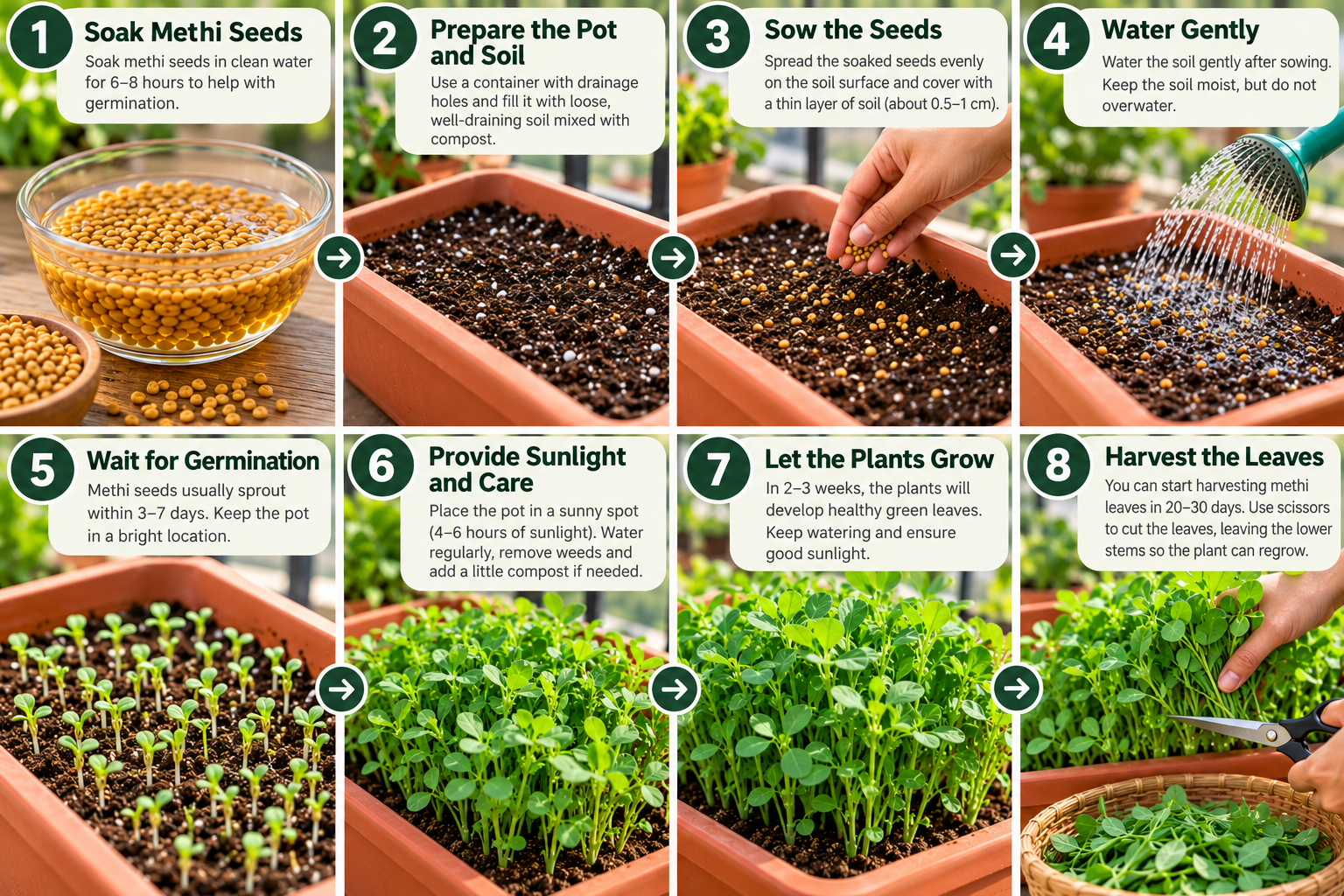
Step 1: Choose Good-Quality Methi Seeds
Start with fresh fenugreek seeds. You can use whole methi seeds from your kitchen if they are untreated and suitable for germination. Seeds sold specifically for gardening are another option.
Avoid seeds that look damaged, mouldy or very old, as they may not germinate well.
Step 2: Soak the Seeds Before Planting
Soaking methi seeds is optional, but it can help soften their outer covering.
- Place the seeds in a bowl.
- Add enough room-temperature water to cover them.
- Leave them to soak for around 6 to 8 hours.
- Drain the water before sowing.
Do not leave the seeds soaking for too long, as this can affect their condition.
Step 3: Prepare the Soil
Fill your pot or tray with loose, well-draining potting mix. You can combine garden soil with mature compost and cocopeat to improve soil structure and moisture retention.
The soil should hold some moisture while allowing extra water to drain away. Avoid compacted soil because it can make it harder for young roots to grow.
Leave a little space at the top of the pot so water does not spill over the sides.
Step 4: Sow the Methi Seeds
Spread the seeds evenly across the soil surface. You can sow them relatively close together when growing methi leaves, but avoid creating a thick, crowded layer.
Cover the seeds with a thin layer of soil, roughly 0.5 cm deep. Press the soil gently so the seeds make contact with it.
Do not bury the seeds too deeply. A light covering is usually enough.
Step 5: Water the Seeds Gently
Water the soil carefully after sowing. Use a spray bottle or a watering can with a gentle flow to avoid moving the seeds around.
Keep the soil moist while the seeds germinate, but do not let water collect at the bottom of the pot.
Check the soil regularly. Water when the surface begins to dry rather than following a fixed schedule regardless of the weather.
Step 6: Wait for Germination
Methi seeds commonly begin to sprout within about 3 to 7 days under suitable conditions.
- Keep the soil lightly moist.
- Place the container in a bright location.
- Avoid disturbing the seeds.
- Make sure excess water can drain away.
If your methi seeds are not germinating, check whether the seeds are old, the soil is too wet or dry, or the seeds were planted too deeply.
Step 7: Give the Methi Plant Sunlight and Care
Once the seedlings appear, provide around 4 to 6 hours of sunlight daily, depending on the weather and growing conditions.
Water when needed and remove weeds that compete with the seedlings for space and nutrients. If the plants become overcrowded, thin out some seedlings to improve airflow.
You can add a small amount of mature compost if the plants need extra nutrients. Avoid adding too much fertiliser, as excess nutrients may not improve leaf growth.
Step 8: Harvest Fresh Methi Leaves
Methi leaves are often ready for the first harvest in around 20 to 30 days after sowing, depending on temperature, sunlight and growing conditions.
When the plants have grown enough, use clean scissors to cut the leaves and stems a few centimetres above the soil. If you want the plants to regrow, avoid cutting every stem right down to the soil.
After harvesting, water the soil lightly. A healthy plant may produce another flush of leaves, although regrowth depends on the plant's condition and growing environment.
How to Grow Methi in a Pot
Growing methi in a pot is a good option if you live in a flat or have limited outdoor space.
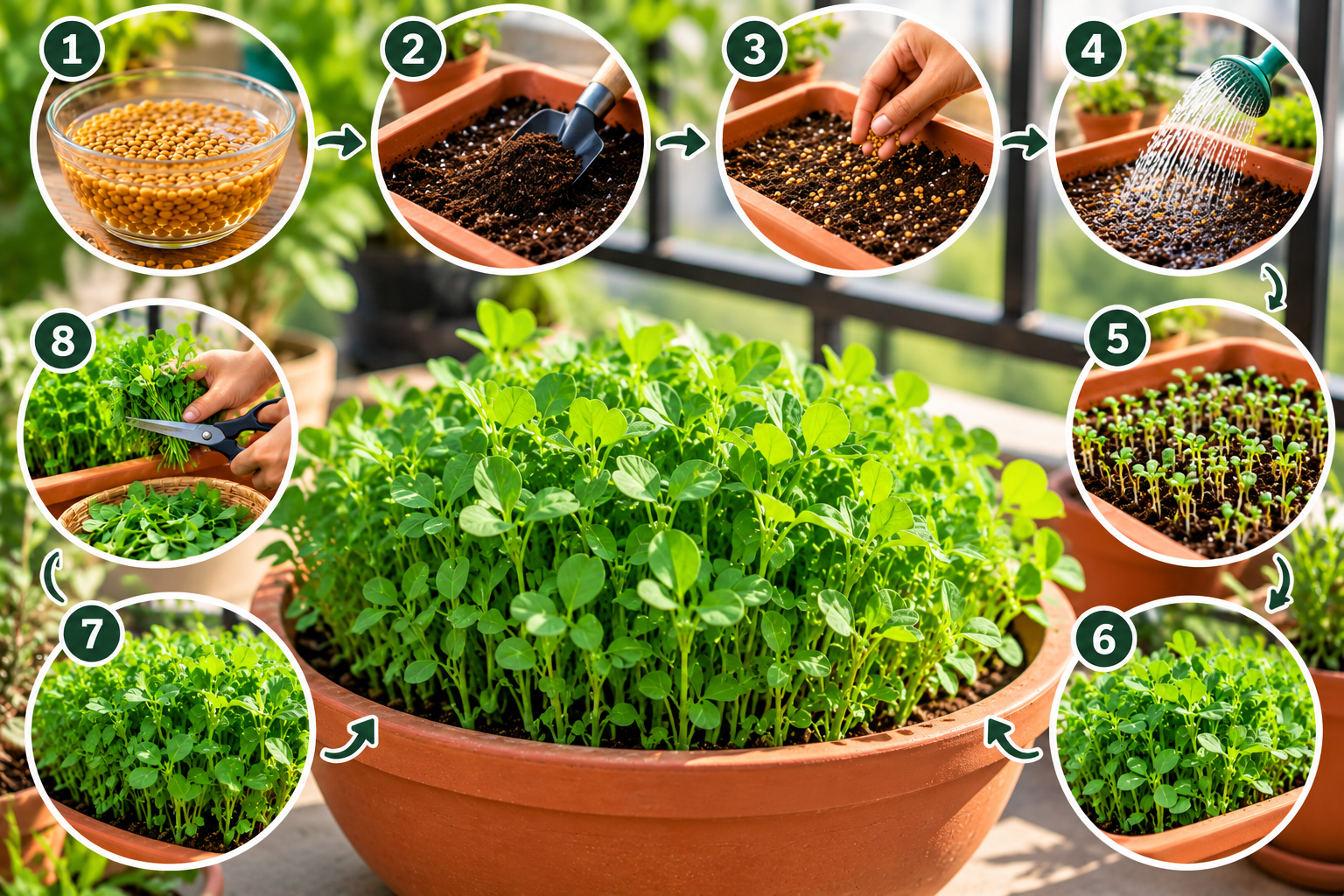
Follow these tips for growing methi in pots:
- Choose a wide pot: A broad pot or rectangular tray provides enough space for the seeds to grow.
- Check drainage: Make sure the container has holes at the bottom.
- Use suitable soil: Fill the pot with loose potting mix containing mature compost.
- Sow evenly: Spread the seeds across the surface and cover them lightly.
- Water gently: Keep the soil moist without soaking it.
- Provide sunlight: Place the pot where the seedlings can receive enough natural light.
- Harvest at the right time: Cut the young leaves when the plants are well established.
You do not need a very deep container because methi is commonly grown as a leafy crop. A wide container with adequate drainage is more important than choosing a very large pot.
How to Grow Methi at Home Without a Garden
You can grow methi even if you do not have a backyard.
A balcony, terrace, sunny windowsill or small outdoor corner can work well. Choose a container that fits your available space and receives sufficient sunlight.
For small spaces, try these ideas:
- Use a rectangular grow tray instead of several individual pots.
- Place the tray near a bright window or on a sunny balcony.
- Use a lightweight potting mix for easier handling.
- Grow a small batch first to understand your local growing conditions.
- Sow another batch every couple of weeks during the suitable season if you want a more regular supply.
Methi is a practical choice for small-space gardening because it grows from seeds and can be harvested for its leaves within a few weeks.
How to Grow Methi at Home in Water
The phrase “growing methi in water” can refer to two different methods: growing methi sprouts for food or growing methi plants in soil with water-based care.

For edible methi sprouts, use seeds specifically suitable for sprouting and follow safe food-handling practices.
- Rinse the seeds thoroughly with clean water.
- Soak them for the recommended time, usually several hours.
- Drain the water completely.
- Keep the seeds in a clean sprouting jar or suitable sprouting container.
- Rinse and drain them regularly according to the sprouting method.
- Harvest when the sprouts have reached the stage you prefer.
Do not leave the seeds sitting in stagnant water, as this can encourage spoilage and bacterial growth. Keep the sprouting container and equipment clean, and discard seeds or sprouts that smell unpleasant or show signs of mould.
For growing a full methi plant, soil is generally the easier option for beginners. Methi grown for leafy greens needs support for its roots and access to nutrients, so simply keeping the seeds submerged in water is not the same as growing a healthy potted plant.
How Long Does Methi Take to Grow?
The time depends on what you want to harvest and the conditions in which you grow it.
| Growth Stage | Approximate Time |
|---|---|
| Seed germination | 3 to 7 days |
| Early seedling growth | 1 to 2 weeks |
| First leaf harvest | Around 20 to 30 days after sowing |
| Flowering and seed production | Takes longer and varies by variety and growing conditions |
These timings are estimates, not fixed deadlines. Temperature, seed quality, sunlight, soil and watering can all affect how quickly the plant grows.
If you want fresh fenugreek leaves for cooking, harvest the young plants before they become too mature or start producing many flowers.
How to Care for a Methi Plant
Good care helps your methi plant grow healthy leaves.
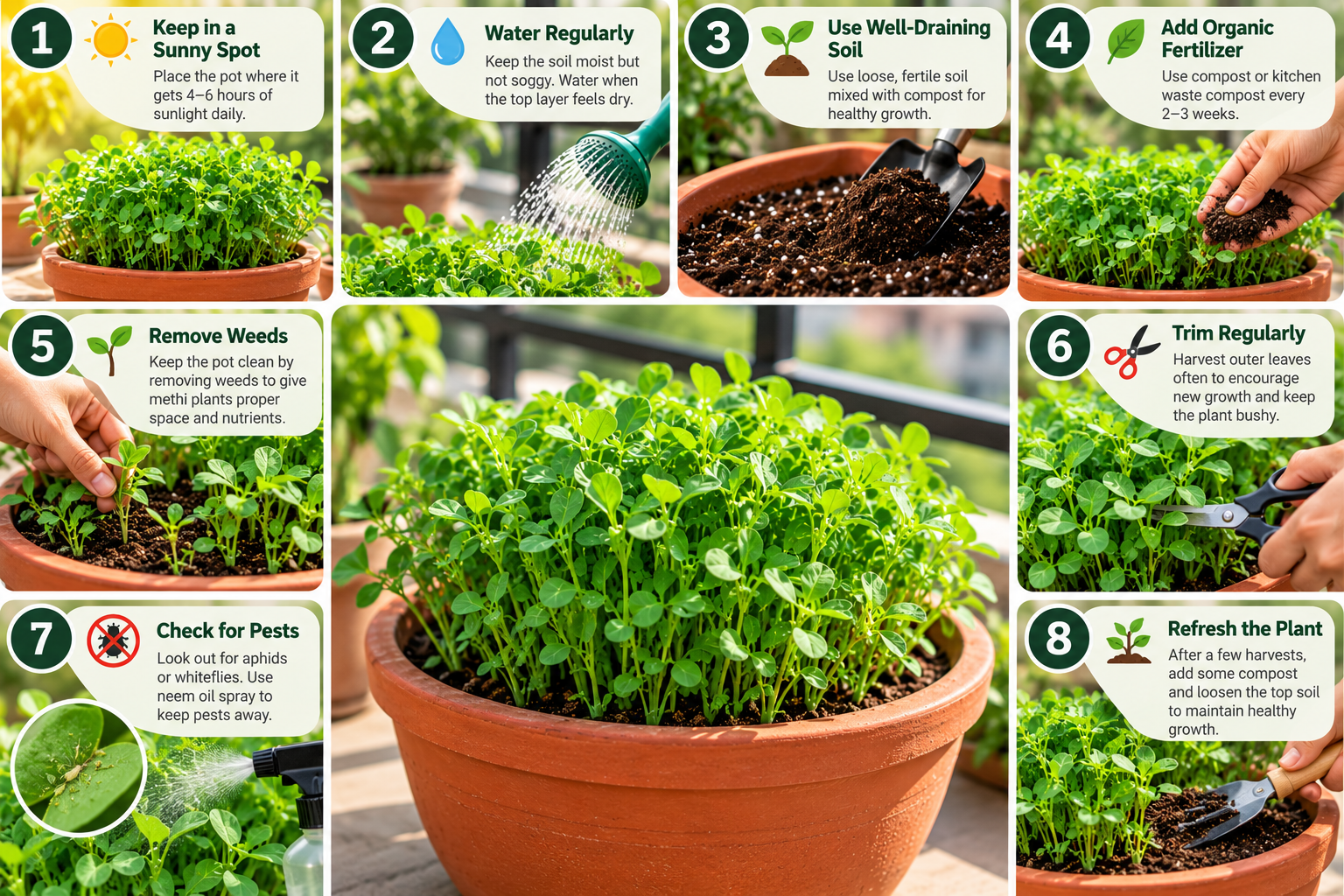
1. Sunlight
Give the plants around 4 to 6 hours of sunlight daily where possible. In very hot weather, protect them from harsh afternoon sun if the leaves begin to wilt or dry out.
2. Watering
Keep the soil lightly moist, particularly during germination. Avoid overwatering, as waterlogged soil can damage the roots.
3. Soil
Use loose, well-draining soil enriched with mature compost. Do not allow the soil to become hard and compacted.
4. Nutrients
Methi usually does not need heavy feeding for a short leaf-growing cycle. A little mature compost mixed into the potting soil is often sufficient.
5. Weed Removal
Remove weeds as soon as you notice them. They compete with young methi plants for water, light and nutrients.
6. Pest and Disease Checks
Inspect the leaves regularly for unusual spots, discolouration, insects or powdery growth. Avoid keeping the plants constantly wet, and provide reasonable airflow to help reduce disease problems.
7. Harvesting
Use clean scissors and avoid cutting too close to the soil if you want to encourage regrowth. Harvesting too late may result in tougher leaves or early flowering.
How to Cut Methi Leaves from the Plant
If you want to harvest methi leaves without removing the whole plant, use the cut-and-regrow method.
- Wait until the plants have enough healthy leaves and have reached a suitable size.
- Use clean, sharp scissors.
- Cut the stems a few centimetres above the soil.
- Leave some lower growth intact.
- Water lightly after harvesting.
- Continue to check for new growth over the following days.
A second harvest may be possible if the plant remains healthy and the growing conditions are suitable. If the leaves become thin or growth slows down, sowing a fresh batch may give you better results.
Common Mistakes to Avoid When Growing Methi
Avoid these common mistakes when growing methi at home:
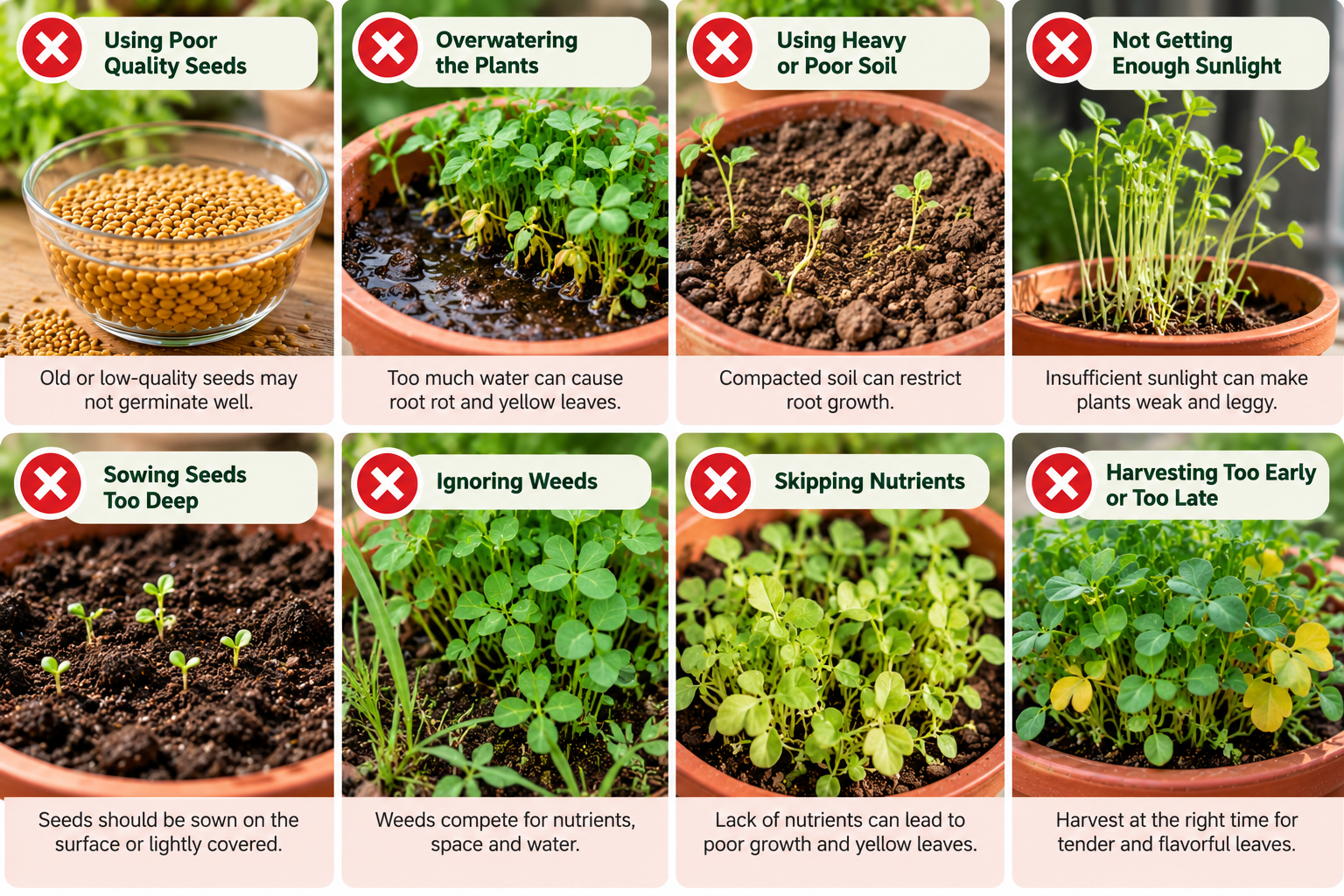
- Using poor-quality seeds: Old or damaged seeds may germinate poorly.
- Overwatering: Constantly wet soil can cause root problems.
- Using heavy soil: Compacted soil can restrict root growth and drainage.
- Providing too little sunlight: Plants may become weak or leggy.
- Sowing seeds too deeply: Deeply buried seeds may struggle to emerge.
- Ignoring weeds: Weeds compete with methi for light, water and nutrients.
- Skipping soil preparation: Poor soil can affect plant growth.
- Harvesting at the wrong time: Very young plants may not have enough growth, while older plants can become less tender.
The easiest way to avoid these problems is to use healthy seeds, prepare suitable soil, water carefully and check your plants regularly.
Frequently Asked Questions About Growing Methi
1. How do you grow methi at home from kitchen seeds?
You can grow methi from fresh, whole, untreated fenugreek seeds. Soak them for around 6 to 8 hours if desired, spread them over moist potting soil, cover them lightly and water gently. Keep the soil moist and provide sufficient sunlight after the seedlings appear.
2. How to grow methi in a pot on a balcony?
Choose a wide pot with drainage holes and fill it with loose potting soil mixed with mature compost. Sow the seeds evenly, cover them lightly, and water gently. Place the pot in a bright spot with around 4 to 6 hours of sunlight where possible.
3. How deep should methi seeds be planted?
Methi seeds should be covered with a thin layer of soil, approximately 0.5 cm deep. Avoid burying them too deeply, as this can make germination more difficult.
4. How many days does methi take to grow?
Methi seeds usually germinate in about 3 to 7 days. Fresh methi leaves can often be harvested around 20 to 30 days after sowing, depending on the weather and growing conditions.
5. Can methi grow in a small container?
Yes. Methi can grow in a small pot, planter or rectangular tray. Choose a container with enough surface area for the seeds and drainage holes to prevent waterlogging.
6. Why are my methi seeds not germinating?
Possible reasons include old seeds, planting too deeply, dry soil, waterlogged soil or unsuitable temperatures. Use fresh seeds, cover them lightly and keep the soil moist but not soaked.
7. Why are my methi seedlings turning yellow?
Yellow leaves may result from overwatering, poor drainage, insufficient light or nutrient problems. Check the soil moisture first and make sure the container drains properly.
8. Can methi grow during summer in India?
Methi can sometimes be grown in warmer months, but excessive heat may cause stress or early flowering. In hot regions, try a cooler growing period or provide morning sunlight and protection from harsh afternoon heat.
9. How often should I water a methi plant in winter?
Water when the soil surface begins to dry. The plant may need less frequent watering in cool weather than in warm weather, so check the soil instead of following a fixed daily schedule.
10. Can I grow methi indoors?
Yes, if you have a bright windowsill or another spot with enough natural light. If the plant receives too little sunlight, growth may become weak. A sunny balcony or terrace is often easier for beginners.
मेथी कैसे उगाएं?
11. घर पर मेथी कैसे उगाएं?
घर पर मेथी उगाने के लिए ताज़े मेथी के बीज लें। उन्हें चाहें तो 6 से 8 घंटे पानी में भिगोएं। बीजों को अच्छी जल निकासी वाली मिट्टी में फैलाकर ऊपर से मिट्टी की पतली परत डालें। हल्का पानी दें और अंकुर निकलने तक मिट्टी में नमी बनाए रखें।
12. गमले में मेथी कैसे उगाएं?
एक चौड़ा गमला लें जिसमें नीचे पानी निकलने के लिए छेद हों। उसमें भुरभुरी मिट्टी और थोड़ी अच्छी तरह तैयार कम्पोस्ट मिलाएं। मेथी के बीज मिट्टी पर समान रूप से फैलाएं, ऊपर से हल्की मिट्टी डालें और धीरे-धीरे पानी दें। गमले को ऐसी जगह रखें जहां पर्याप्त धूप मिले।
13. मेथी के बीज कितने दिन में उगते हैं?
अच्छी परिस्थितियों में मेथी के बीज आमतौर पर 3 से 7 दिनों में अंकुरित होने लगते हैं। बीजों की गुणवत्ता, तापमान और मिट्टी की नमी के अनुसार समय अलग हो सकता है।
14. मेथी उगाने का सबसे अच्छा समय कौन-सा है?
उत्तर भारत के कई हिस्सों में अक्टूबर से फरवरी तक का ठंडा मौसम मेथी उगाने के लिए अच्छा रहता है। अपने शहर के तापमान के अनुसार बुवाई का समय चुनें, क्योंकि बहुत अधिक गर्मी में पौधे जल्दी फूल देने लग सकते हैं।
15. मेथी के पौधे में कितनी बार पानी देना चाहिए?
मेथी के पौधे में पानी तब दें जब मिट्टी की ऊपरी सतह सूखने लगे। मिट्टी में हल्की नमी बनाए रखें, लेकिन गमले में पानी जमा न होने दें।
16. मेथी की पत्तियां कब तोड़नी चाहिए?
मेथी की पत्तियां आमतौर पर बीज बोने के लगभग 20 से 30 दिनों बाद तोड़ी जा सकती हैं। पौधे की बढ़त और मौसम के अनुसार समय बदल सकता है। साफ कैंची से पत्तियां और तने मिट्टी से कुछ सेंटीमीटर ऊपर काटें।
Hinglish FAQs: Methi Ghar Par Kaise Ugayein?
17. Ghar par methi kaise ugayein?
Ghar par methi ugane ke liye fresh methi seeds lein. Seeds ko chahein to 6 se 8 ghante paani mein bhigo dein. Inhe well-draining soil mein spread karein, upar se halki mitti daalein aur gently paani dein. Soil ko moist rakhein, lekin paani jama na hone dein.
18. Gamle mein methi ugane ke liye kaunsi mitti chahiye?
Methi ke liye loose aur well-draining potting soil use karein. Garden soil mein mature compost aur cocopeat milaya ja sakta hai. Aisi mitti choose karein jismein paani rukta na ho.
19. Methi kitne din mein taiyar hoti hai?
Methi ke seeds aam taur par 3 se 7 din mein sprout karte hain. Fresh leaves ki pehli harvesting lagbhag 20 se 30 din mein ho sakti hai, lekin growth weather aur plant care par depend karti hai.
20. Kya methi ghar ke andar ug sakti hai?
Haan, methi indoor grow ho sakti hai agar use bright windowsill ya natural light wali jagah mile. Bahut kam light mein plants weak ho sakte hain, isliye sunny balcony ya terrace bhi achha option hai.
21. Methi ke patte kaise kaatein taaki dobara ug sakein?
Clean scissors se leaves aur stems ko soil se kuch centimetres upar kaatein. Neeche ki growth ko poori tarah remove na karein. Harvest ke baad halka paani dein. Agar plant healthy raha, to naye leaves dobara aa sakte hain.
22. Methi ke seeds germinate nahi ho rahe, kya karein?
Fresh seeds use karein, unhe bahut deep na boyein aur soil ko lightly moist rakhein. Overwatering aur poor drainage se bhi germination par asar pad sakta hai.
Conclusion
Growing methi at home is a simple way to add fresh greens to your kitchen. You can grow a methi plant in a pot, grow tray, balcony or sunny windowsill without needing a large garden.
Start with good-quality seeds, use loose and well-draining soil, water carefully and provide enough sunlight. With suitable growing conditions, you may be able to harvest fresh fenugreek leaves within around 20 to 30 days.
Whether you searched for “how to grow methi at home,” “methi in pot,” or “घर पर मेथी कैसे उगाएं,” the basic process is the same: sow the seeds correctly, care for the seedlings and harvest the leaves at the right stage.
Start with one small pot, observe how your plants grow and sow another batch when you need more fresh methi.
