
How to Grow Methi (मेथी) at Home: A Step-by-Step Guide to Growing Fenugreek
October 21, 2026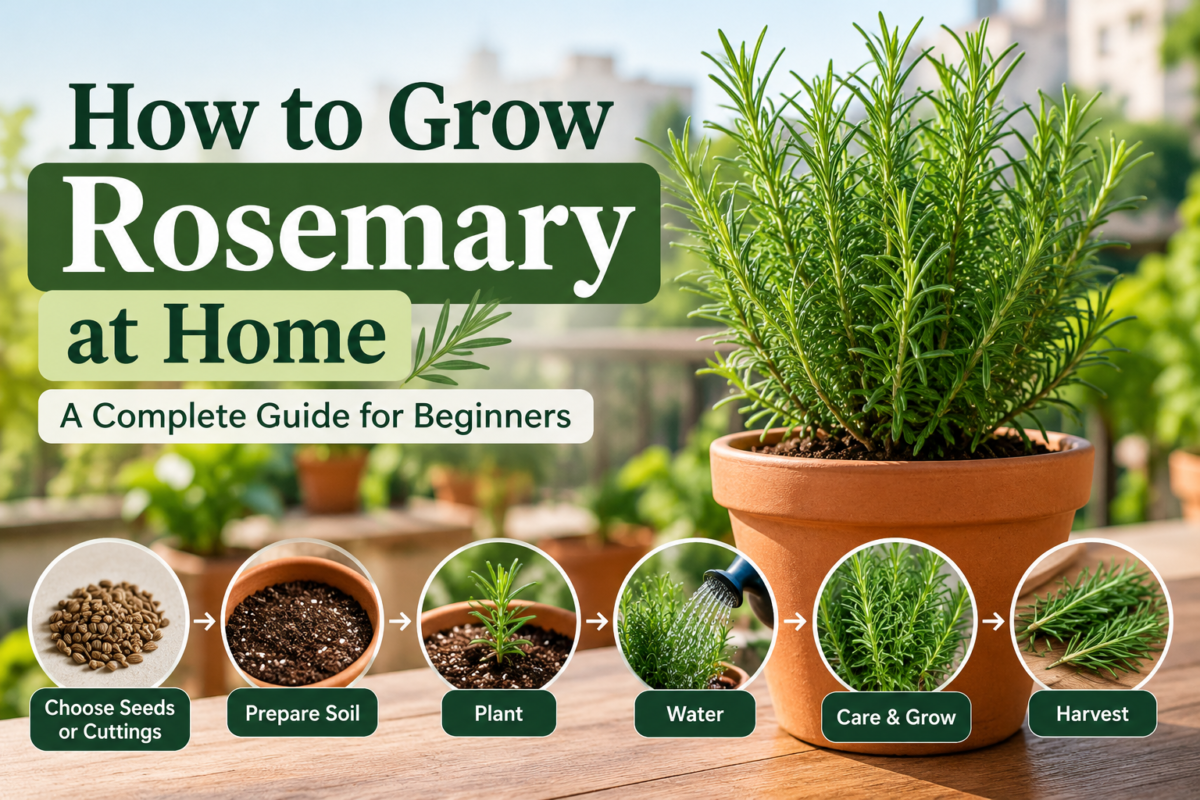
Rosemary is an aromatic herb known for its needle-like leaves and fresh, woody fragrance. It is used in cooking, herbal gardens and home landscaping. You can grow rosemary in a garden bed, on a balcony or in a pot near a sunny window.
If you want to grow rosemary at home in India, the most important things to get right are sunlight, well-draining soil and careful watering. Rosemary does not like sitting in wet soil, so choosing the right pot and growing mix can make a big difference.
Quick answer: Grow rosemary in a pot with drainage holes, use a loose and well-draining soil mix, provide around 6 to 8 hours of sunlight where practical, and water when the upper layer of soil begins to dry.
What Is a Rosemary Plant?
Rosemary is a woody, evergreen herb with narrow, fragrant leaves. Its botanical name is Salvia rosmarinus. The plant grows well in sunny locations and prefers soil that drains quickly after watering.
Rosemary can be grown from seeds, stem cuttings or a young nursery plant. Starting with a nursery plant or a healthy cutting is often easier for beginners because rosemary seeds can take time to germinate.
Can Rosemary Grow in India?
Yes, rosemary can grow in India when its growing conditions are suitable. It generally prefers sunny locations, good air circulation and soil that does not remain wet for long periods.
In hot regions, protect potted rosemary from extreme afternoon heat if the plant shows signs of stress. During the monsoon, keep the pot in a location where rainwater can drain freely and the soil does not stay soggy.
In cooler regions, rosemary can grow well in a sunny outdoor spot. In warmer regions, a bright balcony with good airflow can be a useful place to grow it.
What You Need to Grow Rosemary at Home
Before planting rosemary, prepare the following supplies:
- Rosemary seeds, healthy stem cuttings or a young nursery plant.
- A pot with drainage holes.
- A loose, well-draining potting mix.
- Perlite, coarse sand or another suitable material to improve drainage.
- A small trowel and a watering can.
- A sunny location with good air circulation.
How to Grow Rosemary at Home Step by Step
Follow these steps to start growing rosemary in a pot or garden container.
Step 1: Choose Your Planting Method
Decide whether you want to grow rosemary from seeds, stem cuttings or a young nursery plant. A healthy nursery plant is usually the simplest option for beginners.
Step 2: Prepare the Soil
Use a loose potting mix that drains freely. Avoid heavy soil that holds too much water around the roots.
Step 3: Select a Suitable Pot
Choose a container with drainage holes. A terracotta pot can help the growing mix dry more readily than some non-porous containers.
Step 4: Plant the Rosemary
Place the young plant in the pot at approximately the same depth it was growing before. Fill around the roots with soil and gently firm the mix.
Step 5: Water Carefully
Water after planting so the soil settles around the roots. Let excess water drain out, and do not leave the pot standing in collected water.
Step 6: Provide Enough Sunlight
Place the pot in a sunny area. If moving a plant from indoors to strong outdoor sunlight, increase its exposure gradually.
1. How to Grow Rosemary from Seeds or Cuttings
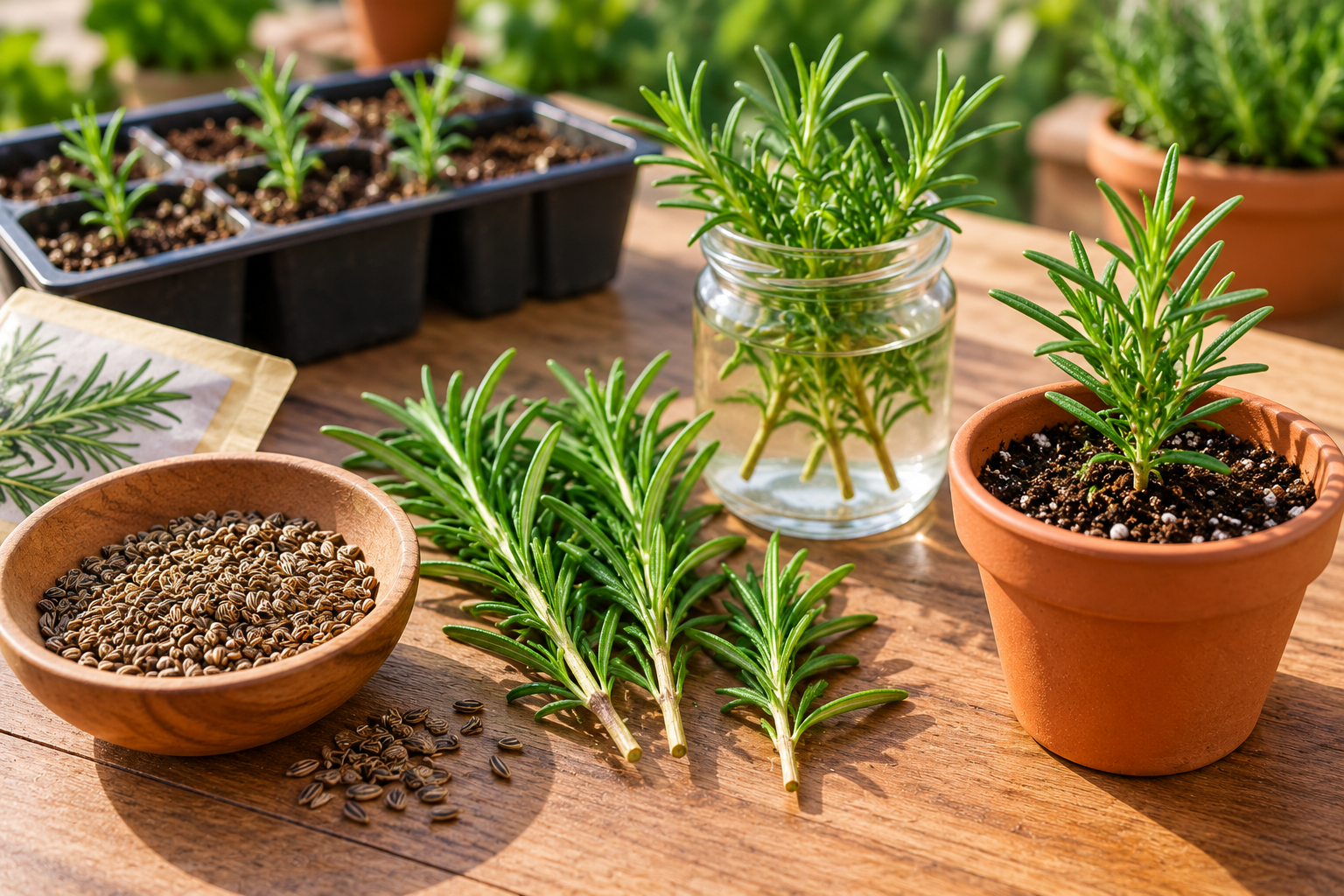
Rosemary can be propagated from seeds or stem cuttings. Both methods can work, but growing from seeds usually requires more patience. Stem cuttings taken from a healthy plant are a useful option if you want to grow another rosemary plant.
Growing Rosemary from Seeds
- Fill a seed tray or small pot with a light, well-draining seed-starting mix.
- Sow the seeds according to the seed packet instructions.
- Cover them lightly if instructed, rather than burying them too deeply.
- Keep the mix lightly moist, but never waterlogged.
- Place the tray in a warm, bright location and allow time for germination.
- Once the seedlings are large enough to handle, transplant them carefully into individual pots.
Rosemary seeds can germinate slowly and unevenly. Follow the instructions supplied with your seeds, and avoid disturbing the growing medium while waiting for seedlings to appear.
Growing Rosemary from Cuttings
- Take a healthy stem cutting from a suitable rosemary plant.
- Remove the leaves from the lower portion of the stem.
- Insert the bare portion into a moist, free-draining propagation mix.
- Keep the mix lightly moist while the cutting develops roots.
- Provide bright light without exposing the unrooted cutting to harsh conditions.
- Once roots are established and new growth appears, move the cutting into a suitable pot.
Can You Grow Rosemary Cuttings in Water?
You can try rooting rosemary cuttings in water. Place the lower portion of a healthy cutting in clean water, keeping the leaves above the waterline. Change the water regularly and watch for root development.
Results can vary. Once the cutting has developed suitable roots, transfer it carefully into a well-draining potting mix and keep an eye on moisture while it adjusts.
2. Best Soil for Rosemary
Rosemary grows best in soil that drains well and allows air to reach the roots. Heavy, compacted soil can retain too much moisture, increasing the risk of root problems.
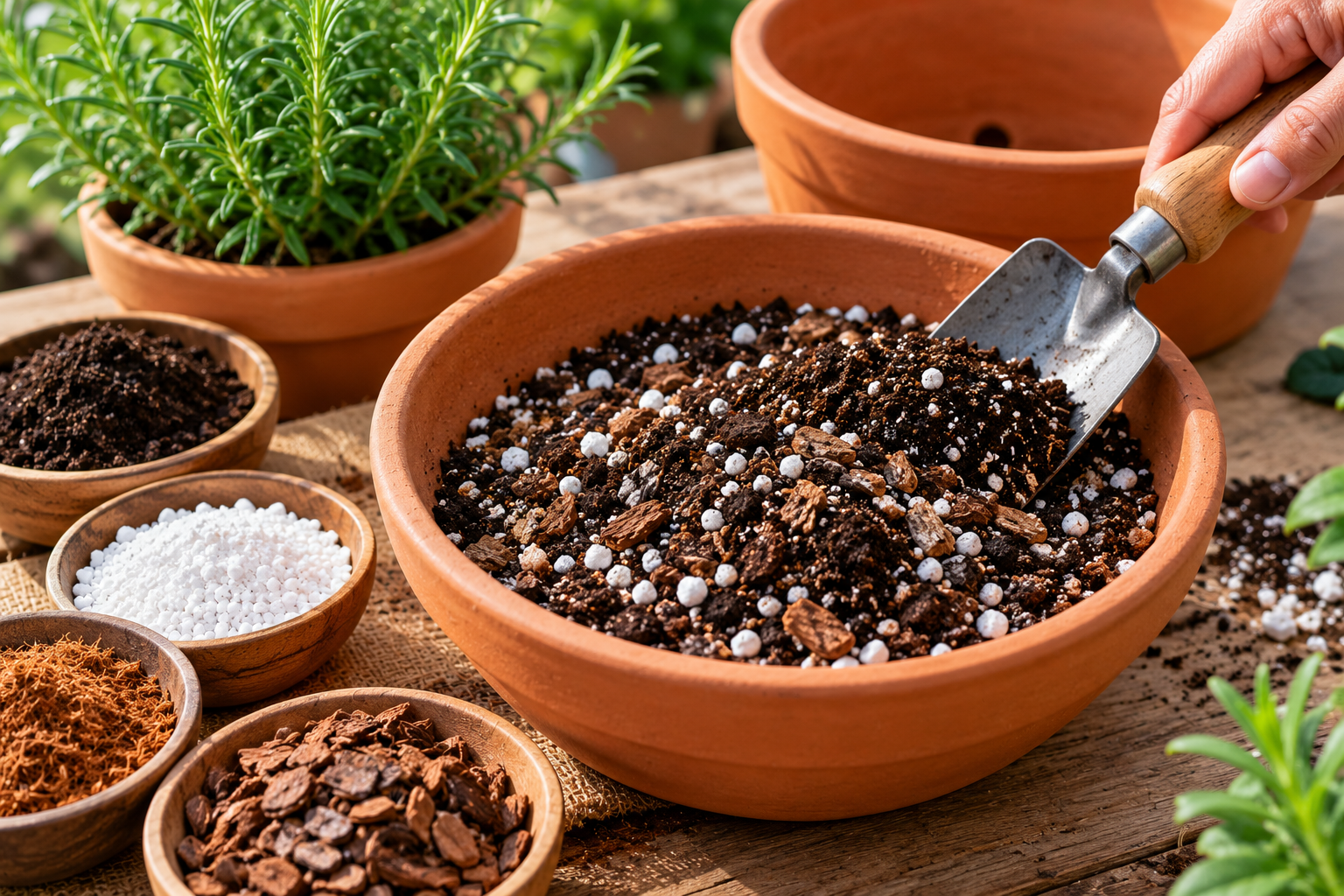
A suitable potting mix may include:
- A good-quality potting mix as the base.
- Perlite or pumice to improve aeration and drainage.
- A suitable amount of coarse horticultural sand or fine bark, if needed for the mix.
Avoid using dense garden soil by itself in a container. Most importantly, make sure the pot has drainage holes and that excess water can escape freely.
3. How to Plant Rosemary in a Pot
Growing rosemary in pots is practical if you have limited outdoor space or want to move the plant to a better location as the weather changes.
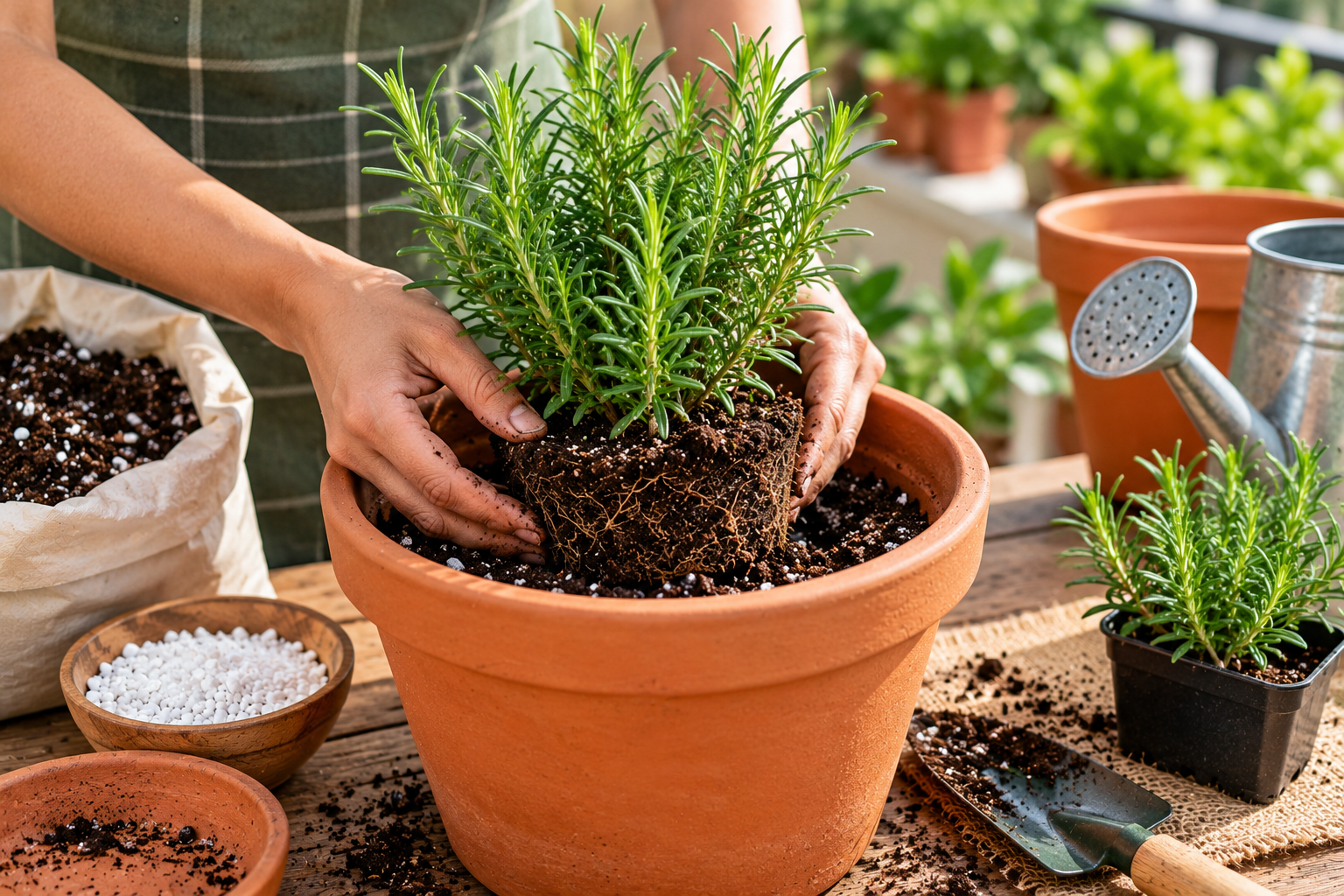
- Choose a pot with drainage holes that is suitable for the size of the plant.
- Add the prepared potting mix to the container.
- Remove the rosemary plant carefully from its nursery pot.
- Position the root ball at the same depth as before.
- Fill the gaps around the root ball with potting mix.
- Water thoroughly and allow excess water to drain.
- Place the pot in a sunny location with good air circulation.
Which Pot Is Best for Rosemary?
Terracotta pots are a good option because their porous sides allow moisture to evaporate through the pot material. Plastic or glazed pots can also work, provided they have drainage holes and you adjust watering to the conditions.
Avoid moving a small plant directly into an excessively large container. A pot suited to the current root system can make moisture management easier.
4. Can Rosemary Grow Indoors?
Yes, rosemary can grow indoors if it receives enough direct sunlight and has good airflow. A bright windowsill or a sunny balcony doorway may work, provided the plant gets sufficient light throughout the day.
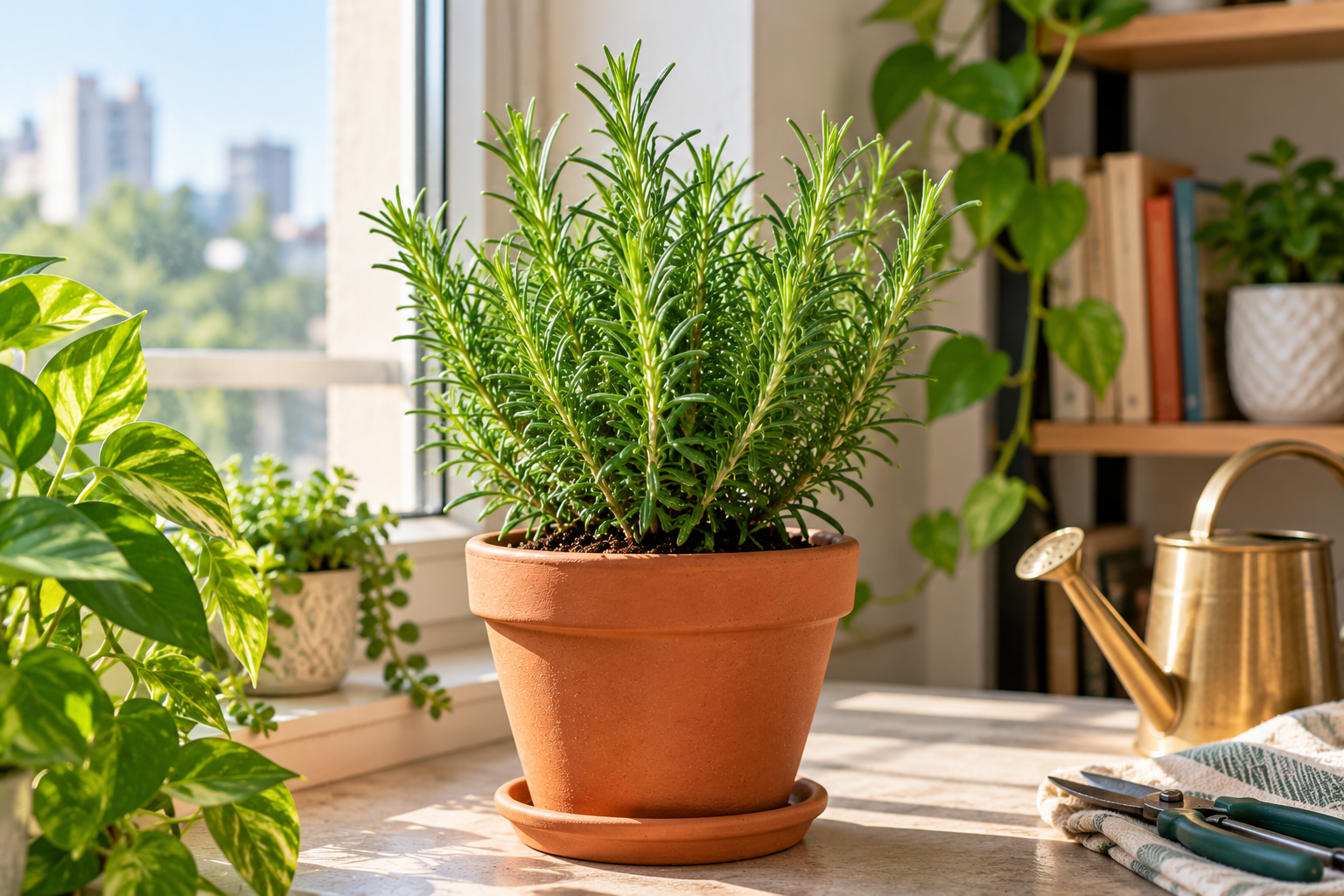
For growing rosemary indoors:
- Choose the brightest suitable window available.
- Rotate the pot occasionally if growth leans towards the light.
- Keep the plant away from persistently damp corners.
- Allow excess water to drain away after watering.
- Provide airflow and avoid crowding the plant among other pots.
If your room does not receive enough sunlight, the plant may become weak or develop long, sparse stems. A suitable grow light may help when natural light is insufficient.
5. How to Water and Care for Rosemary
Rosemary prefers soil that dries somewhat between waterings. The exact watering schedule depends on the weather, pot size, soil mix, sunlight and whether the plant is indoors or outdoors.
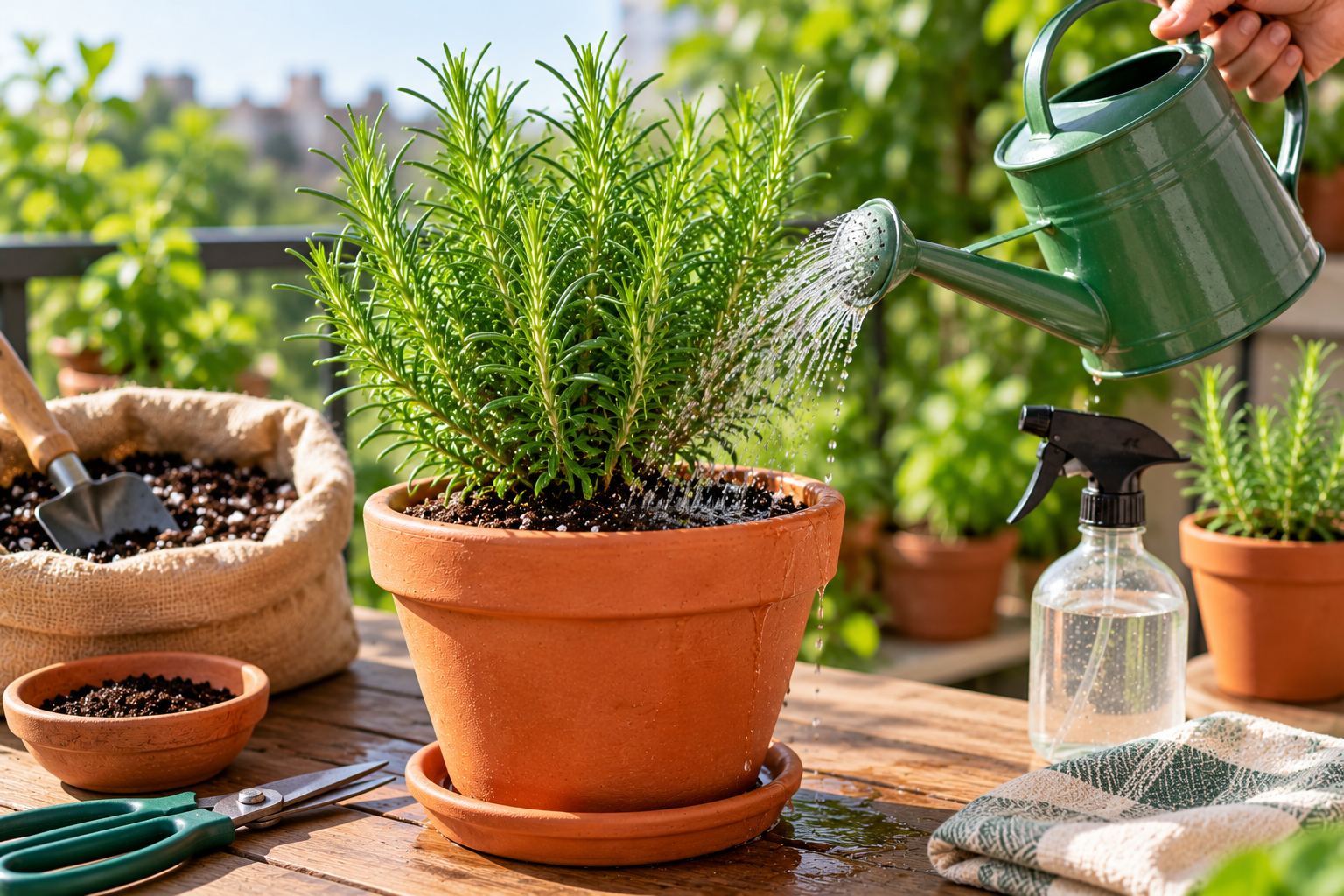
How Often Should You Water Rosemary?
Check the upper layer of soil before watering. If it is still moist, wait and check again later. When the soil has begun to dry, water thoroughly and let the excess drain from the bottom of the pot.
During hot weather, pots may dry faster. During cool or rainy weather, the soil may stay moist for longer. Use the soil condition rather than following a fixed daily watering schedule.
How Much Sunlight Does Rosemary Need?
Rosemary generally grows best in a sunny spot, ideally receiving around 6 to 8 hours of sunlight daily where conditions allow. In very hot climates, protect the plant from extreme afternoon heat if it shows signs of stress.
Should You Fertilise Rosemary?
Rosemary does not usually need heavy feeding. Use a suitable, balanced plant fertiliser sparingly if the plant needs it, and follow the product instructions. Excess fertiliser can encourage weak growth and may affect the plant's overall health.
Rosemary Plant Care at a Glance
| Care Factor | What Rosemary Needs |
|---|---|
| Sunlight | A sunny location with several hours of direct light. |
| Soil | Loose, well-draining soil with good aeration. |
| Watering | Water when the upper soil layer begins to dry. |
| Pot | A suitable container with drainage holes. |
| Airflow | Good circulation around the foliage and pot. |
| Fertiliser | Light feeding only when needed, following product directions. |
| Pruning | Occasional trimming to harvest sprigs and maintain shape. |
These are general care guidelines. Adjust them to your local climate, growing conditions and the needs of your plant.
6. Common Rosemary Plant Problems
If your rosemary is turning yellow, developing brown leaves or growing slowly, check the soil moisture, drainage, sunlight and roots before changing your care routine.
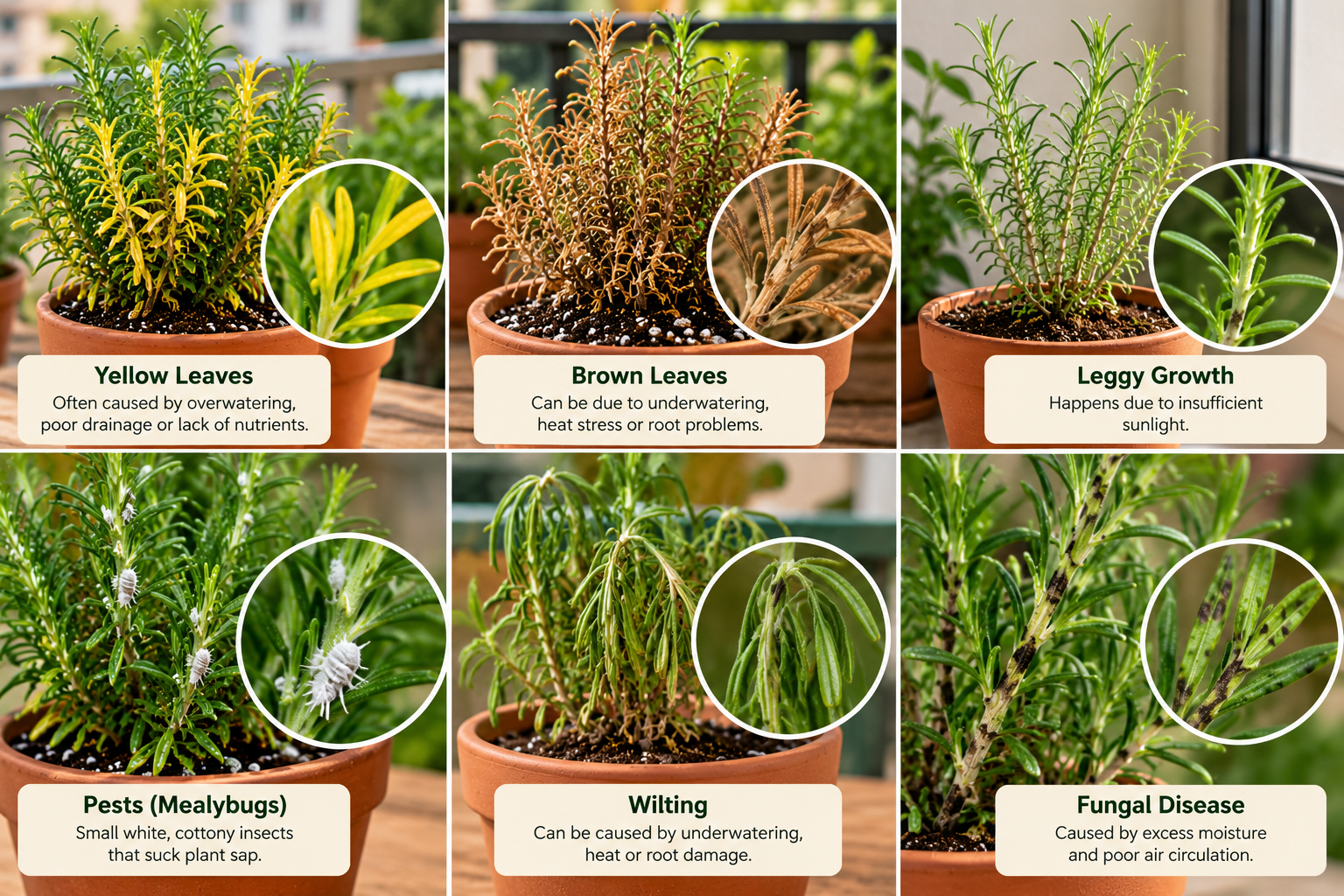
| Problem | Possible Cause | What to Check |
|---|---|---|
| Yellow leaves | Overwatering, poor drainage or nutrient issues. | Check soil moisture, drainage holes and overall growing conditions. |
| Brown, crispy leaves | Underwatering, heat stress or root damage. | Check the soil, roots and exposure to strong heat. |
| Leggy growth | Insufficient sunlight or crowded growth. | Move the plant to a brighter location and improve spacing. |
| Wilting | Dry soil, waterlogged roots or heat stress. | Check moisture before deciding whether to water. |
| White cottony pests | Possible mealybug infestation. | Inspect stems and leaf joints, then use an appropriate treatment. |
| Dark spots or damaged stems | Possible disease or prolonged moisture. | Improve airflow, avoid wet foliage where possible and remove affected material if appropriate. |
Why Is My Rosemary Plant Not Growing?
Slow growth can result from insufficient sunlight, poor drainage, unsuitable temperatures or problems with the roots. Rosemary also takes time to establish after planting or propagation.
Check that the plant is receiving enough light, that the soil is not staying wet, and that the pot is suitable for its roots. Avoid adding extra fertiliser until you have identified a likely cause.
How to Revive a Drying Rosemary Plant
First, check whether the soil is too dry or too wet. If it is dry, water thoroughly and let excess water drain. If the soil is saturated, check the drainage and allow the mix to dry appropriately.
Remove dead material carefully, keep the plant in suitable light and avoid making several major changes at once. Severely damaged roots or woody stems may not recover, so improvement depends on the cause and extent of the damage.
7. How to Prune and Harvest Rosemary
You can harvest small amounts of rosemary once the plant is established and producing healthy growth. Regular, careful harvesting can help you use the herb while keeping the plant manageable.
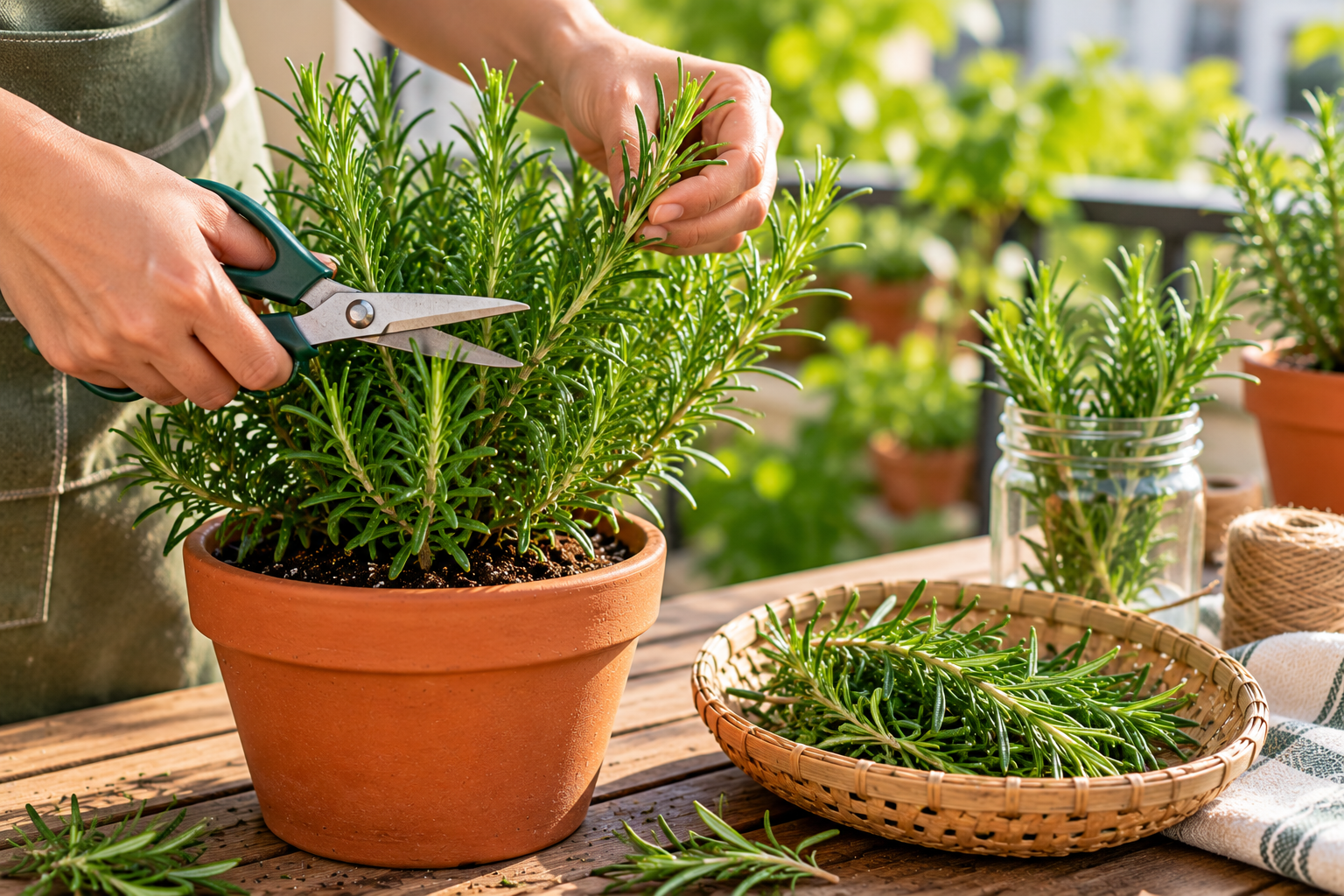
How to Harvest Rosemary
- Choose healthy green stems from an established plant.
- Use clean, sharp scissors or pruning shears.
- Cut a small portion of the stem rather than removing large amounts at once.
- Leave enough healthy foliage for the plant to continue growing.
- Use the fresh sprigs immediately or store them properly.
When Should You Prune Rosemary?
Light pruning can be done when the plant is actively growing and conditions are suitable. Remove dead or damaged material and trim green growth to maintain a balanced shape.
Avoid cutting deeply into old, bare woody stems, as rosemary may not produce new growth reliably from these areas. In hot climates, avoid heavy pruning when the plant is already under heat stress.
8. How to Store Fresh Rosemary
Fresh rosemary can be stored in the refrigerator or dried for later use. Choose the method based on how soon you plan to use the herb.
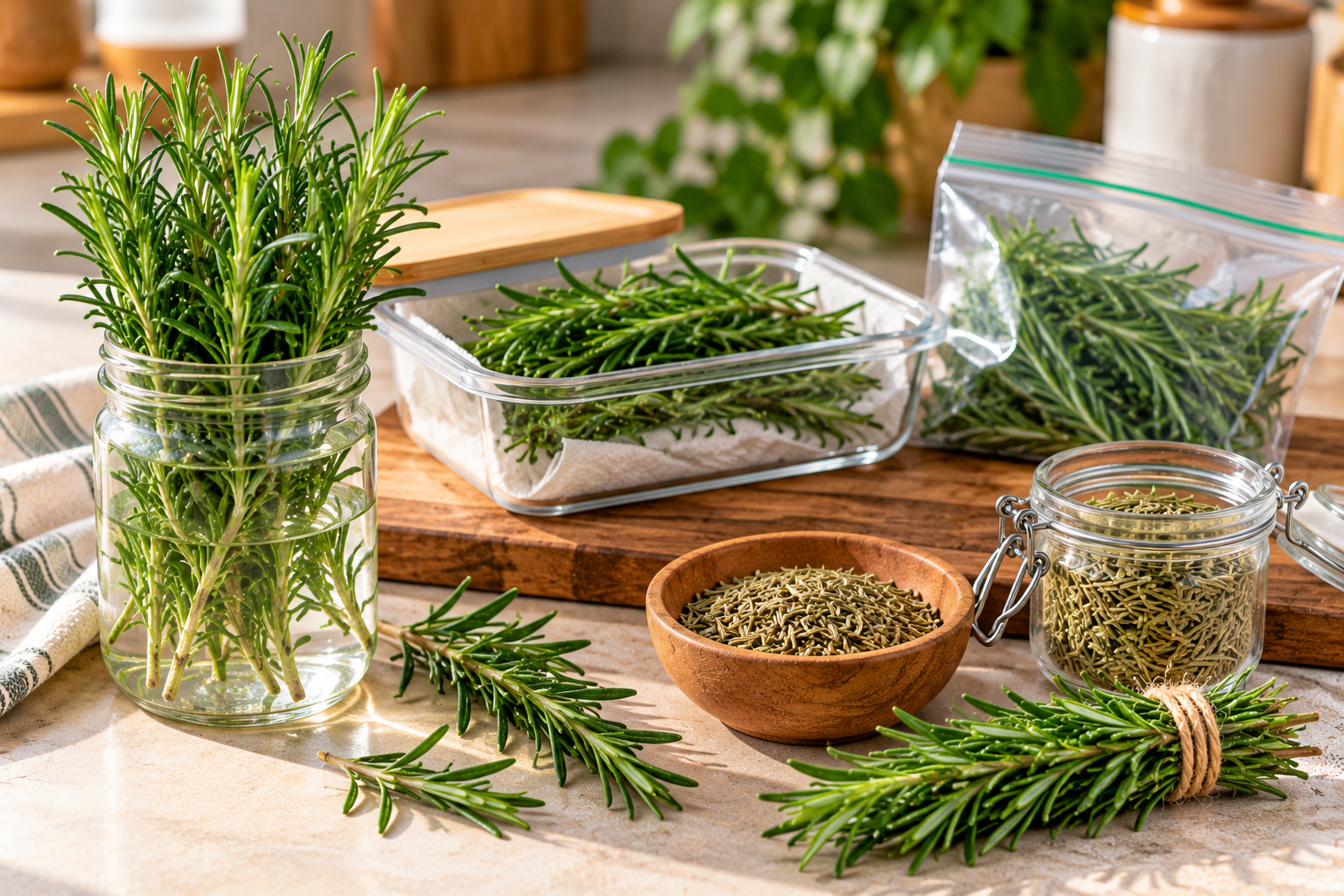
How to Store Fresh Rosemary in the Refrigerator
- Inspect the sprigs and remove damaged leaves.
- Keep the sprigs dry, or gently pat them dry if they have been washed.
- Wrap them loosely in a slightly damp paper towel, or place them in a suitable container.
- Store them in the refrigerator and check regularly for moisture or spoilage.
How to Dry Rosemary
- Harvest healthy sprigs and remove any damaged material.
- Ensure the sprigs are clean and dry before storing.
- Hang small bundles in a dry, well-ventilated area away from direct sunlight, or use a suitable low-temperature drying method.
- Once completely dry, remove the leaves from the stems if desired.
- Store the dried rosemary in an airtight container in a cool, dry and dark place.
Make sure the leaves are fully dry before sealing them in a container. Any remaining moisture can lead to spoilage.
Frequently Asked Questions About Growing Rosemary
1. How long does rosemary take to grow?
Rosemary grows at a moderate pace once established. Seed germination can be slow and uneven, while rooted cuttings and nursery plants may establish more quickly. Growth depends on sunlight, temperature, soil and care.
2. Can rosemary grow in pots?
Yes. Rosemary can grow well in pots with drainage holes and a well-draining potting mix. Place the container in a sunny location and adjust watering to the soil conditions.
3. Can I grow rosemary indoors in India?
Yes, if you can provide enough direct sunlight, good airflow and a potting mix that drains freely. A bright window or sunny balcony can be suitable.
4. How often should I water a rosemary plant?
Water when the upper layer of soil begins to dry. The frequency varies with temperature, pot size, soil and sunlight, so check the soil rather than watering automatically every day.
5. What is the best soil for rosemary?
Rosemary prefers loose, well-draining soil. A suitable potting mix amended with perlite or another drainage-improving material can help prevent excess moisture around the roots.
6. Is rosemary an indoor or outdoor plant?
Rosemary can grow outdoors in a sunny garden or container and can also grow indoors when it receives sufficient light. The best location depends on your local climate and growing conditions.
7. Why are my rosemary leaves turning brown?
Brown leaves can result from underwatering, heat stress, root damage or other growing problems. Check soil moisture, drainage and sunlight before changing your care routine.
8. Can rosemary grow from cuttings?
Yes. Healthy stem cuttings can develop roots in a suitable propagation mix. Keep the medium lightly moist and provide bright, indirect light while roots develop.
9. Can rosemary grow in water?
Rosemary cuttings may develop roots in water, although results can vary. Once roots are established, transfer the cutting carefully into a free-draining potting mix.
10. When can I start harvesting rosemary?
Begin harvesting small amounts once the plant is established and producing healthy growth. Use clean scissors and leave enough foliage for the plant to keep growing.
11. Can rosemary survive hot weather?
Established rosemary can tolerate warm conditions, but intense heat can stress potted plants. Monitor soil moisture, ensure good drainage and provide protection from extreme afternoon heat when needed.
12. How do I keep fresh rosemary for longer?
Store fresh sprigs in the refrigerator in a suitable container or dry them completely for longer storage. Keep dried rosemary in an airtight container away from heat, moisture and direct sunlight.
