
How to Grow Phlox Flowers in India: Sowing Time, Seeds & Care
October 18, 2026
How to Grow Methi (मेथी) at Home: A Step-by-Step Guide to Growing Fenugreek
October 21, 2026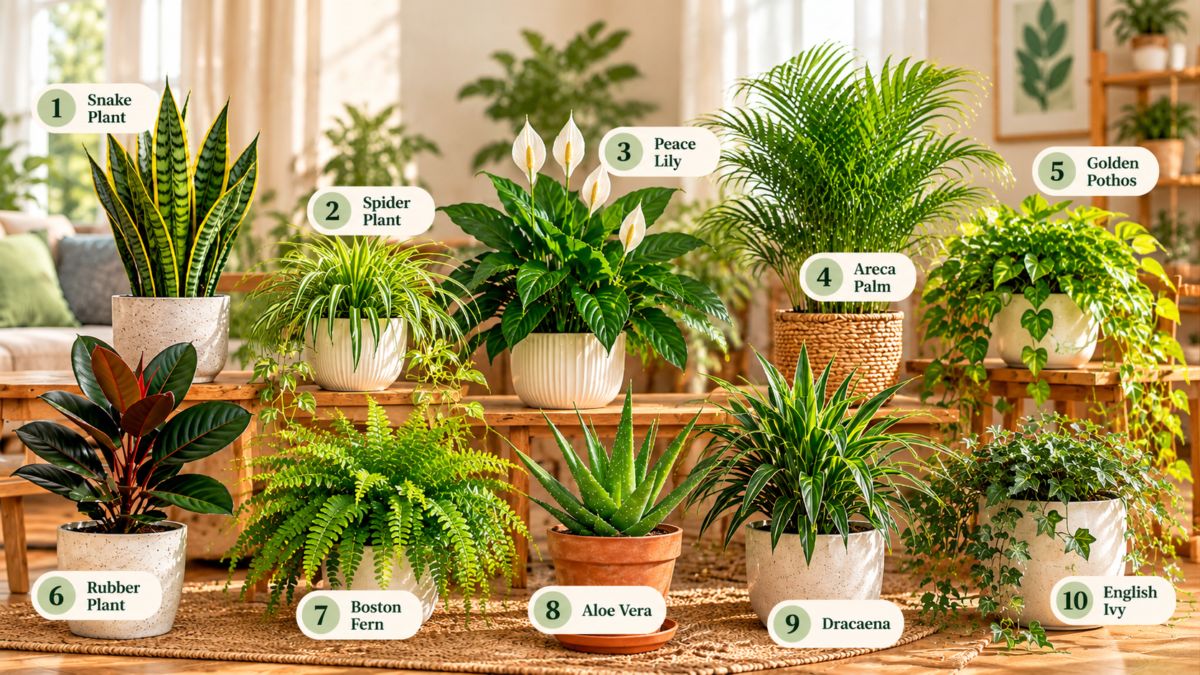
Indoor plants bring natural beauty to your home and make indoor spaces feel fresh and welcoming. From the popular snake plant to the elegant peace lily, there are many indoor plants for home that suit different rooms, lighting conditions and gardening skills.
If you are searching for air purifying plants for home, you may want to know which plants are suitable for bedrooms, which varieties need less care, and which indoor plants grow well in small pots.
In this guide, we cover 10 popular air purifying indoor plants, their names, growing requirements, suitable locations and tips for choosing the right pots and planters.
What Are Air Purifying Plants?
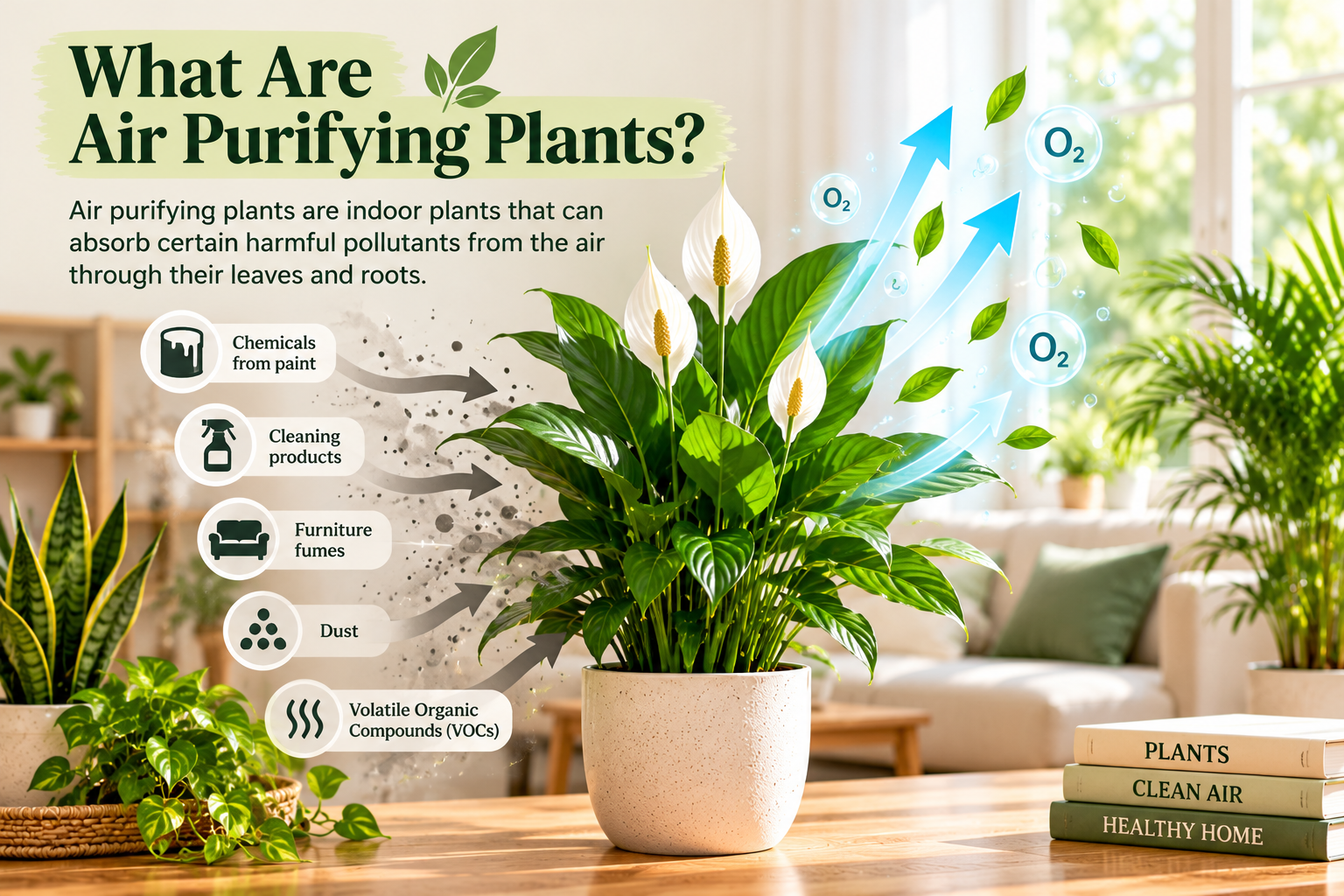
Air purifying plants are houseplants commonly associated with the removal of certain airborne pollutants. Researchers have studied plants such as snake plants, spider plants, peace lilies and pothos for their ability to absorb volatile organic compounds, also called VOCs, under controlled conditions.
VOCs are chemicals released by some paints, cleaning products, furniture and building materials. Their presence and concentration depend on the materials and activities inside a building.
NASA's well-known research on plants and indoor pollutants helped popularise the idea of using houseplants for air purification. However, later research found that plants remove pollutants too slowly to compete with normal air exchange in most homes.
Houseplants can still be a lovely addition to your home. Choose them for their appearance, growing characteristics and enjoyment rather than treating them as a replacement for ventilation or an air purifier.
10 Best Air Purifying Indoor Plants for Home
These 10 popular houseplants offer different leaf shapes, sizes and care requirements. Compare their needs before choosing plants for your home.
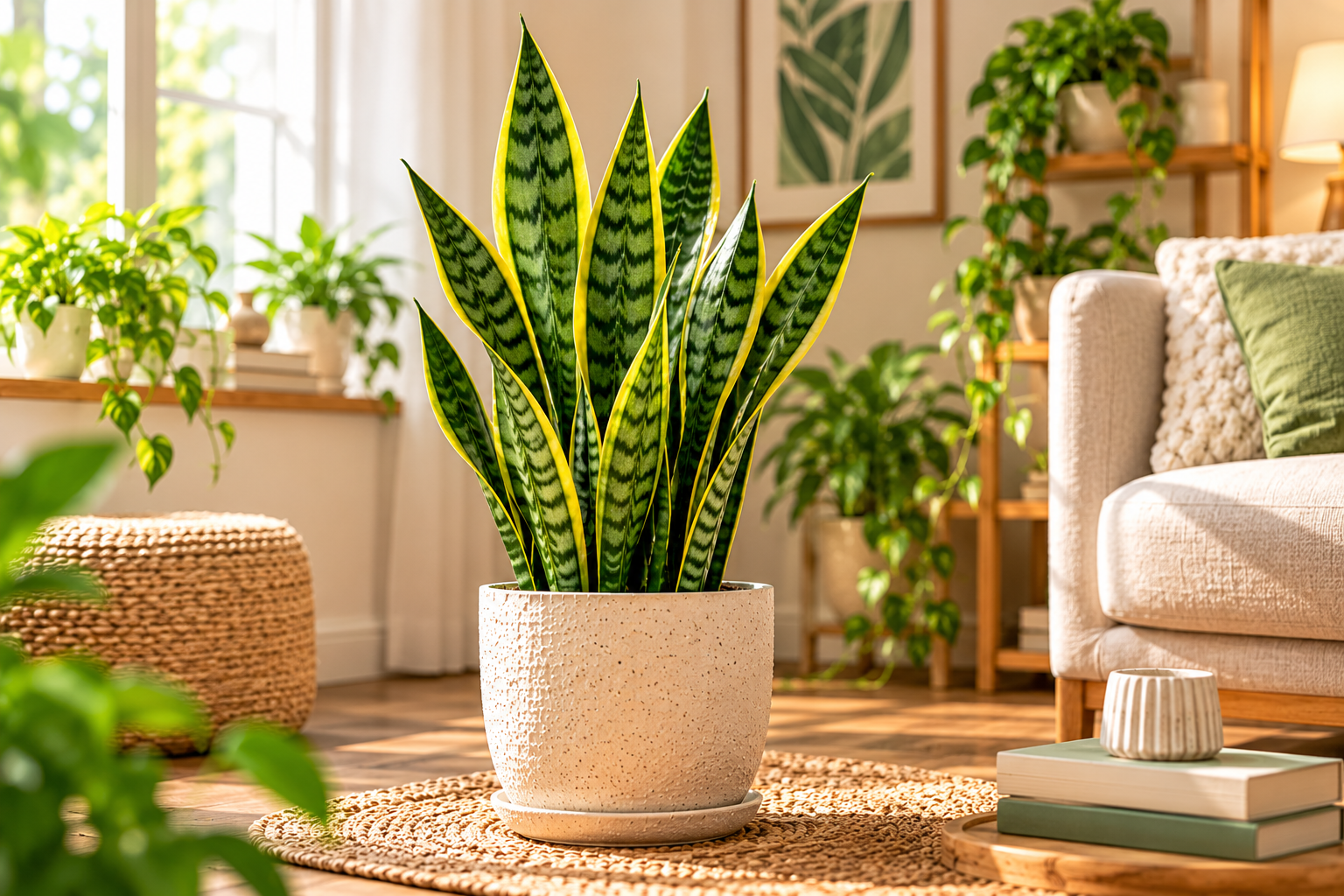
1. Snake Plant
Dracaena trifasciata
The snake plant has upright, sword-shaped leaves that suit bedrooms, living rooms and offices. It tolerates a range of indoor lighting conditions and is popular with beginners.
- Light: Low to bright indirect light.
- Water: Allow the soil to dry between waterings.
- Soil: Well-draining potting mix.
- Pot: A container with drainage holes.
Snake plants are often promoted as air purifiers, but one plant cannot meaningfully purify the air in an ordinary room.
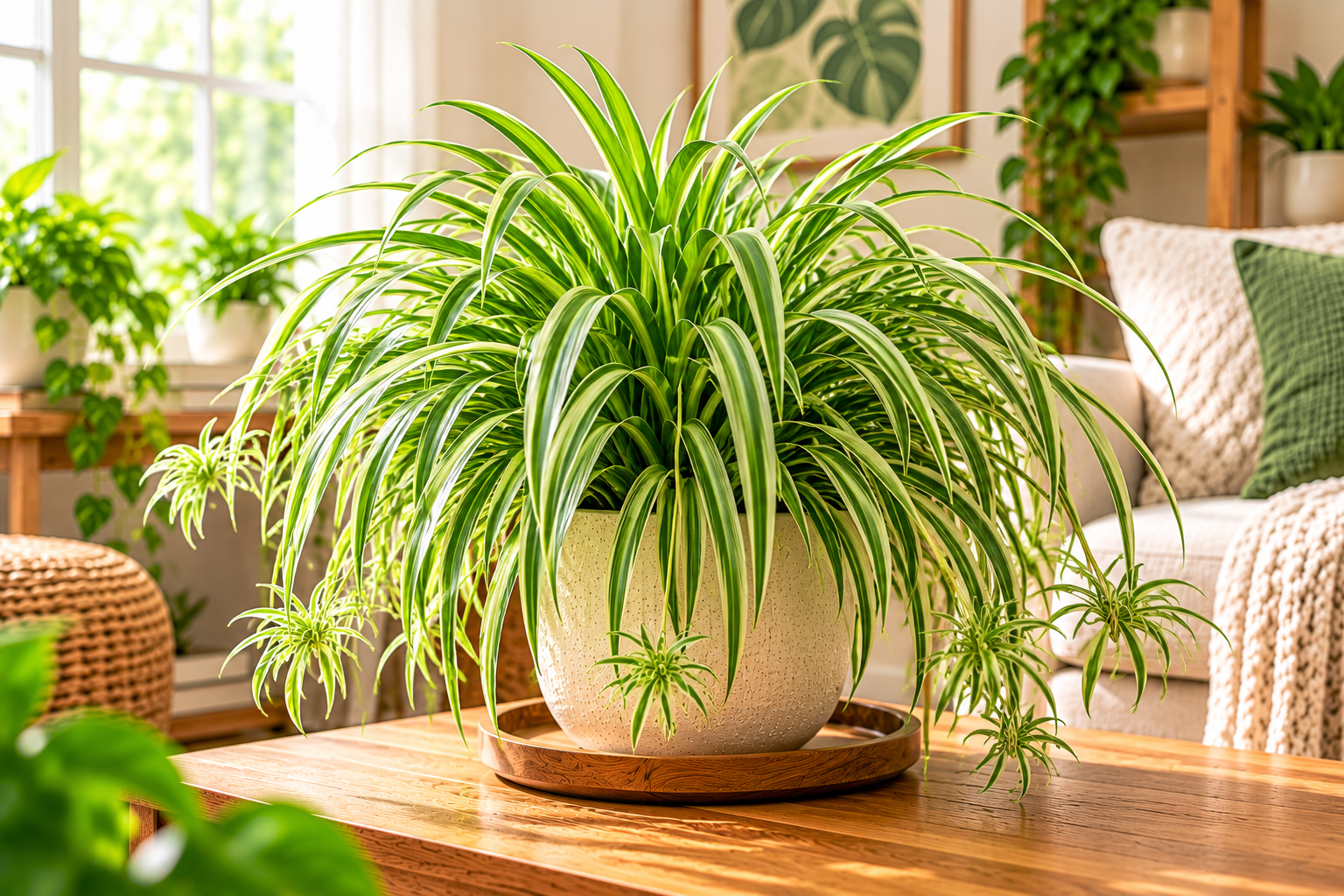
2. Spider Plant
Chlorophytum comosum
Spider plants have long, arching leaves and often produce small plantlets that can be propagated. They work well in hanging baskets and on shelves.
- Light: Bright, indirect sunlight.
- Water: Water when the top layer begins to dry.
- Soil: Loose, well-draining mix.
- Pot: Regular or hanging pot with drainage.
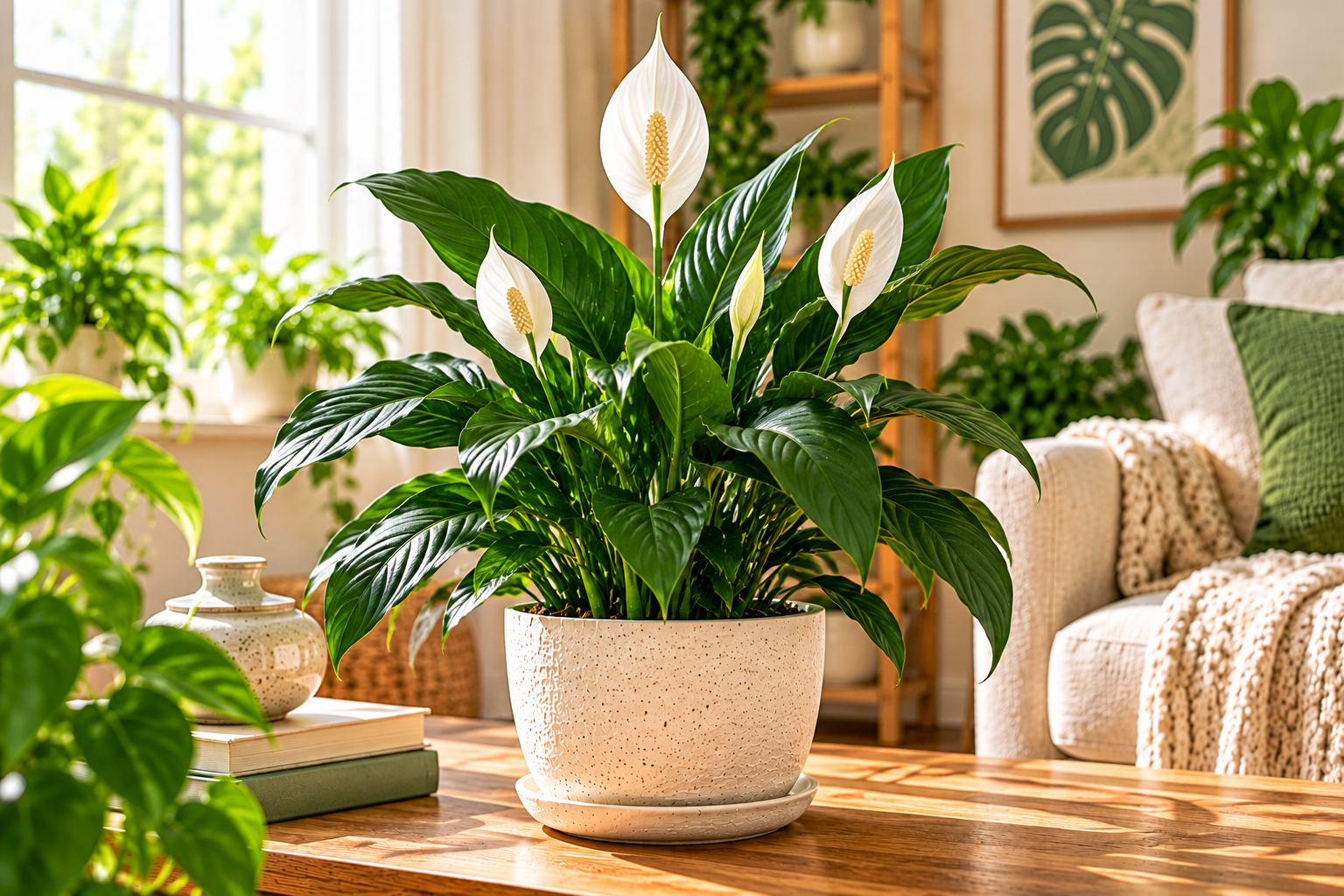
3. Peace Lily
Spathiphyllum
Peace lilies have glossy foliage and distinctive white spathes. They are attractive plants for indoor areas with indirect light.
- Light: Medium to bright indirect light.
- Water: Water when the top layer begins to dry.
- Soil: Moist but well-draining.
- Pot: Container with drainage holes.
Safety: Peace lilies can irritate the mouth if chewed. Keep them away from pets and children who may eat the leaves.
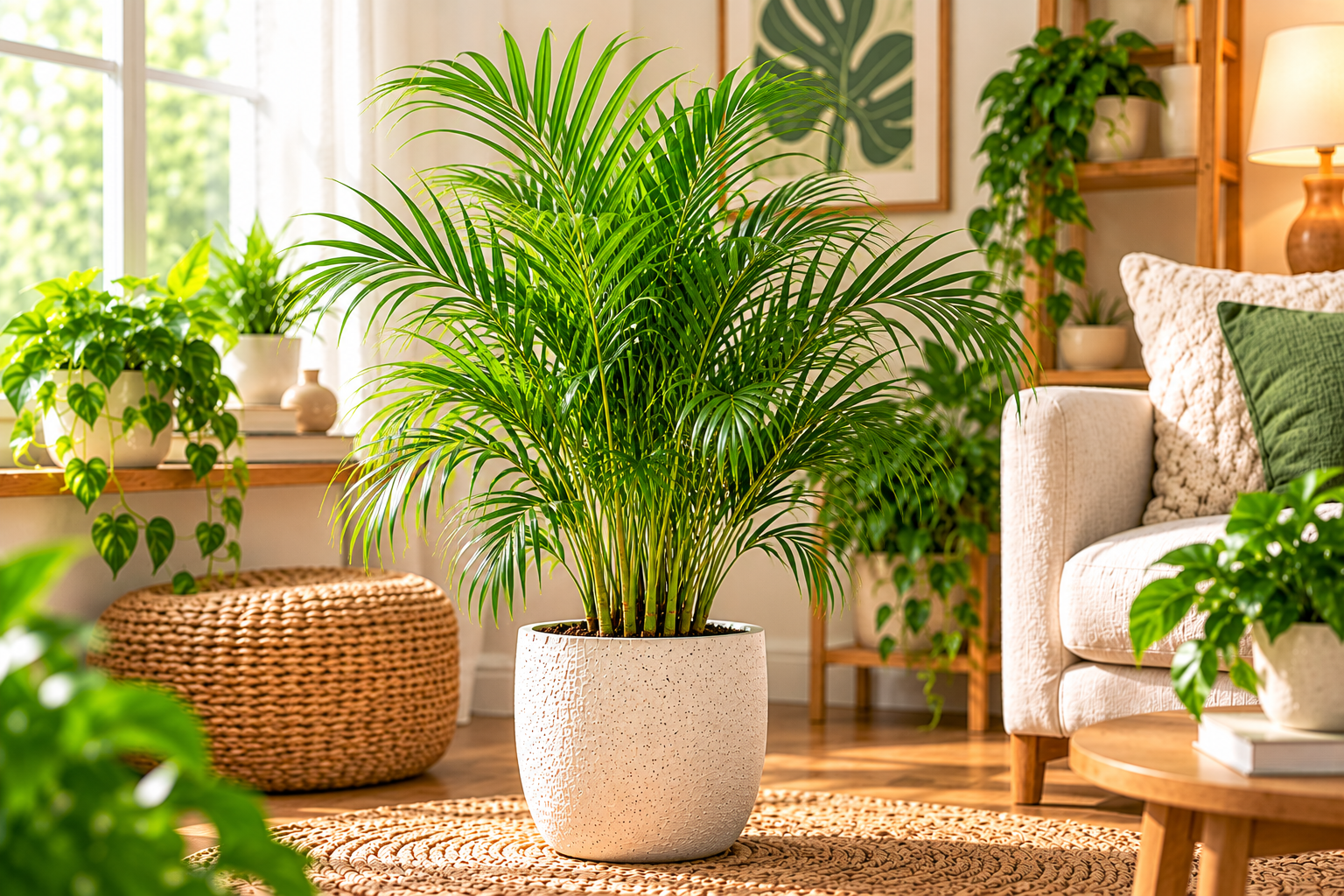
4. Areca Palm
Dypsis lutescens
The areca palm has soft, arching fronds and a tropical appearance. It suits spacious living rooms and bright indoor corners.
- Light: Bright, indirect sunlight.
- Water: Water when the top layer starts to dry.
- Soil: Rich, well-draining mix.
- Pot: Stable container with drainage.
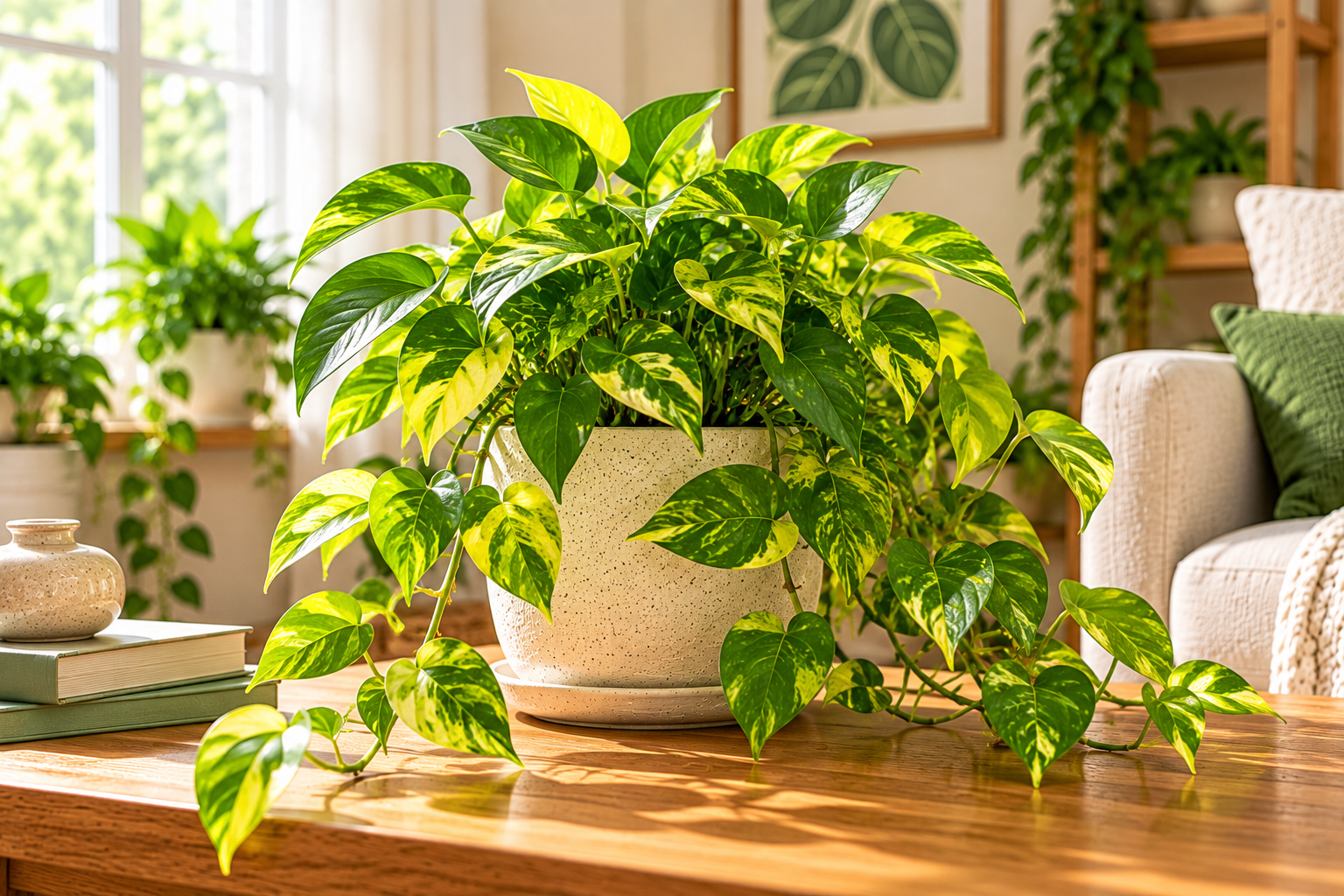
5. Golden Pothos
Epipremnum aureum
Golden pothos is a trailing houseplant with heart-shaped green and yellow leaves. It works well in hanging baskets, on shelves and on plant stands.
- Light: Low to bright indirect light.
- Water: Let the upper soil layer dry first.
- Soil: Well-draining potting mix.
- Pot: Hanging planter or regular pot with drainage.
Safety: Pothos contains calcium oxalate crystals and can be harmful if chewed by pets or children.
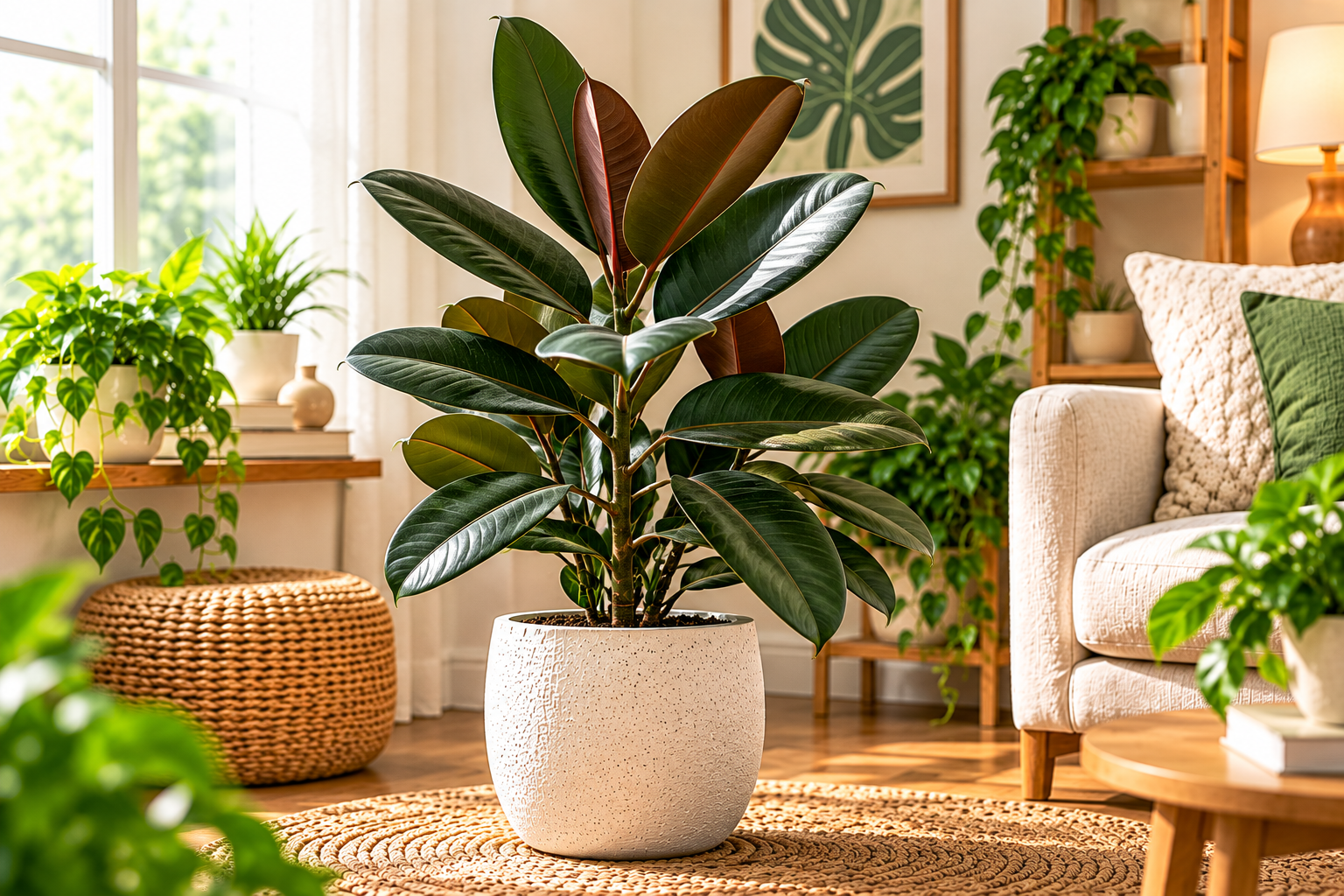
6. Rubber Plant
Ficus elastica
The rubber plant has thick, glossy leaves and an upright growth habit. It makes an attractive feature in living rooms and home offices.
- Light: Bright, indirect sunlight.
- Water: Water when the upper soil layer dries.
- Soil: Well-draining potting mix.
- Pot: Sturdy container with drainage.
Safety: Its milky sap may irritate skin, and the plant is harmful to pets if ingested.
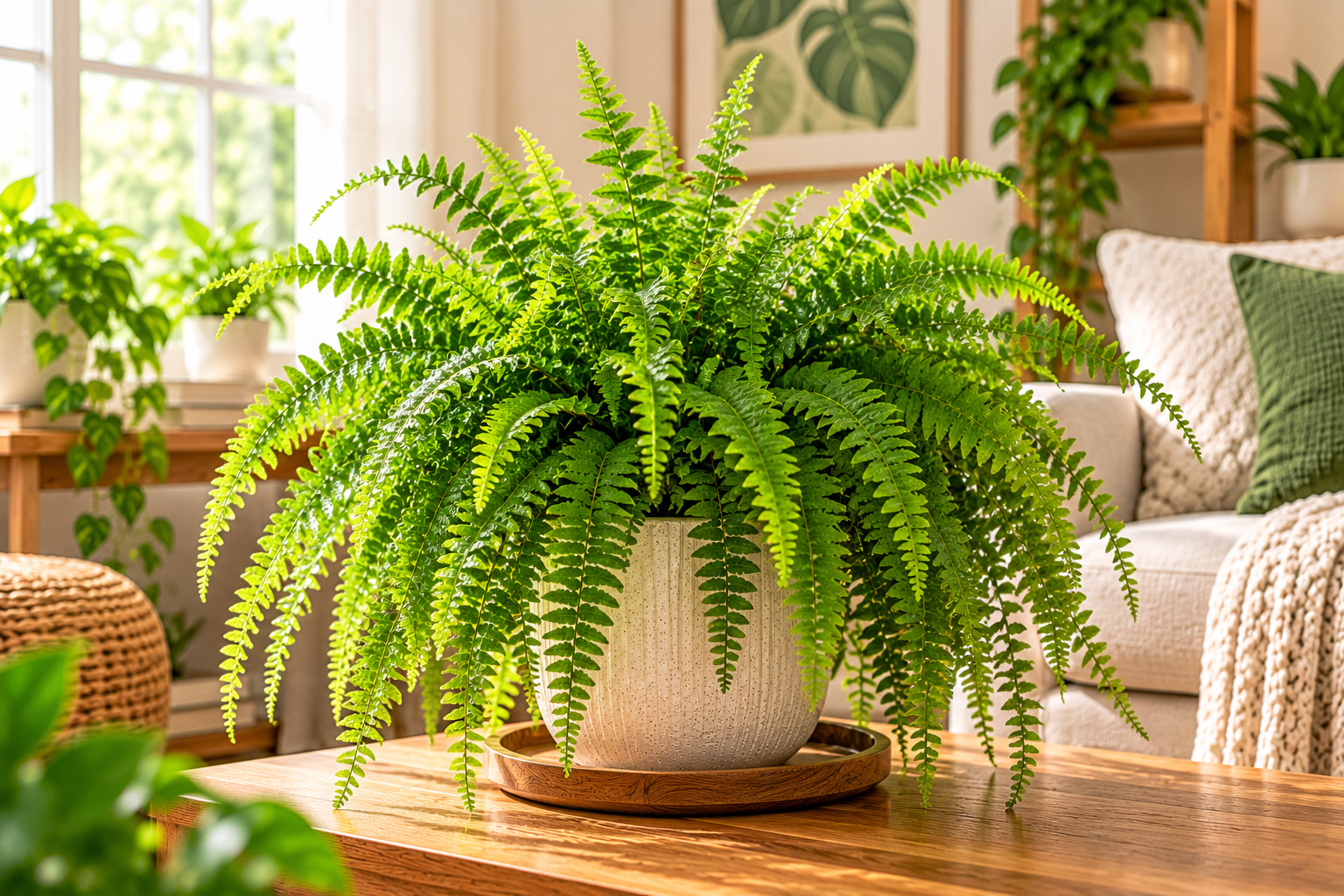
7. Boston Fern
Nephrolepis exaltata
Boston ferns have soft, feathery fronds that look attractive in hanging baskets and decorative pots. They prefer consistent moisture and suitable humidity.
- Light: Bright, indirect light.
- Water: Keep soil lightly moist.
- Soil: Moisture-retentive but well-draining.
- Pot: Container with drainage holes.
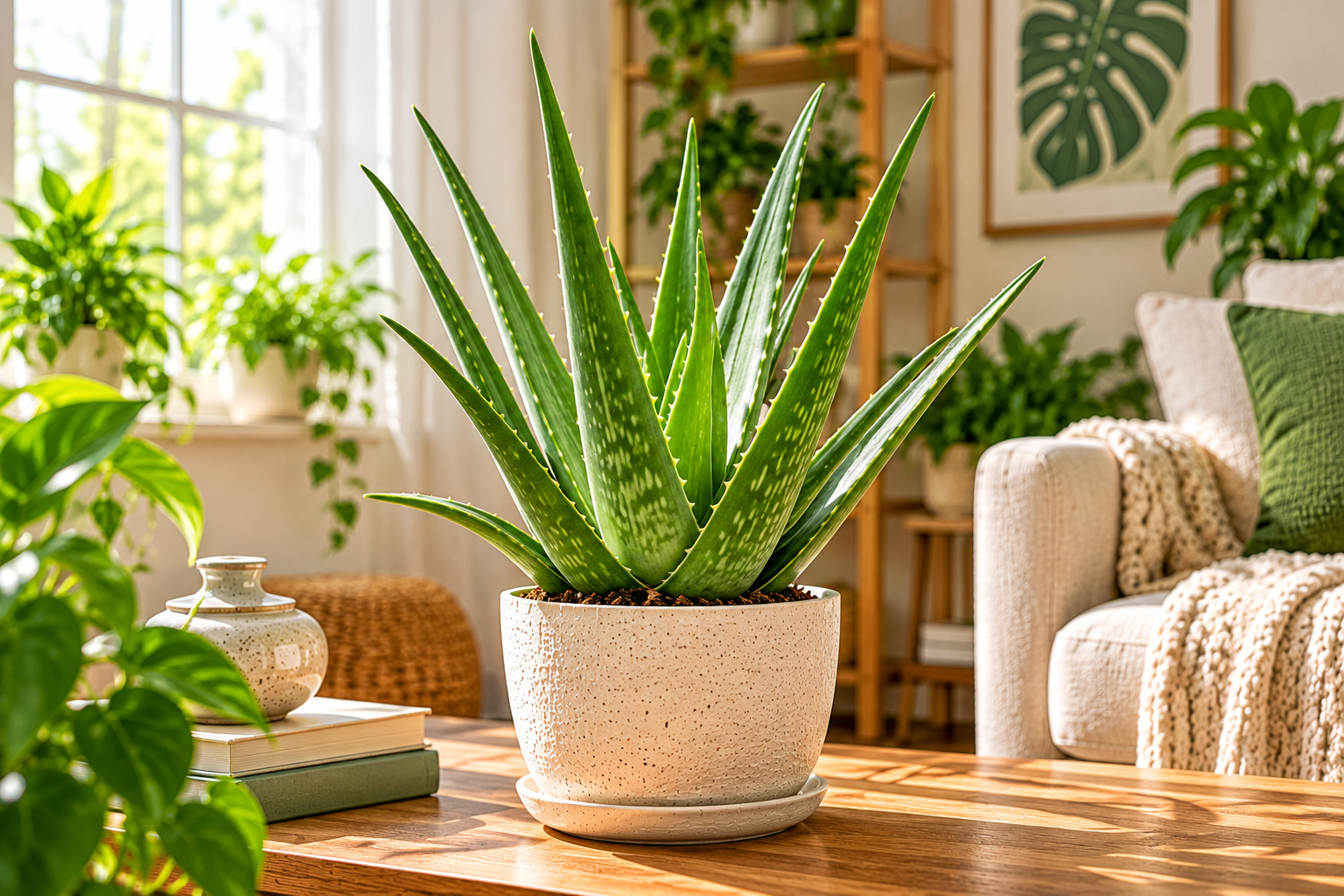
8. Aloe Vera
Aloe vera
Aloe vera is a succulent with thick leaves that store water. It is suitable for sunny windowsills and gardeners who prefer infrequent watering.
- Light: Bright light.
- Water: Let the soil dry completely between waterings.
- Soil: Cactus or succulent mix.
- Pot: Container with drainage holes.
Safety: Aloe vera can be harmful to cats and dogs if eaten.
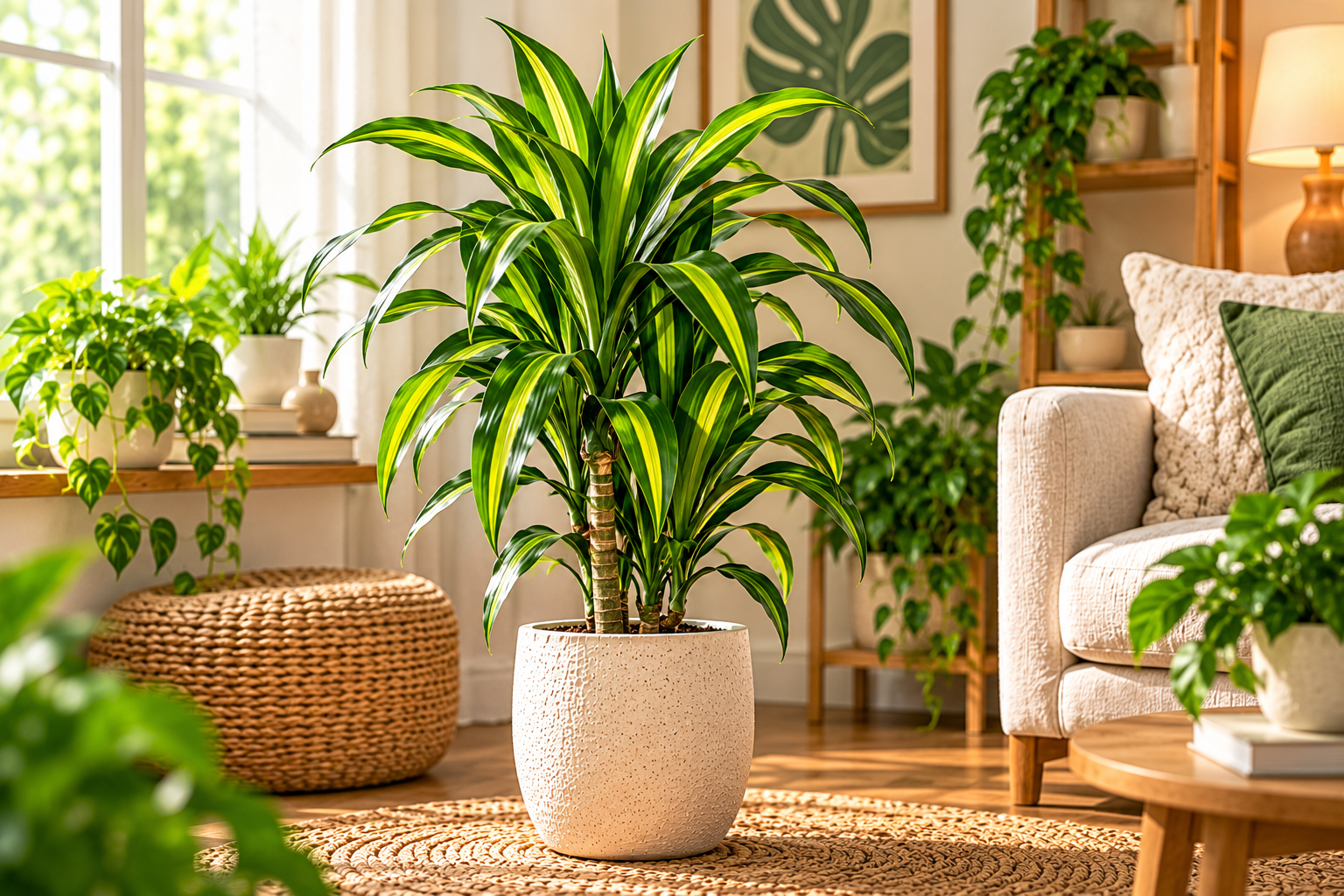
9. Dracaena
Dracaena species
Dracaena plants come in several shapes and colours, from narrow upright leaves to broader foliage. They are popular in living rooms and offices.
- Light: Bright, indirect light.
- Water: Allow the upper soil layer to dry.
- Soil: Well-draining indoor potting mix.
- Pot: Container with suitable drainage.
Safety: Dracaena is toxic to cats and dogs if ingested.
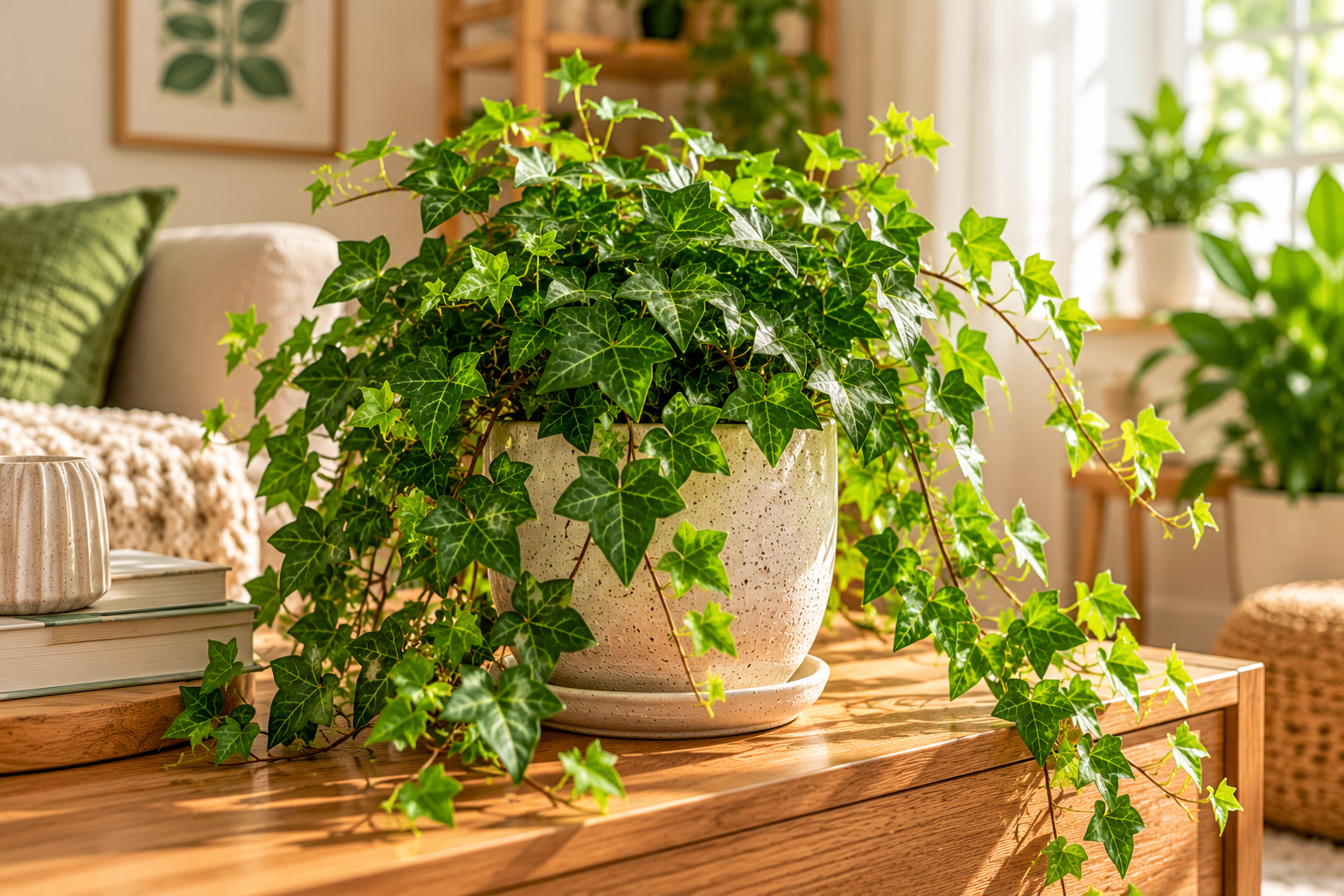
10. English Ivy
Hedera helix
English ivy is a trailing or climbing plant with lobed leaves. It can be grown in hanging baskets or trained along a support.
- Light: Bright, indirect light.
- Water: Keep soil lightly moist without waterlogging.
- Soil: Well-draining potting mix.
- Pot: Hanging basket or regular pot with drainage.
Safety: English ivy can be harmful if eaten by pets or children.
Air Purifying Plants for Home: Comparison Table
Use this comparison to choose indoor plants according to their light requirements, watering needs and suitable locations.
| Plant | Light | Watering | Suitable location |
|---|---|---|---|
| Snake plant | Low to bright indirect | Allow soil to dry | Bedroom or living room |
| Spider plant | Bright indirect | Moderate | Shelf or hanging basket |
| Peace lily | Medium to bright indirect | Keep lightly moist | Indoor corner |
| Areca palm | Bright indirect | Moderate | Spacious living room |
| Golden pothos | Low to bright indirect | Allow top layer to dry | Shelf or hanging planter |
| Rubber plant | Bright indirect | Allow top layer to dry | Living room or office |
| Boston fern | Bright indirect | Keep lightly moist | Humid indoor area |
| Aloe vera | Bright light | Allow soil to dry fully | Sunny windowsill |
| Dracaena | Bright indirect | Moderate | Living room or office |
| English ivy | Bright indirect | Moderate | Hanging planter |
Watering needs vary with temperature, humidity, soil, pot size and season. Check the soil before watering instead of following a fixed schedule.
Best Indoor Plants for Small Spaces
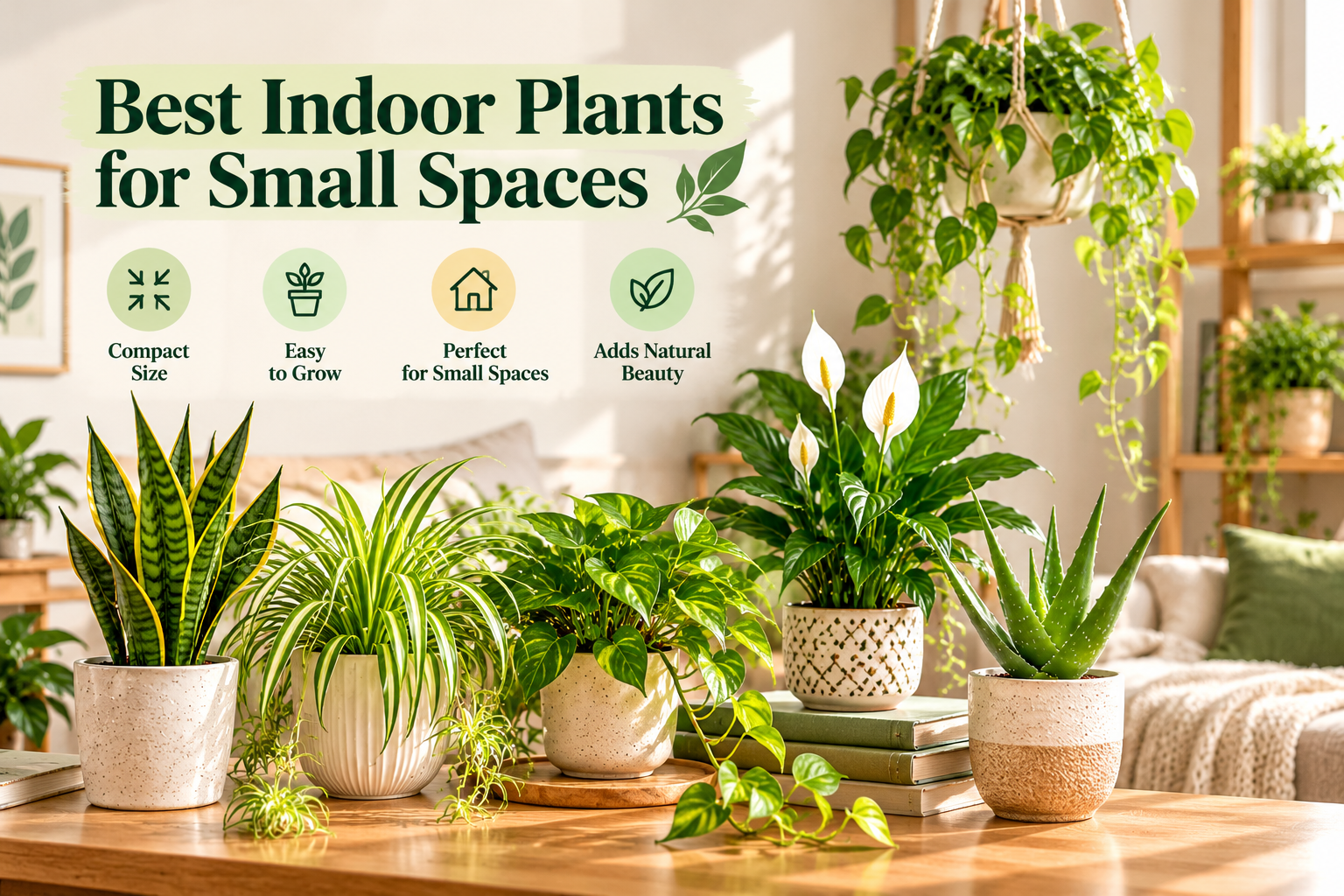
You do not need a large garden to enjoy indoor plants. Compact varieties can fit on desks, shelves, windowsills and small tables.
- Small snake plant: Its upright growth takes up relatively little floor space.
- Spider plant: Works well on shelves or in hanging baskets.
- Golden pothos: Can trail from a shelf or planter.
- Aloe vera: A compact option for a sunny windowsill.
- Small peace lily: Suitable for a shaded spot with indirect light.
Choose a plant according to the light available, not just its size. Aloe vera needs much brighter conditions than a peace lily.
Best Indoor Plants for the Living Room
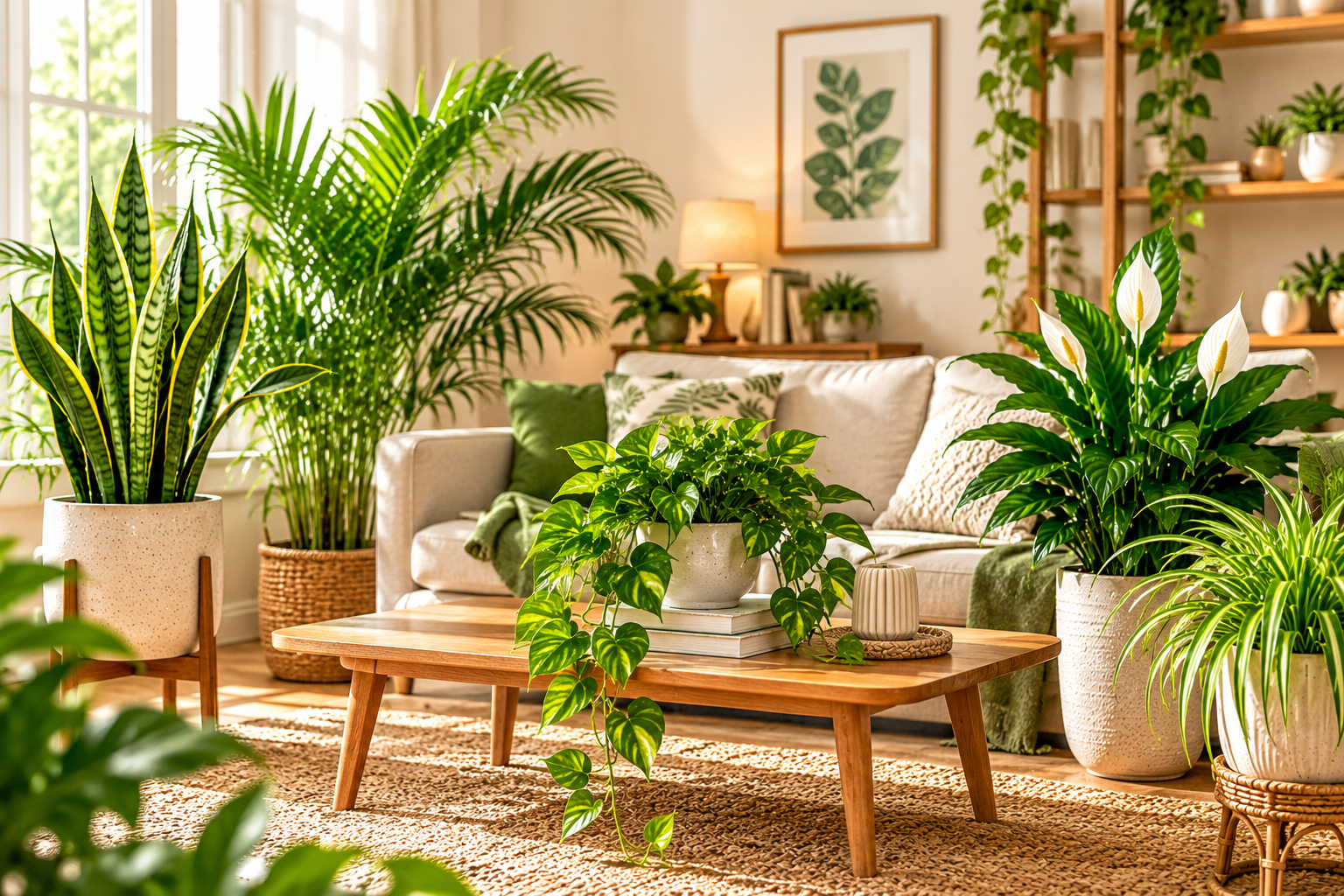
The living room often offers enough space for decorative plants. Choose varieties that suit the natural light and the amount of room available.
- Areca palm: Adds a tropical look to a spacious room with bright indirect light.
- Rubber plant: Its broad, glossy leaves create a striking focal point.
- Peace lily: Works well in a shaded area with indirect light.
- Golden pothos: Suitable for shelves, hanging baskets and plant stands.
- Dracaena: Provides upright greenery for an empty corner.
Leave room for plants to grow, and avoid placing them beside strong air-conditioning vents or heaters.
Best Low-Maintenance Indoor Plants
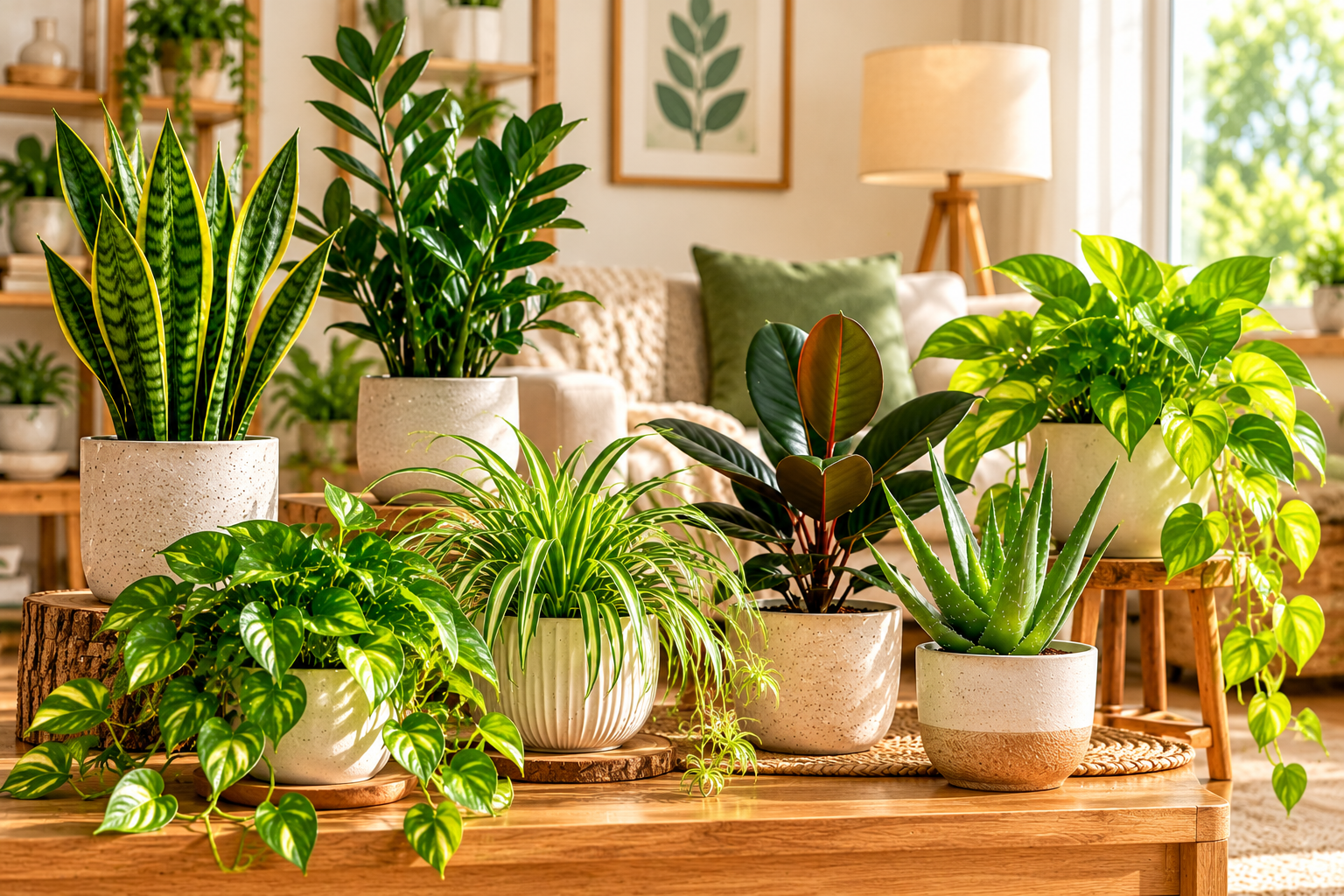
If you have a busy schedule, start with plants that tolerate occasional changes in watering or lighting.
- Snake plant: Tolerates dry soil between waterings.
- Golden pothos: Adaptable and easy to propagate.
- Spider plant: Easy to grow and produces plantlets.
- Aloe vera: Needs infrequent watering but plenty of light.
- Rubber plant: Straightforward to maintain with suitable light.
Low-maintenance does not mean no-maintenance. Every plant needs appropriate light, watering and occasional checks for pests.
How to Choose Pots for Indoor Plants
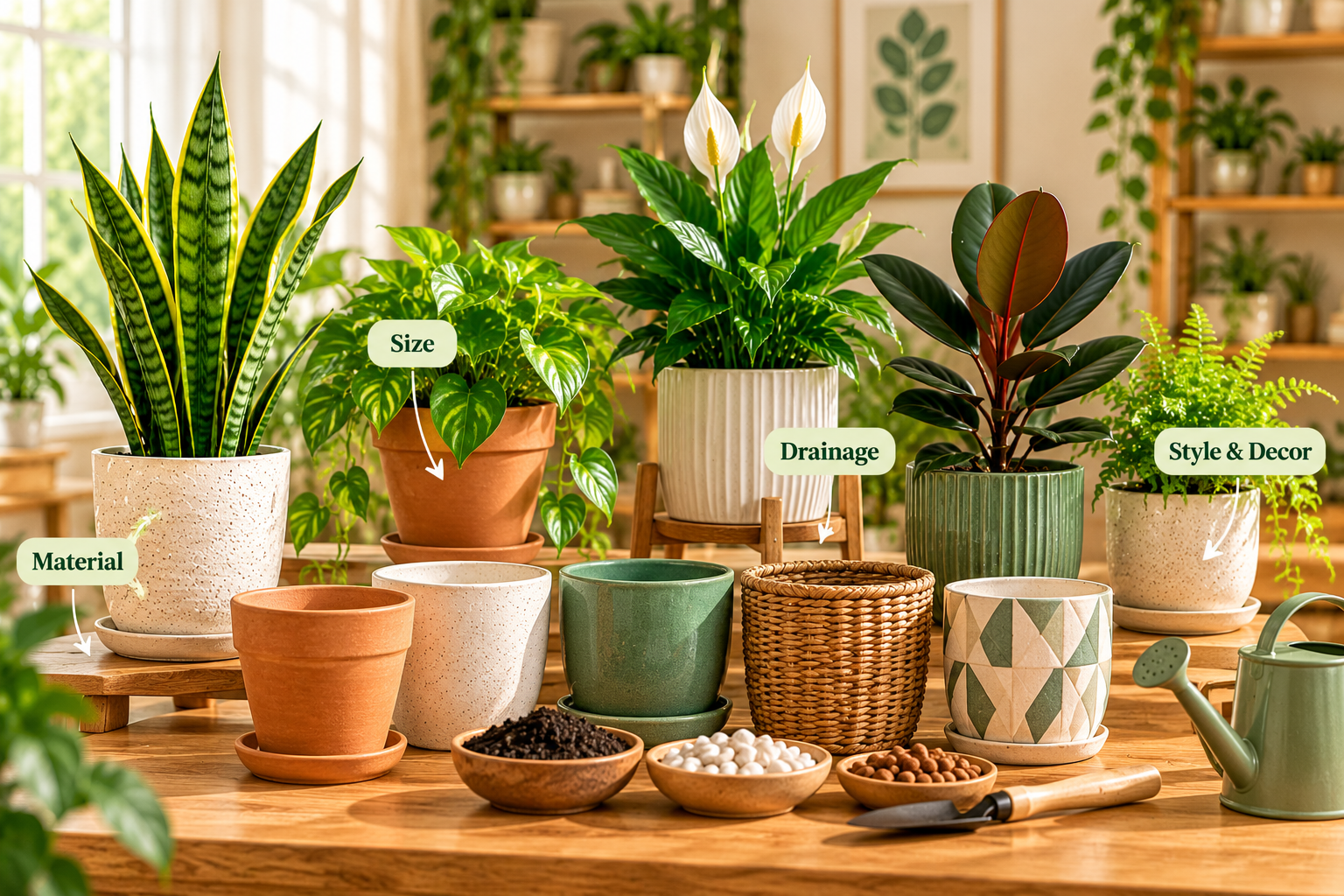
Choosing the right pot helps support healthy root growth. Even the best indoor plants can struggle when their containers are too small, too large or poorly drained.
Choose the Right Pot Size
The pot should provide enough room for the roots without holding excessive amounts of wet soil. Small indoor plants generally need smaller containers, while larger plants such as areca palms and rubber plants may need bigger pots as they grow.
Look for Drainage Holes
Pots for indoor plants should generally have drainage holes to let excess water escape. If you prefer decorative pots without holes, use them as outer covers for a separate nursery pot with drainage. Empty any water collected in the outer container.
Select the Right Material
- Terracotta pots: Porous and useful for plants that prefer soil to dry between waterings.
- Plastic pots: Lightweight and generally retain moisture longer.
- Ceramic pots: Decorative and available in many styles.
- Hanging planters: Useful for trailing plants such as pothos and spider plants.
When to Use Big Pots for Indoor Plants
Big pots for indoor plants are useful when growing larger specimens or when a plant has outgrown its current container. When repotting, choose a pot only moderately larger than the existing root ball. Excess soil in a much larger pot may stay wet for too long.
Choose Planters That Suit Your Space
Planters for indoor plants should be stable, easy to clean and suitable for their intended location. Consider the plant's mature size and the weight of the filled container before placing it on a shelf or table.
Which Air Purifying Plants Are Best for the Bedroom?
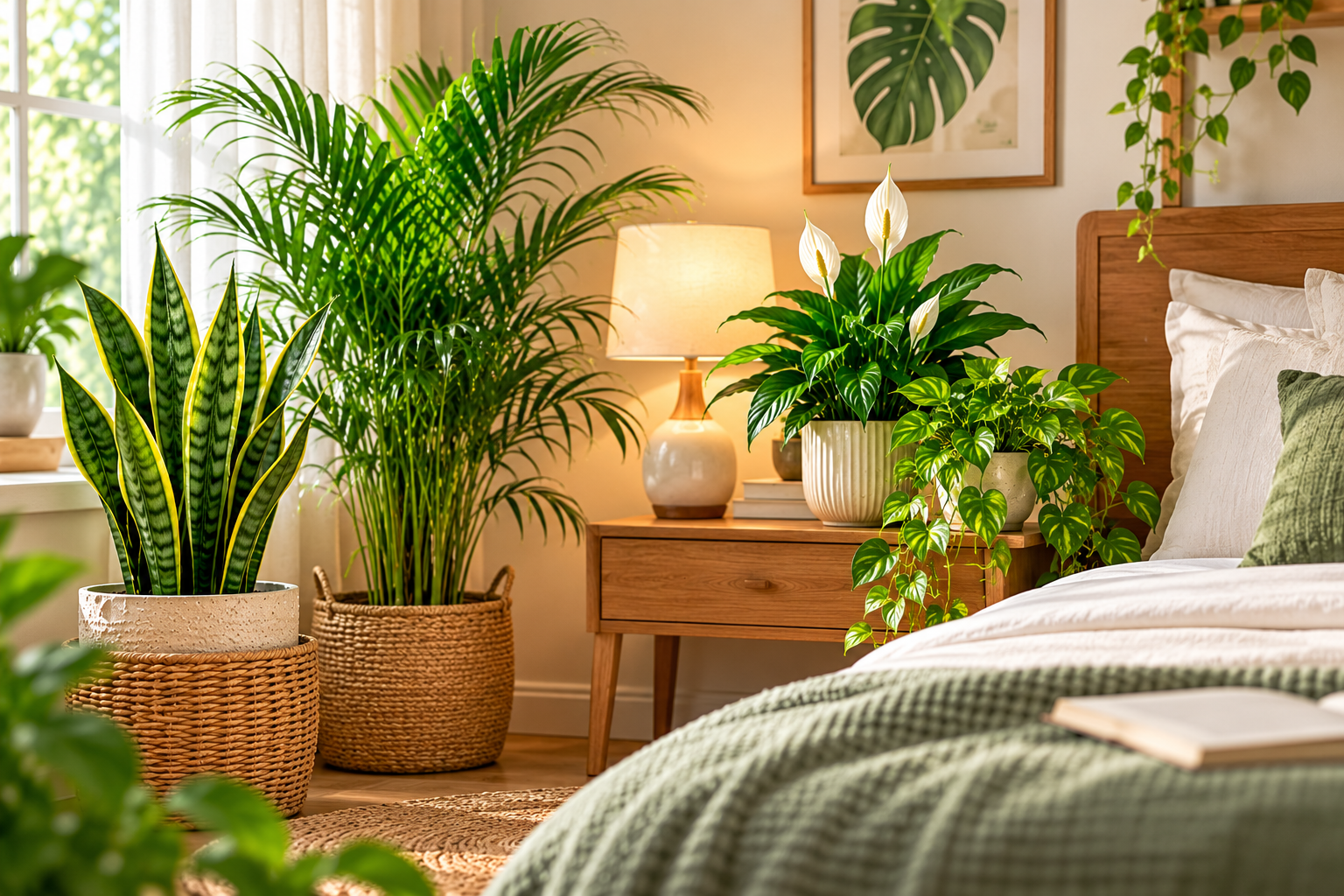
Snake plants, spider plants, pothos and peace lilies are popular bedroom plants because they come in different sizes and can suit a range of indoor lighting conditions.
Choose a snake plant if you want a relatively low-maintenance option. Choose a spider plant if your bedroom has bright indirect light, or pothos if you want trailing foliage on a shelf.
However, no ordinary bedroom plant has been shown to purify room air sufficiently to replace proper ventilation or air filtration. Select plants for their appearance and growing needs rather than relying on them to increase oxygen levels or remove pollutants.
Which Indoor Plants Produce the Most Oxygen?
Plants release oxygen during photosynthesis, which requires light. They also use oxygen during cellular respiration.
The amount of oxygen a plant produces depends on factors such as its size, growth rate and lighting conditions. There is no reliable universal ranking that identifies one common houseplant as the best oxygen producer for every home.
Snake plants, aloe vera, spider plants and other houseplants are often marketed as oxygen plants for home. However, it is misleading to suggest that one pot will significantly increase oxygen levels in an ordinary bedroom.
If you want to improve indoor air quality, focus on ventilation, controlling pollution sources and using suitable air filtration where needed.
Are NASA-Recommended Houseplants Effective Air Purifiers?
NASA's research investigated whether plants could remove certain airborne chemicals in enclosed environments. This research helped popularise several plants as natural air purifiers.
However, laboratory conditions differ from ordinary homes. Indoor air is continually exchanged with outdoor air, and pollutants enter rooms at different rates.
A review published in the Journal of Exposure Science & Environmental Epidemiology found that ordinary potted plants remove pollutants too slowly to compete with typical building air exchange.
You can still grow houseplants such as snake plants, spider plants and peace lilies for their decorative value, but do not treat them as proven substitutes for air-cleaning equipment.
Further reading: Potted plants do not improve indoor air quality, a peer-reviewed research review.
How to Improve Indoor Air Quality at Home
Houseplants can make your home greener, but other measures are more effective for improving indoor air quality.
Improve Ventilation
Use suitable ventilation when outdoor air quality and weather conditions allow. If outdoor pollution levels are high, consider other ways to manage indoor air exchange.
Reduce Pollution Sources
Avoid indoor smoking and unnecessary burning of materials. Follow safety instructions when using cleaning products, paints and other products that release fumes.
Use a Suitable Air Purifier
For airborne particles, consider a properly sized air purifier with an appropriate HEPA filter. Different technologies are needed for different gaseous pollutants.
Keep Plants Healthy
Avoid constantly wet soil, remove dead leaves and maintain suitable airflow around pots. Overwatered plants can encourage mould and fungus gnats.
Clean Indoor Surfaces
Dust shelves, floors and plant leaves regularly. Clean foliage helps plants look healthy and keeps indoor spaces tidy.
Common Mistakes to Avoid When Growing Indoor Plants
- Overwatering: Can cause root rot and damage the plant.
- Insufficient light: Can lead to slow or weak growth.
- Poor drainage: Can leave roots sitting in excess water.
- Choosing the wrong pot: Oversized pots can stay wet for too long.
- Ignoring plant toxicity: Some common houseplants are harmful if eaten by pets or children.
- Expecting plants to replace air purifiers: Houseplants should not be relied upon for meaningful household air purification.
Before buying a new plant, check its light requirements, mature size, watering needs and safety.
Frequently Asked Questions
1. Which indoor plant is best for air purification?
Snake plants, spider plants, peace lilies and pothos are often described as air purifying plants. However, research has not shown that ordinary numbers of these plants meaningfully clean indoor air in typical homes.
2. Which air purifying plants are best for bedrooms?
Snake plants, spider plants and pothos are popular bedroom choices. Select a plant that suits the available light, room size and care routine.
3. Which are the best low-maintenance indoor plants?
Snake plants, golden pothos, spider plants and aloe vera are popular choices. Their care needs differ, particularly in terms of light and watering.
4. Do snake plants purify air at night?
Snake plants use crassulacean acid metabolism (CAM), a type of photosynthesis that allows them to take in carbon dioxide at night. However, one plant will not meaningfully purify the air or increase oxygen levels in a typical bedroom.
5. Which indoor plants are suitable for offices?
Snake plants, pothos and spider plants can work well in offices, depending on the available light. Avoid placing plants in dark locations where they cannot grow properly.
6. Which pots are best for indoor plants?
Choose pots with suitable drainage holes and enough room for root growth. Terracotta, plastic and ceramic pots can all work, depending on the plant and your watering routine.
7. Where can I find indoor plants near me?
Search for local nurseries or indoor plant sellers. Compare plant health, available varieties, prices and care advice before purchasing.
8. Are air purifying plants safe for pets?
Some popular houseplants, including snake plants, pothos, peace lilies, dracaena and aloe vera, can be harmful if eaten by pets. Check the safety of each plant before bringing it into a pet-friendly home.
Final Thoughts
Air purifying plants are a popular way to bring natural colour and texture into indoor spaces. Snake plants, spider plants, peace lilies, areca palms and pothos offer different shapes and growing requirements, making it easier to find an option for your home.
However, plants should not be treated as a replacement for ventilation, pollution control or appropriate air filtration. Choose houseplants based on their light requirements, available space, watering needs and safety.
Start with one or two easy-care plants and gradually build an indoor garden that suits your home.
For more practical advice, visit MyGardenerGuide for indoor plant care, gardening tips and guides to growing healthy plants at home.
