
10 Sacred Plants You Can Grow in Your Home Courtyard: Names, Spiritual Meaning, Varieties & Benefits
September 27, 2026
10 Best Winter Flowers in India: Names, Growing Season & Care Guide
September 30, 2026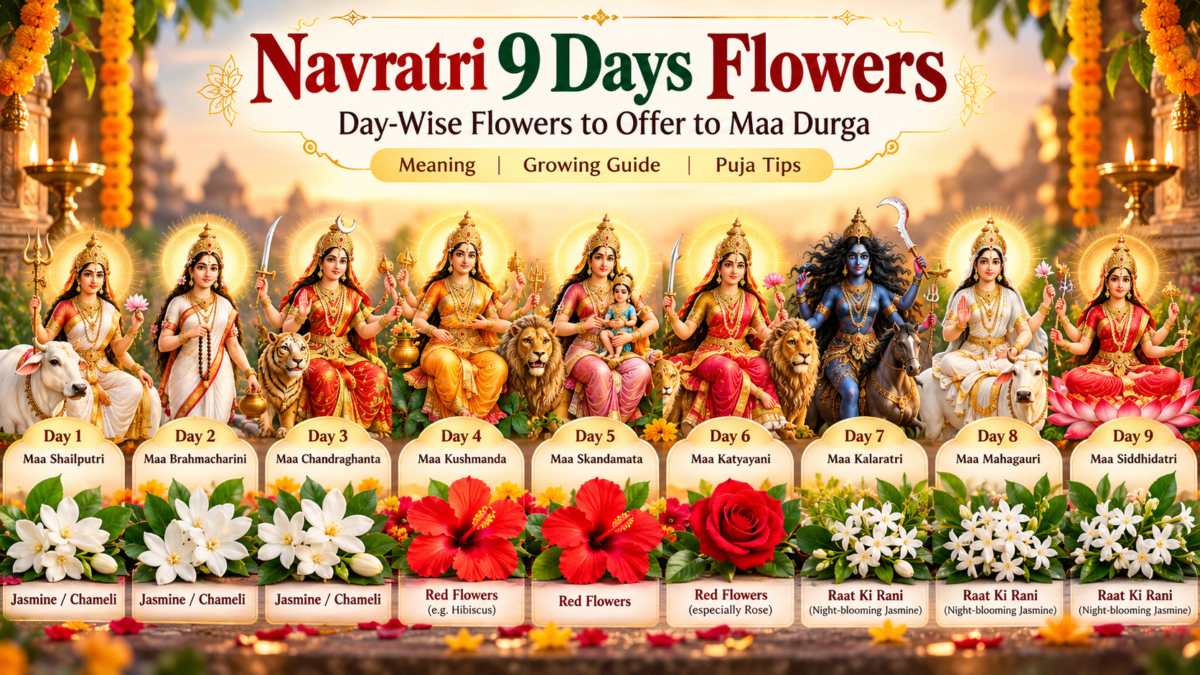
Navratri is dedicated to the nine forms of Goddess Durga, known collectively as Navdurga. Flowers are commonly used during puja, altar decoration, garlands and other devotional practices.
But one question creates a lot of confusion:
Which flower should you offer to Maa Durga on each day of Navratri?
If you search for Navratri 9 days flowers, you will find many different charts online. Some assign nine completely different flowers to the nine days, while others give different recommendations.
To avoid presenting one internet list as a universal religious rule, this guide follows one consistent day-wise reference for the Navdurga flower mapping.
Regional traditions, temple customs and family practices can still differ, so if your family follows a specific custom, that tradition should take priority.
Navratri 9 Days Flowers: Day-Wise Guide
| Navratri Day | Form of Maa Durga | Flower |
|---|---|---|
| Day 1 | Maa Shailputri | Jasmine / Chameli |
| Day 2 | Maa Brahmacharini | Jasmine / Chameli |
| Day 3 | Maa Chandraghanta | Jasmine / Chameli |
| Day 4 | Maa Kushmanda | Red-coloured flowers |
| Day 5 | Maa Skandamata | Red-coloured flowers |
| Day 6 | Maa Katyayani | Red flowers, especially Rose |
| Day 7 | Maa Kalaratri | Night-blooming Jasmine / Raat Ki Rani |
| Day 8 | Maa Mahagauri | Night-blooming Jasmine / Raat Ki Rani |
| Day 9 | Maa Siddhidatri | Night-blooming Jasmine / Raat Ki Rani |
Navratri Days 1–3: Jasmine / Chameli (चमेली)
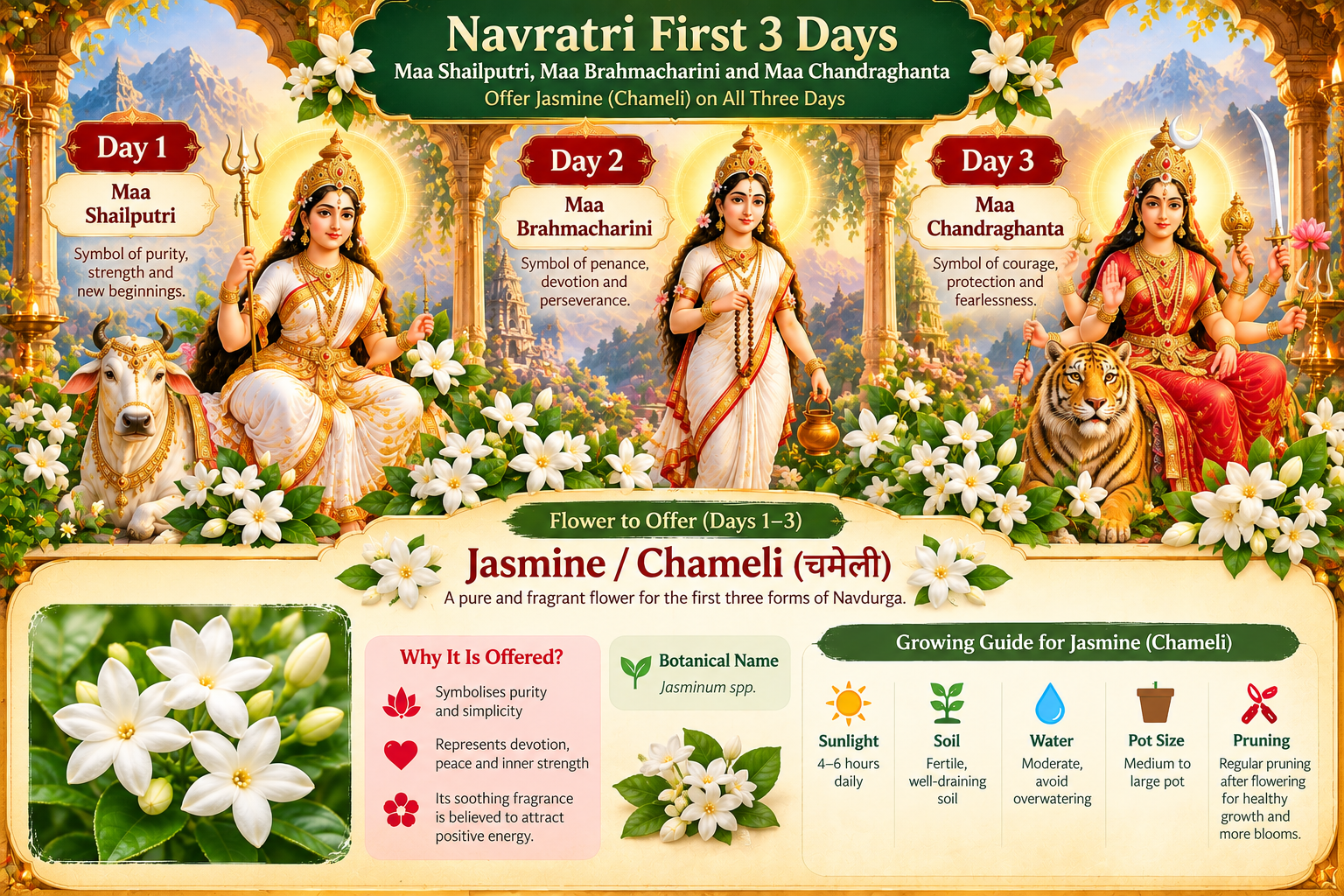
Day 1 – Maa Shailputri: Jasmine / Chameli
Maa Shailputri is worshipped on the first day of Navratri. Jasmine or Chameli is listed as her favourite flower in the reference followed in this guide.
Why Is Jasmine Offered?
In devotional use, white fragrant flowers are often associated with purity, simplicity and devotion.
Day 2 – Maa Brahmacharini: Jasmine / Chameli
Maa Brahmacharini is worshipped on the second day of Navratri, and Chameli is again listed as the associated flower.
This is important because many online charts incorrectly force a completely different flower onto every Navratri day.
You do not necessarily need nine different flower species simply because Navratri lasts nine days.
Day 3 – Maa Chandraghanta: Jasmine / Chameli
Maa Chandraghanta is worshipped on Day 3. Jasmine or Chameli is also listed for this day.
How to Grow Jasmine at Home for Puja
Botanical group: Jasminum spp.
Sunlight: Around 4–6 hours
Soil: Fertile and well-draining
Watering: Moderate; avoid continuously wet soil
Pot: Medium to large pot
Propagation: Cuttings or layering
A well-established Jasmine plant may produce fragrant flowers repeatedly during its flowering season.
Gardening Tip
If you already grow Jasmine at home, the same plant may provide flowers for several Navratri days depending on its blooming cycle.
Do not overharvest buds or damage new shoots simply to obtain flowers.
Why Is My Jasmine Plant Not Flowering?
If the plant has lots of leaves but very few flowers, possible reasons include insufficient sunlight, excessive nitrogen, poor pruning or unsuitable watering.
Navratri Days 4–6: Red Flowers and Rose
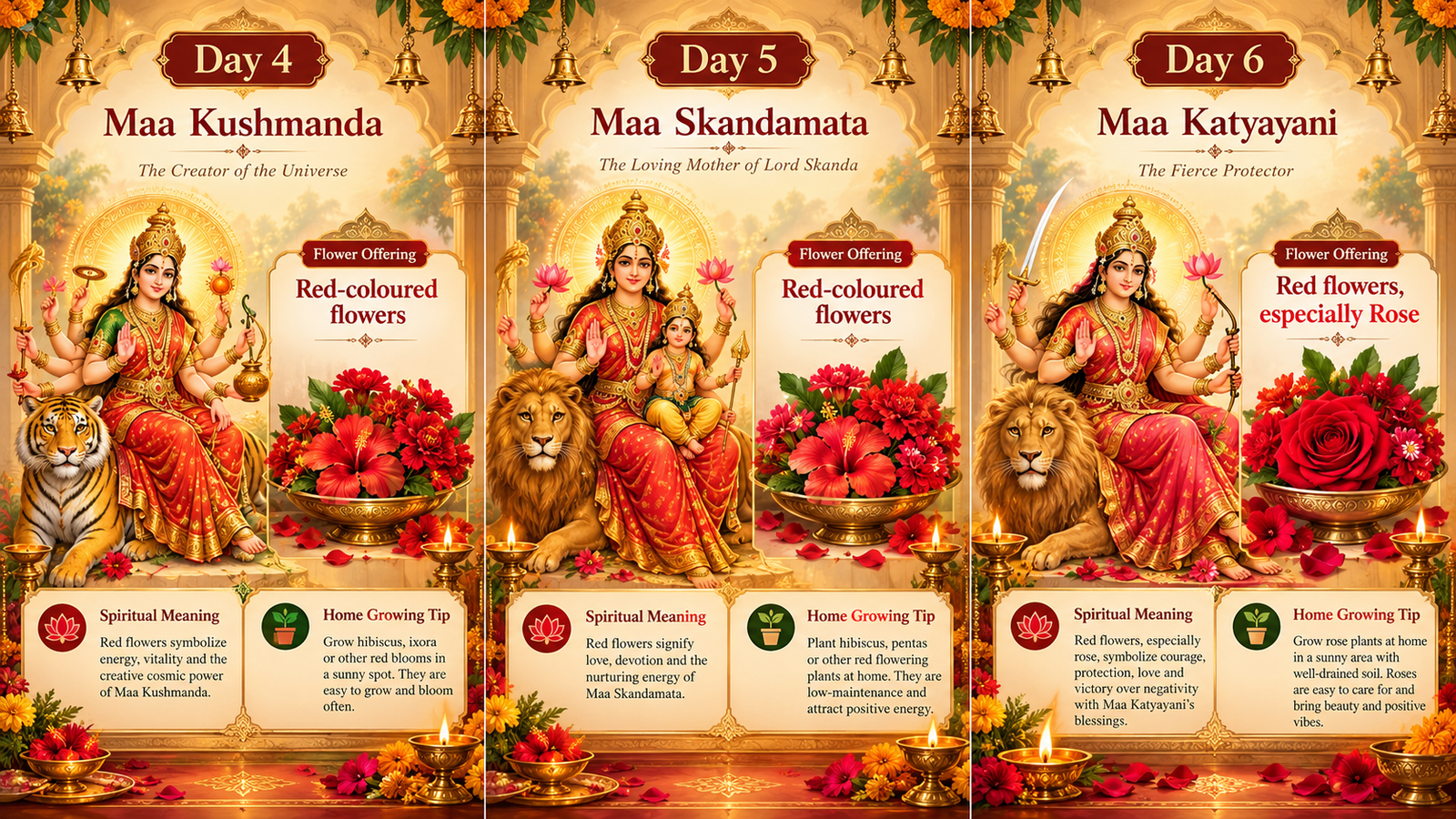
Day 4 – Maa Kushmanda: Red-Coloured Flowers
For Maa Kushmanda, the reference specifies red-coloured flowers rather than one particular flower species.
Depending on regional practice and availability, a suitable fresh red flower may be selected.
Practical Red Flowers You Can Grow at Home
- Red Hibiscus / Gudhal
- Red Rose / Gulab
- Other suitable fresh red garden flowers followed in your tradition
Day 5 – Maa Skandamata: Red-Coloured Flowers
Maa Skandamata is worshipped on Day 5. Red-coloured flowers are listed as the preferred offering in the reference followed in this guide.
The flower is not limited to one particular species.
Which Red Flower Is Easiest to Grow?
For many Indian homes, Hibiscus is practical because it is perennial and can flower repeatedly.
Red Rose can also be grown, although roses generally require more pruning, feeding and pest monitoring.
Day 6 – Maa Katyayani: Red Flowers, Especially Rose
Maa Katyayani is worshipped on the sixth day. Red-coloured flowers, especially Rose, are listed for this form in the reference followed here.
How to Grow Rose for Puja Flowers
Sunlight: 5–6+ hours
Soil: Fertile, airy and well-draining
Water: Deep watering when needed
Pot: Medium-large to large pot
Care: Pruning, deadheading and pest monitoring
Avoid keeping Rose roots permanently wet.
If you want to use home-grown flowers for puja, avoid unnecessary pesticide spraying close to flower harvesting.
Navratri Days 7–9: Night-Blooming Jasmine / Raat Ki Rani
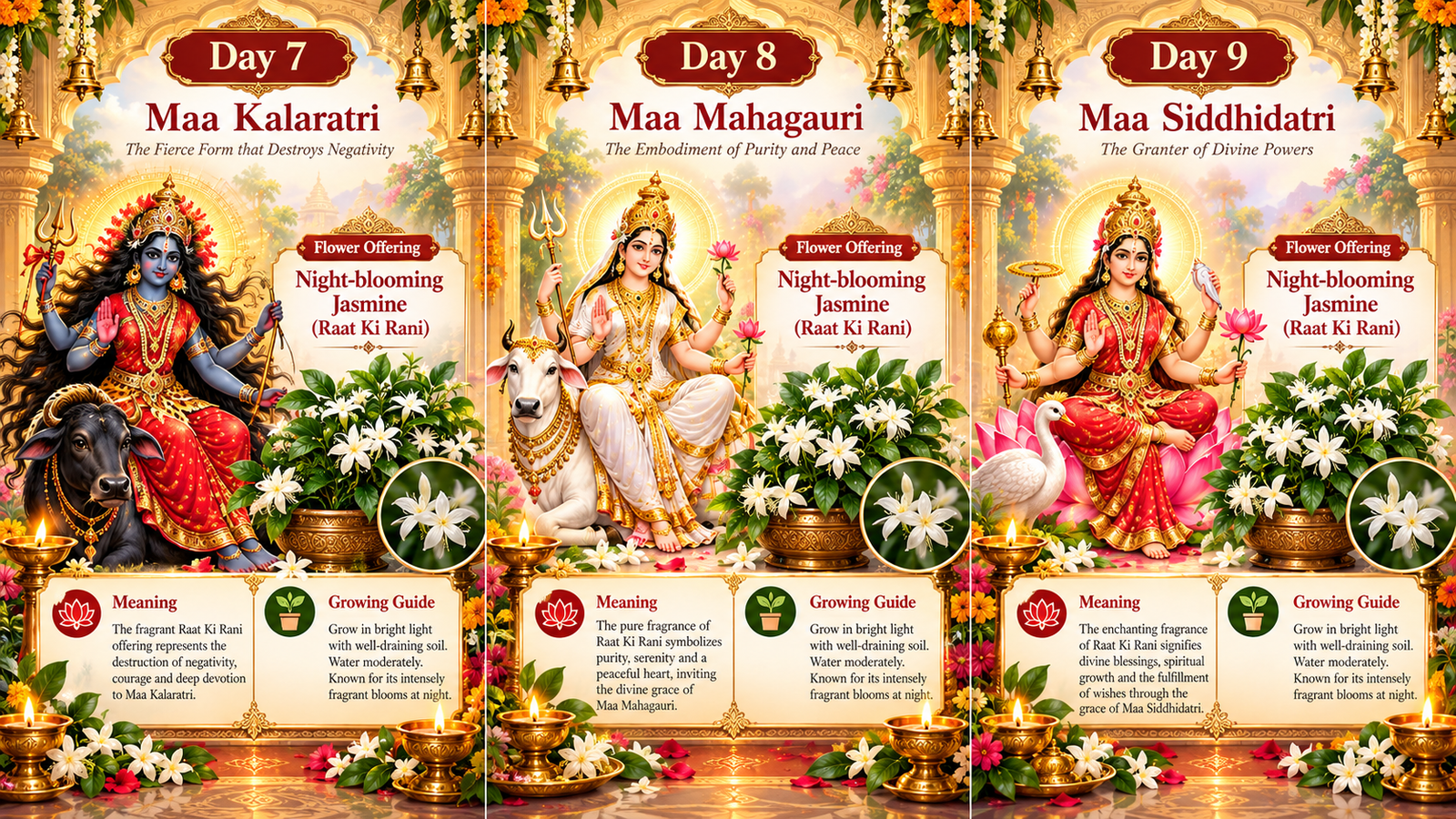
Day 7 – Maa Kalaratri: Night-Blooming Jasmine / Raat Ki Rani
For Maa Kalaratri, Night-blooming Jasmine or Raat Ki Rani is listed in the reference followed in this article.
Day 8 – Maa Mahagauri: Night-Blooming Jasmine / Raat Ki Rani
Maa Mahagauri is worshipped on Day 8, and Night-blooming Jasmine is again listed as the associated flower.
Day 9 – Maa Siddhidatri: Night-Blooming Jasmine / Raat Ki Rani
Maa Siddhidatri is worshipped on the ninth day, and Night-blooming Jasmine is also listed for this day.
This is another reason a reliable Navratri flower guide should not invent nine different flowers simply to make the day-wise list appear more varied.
How to Grow Raat Ki Rani at Home
A commonly sold Raat Ki Rani is Cestrum nocturnum.
Sunlight: Bright light to partial/full sun
Watering: Moderate
Soil: Fertile and well-draining
Space: Large pot or ground
Feature: Strong evening and night fragrance
Why Is My Raat Ki Rani Not Flowering?
Weak flowering may happen when the plant is:
- kept in deep shade
- heavily overwatered
- never pruned
- grown in poorly draining soil
Bright light and sensible pruning generally support stronger flowering growth.
Other Flowers Commonly Used During Navratri and Durga Puja
The day-wise Navdurga flower list is different from the wider group of flowers commonly used for puja, garlands, altar decoration and devotional offerings.
Marigold / Genda (गेंदा)
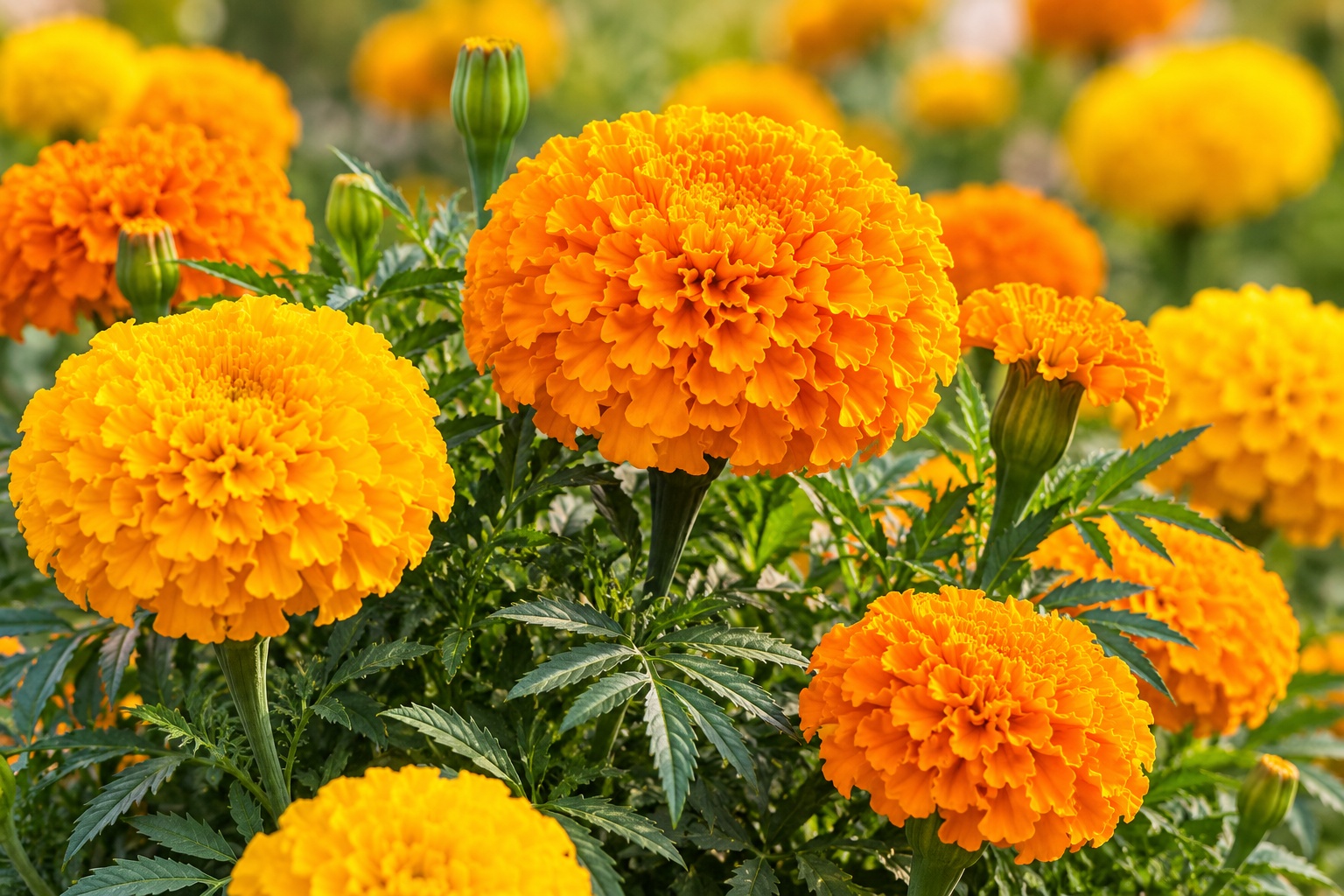
Marigold is a very common flower for Navratri puja and festive decoration.
Genda is often used for:
- puja garlands
- altar decoration
- doorway decoration
- festival floral arrangements
This does not mean that Marigold is necessarily the fixed favourite flower of one specific Navdurga form.
How to Grow Marigold at Home
Botanical name: Tagetes spp.
Sunlight: Full sun
Water: Moderate
Soil: Loose and well-draining
Propagation: Seeds
Difficulty: Very easy
Marigold is one of the easiest choices if you want to grow your own Navratri flowers because it develops more quickly than many perennial flowering shrubs.
Hibiscus / Gudhal (गुड़हल)
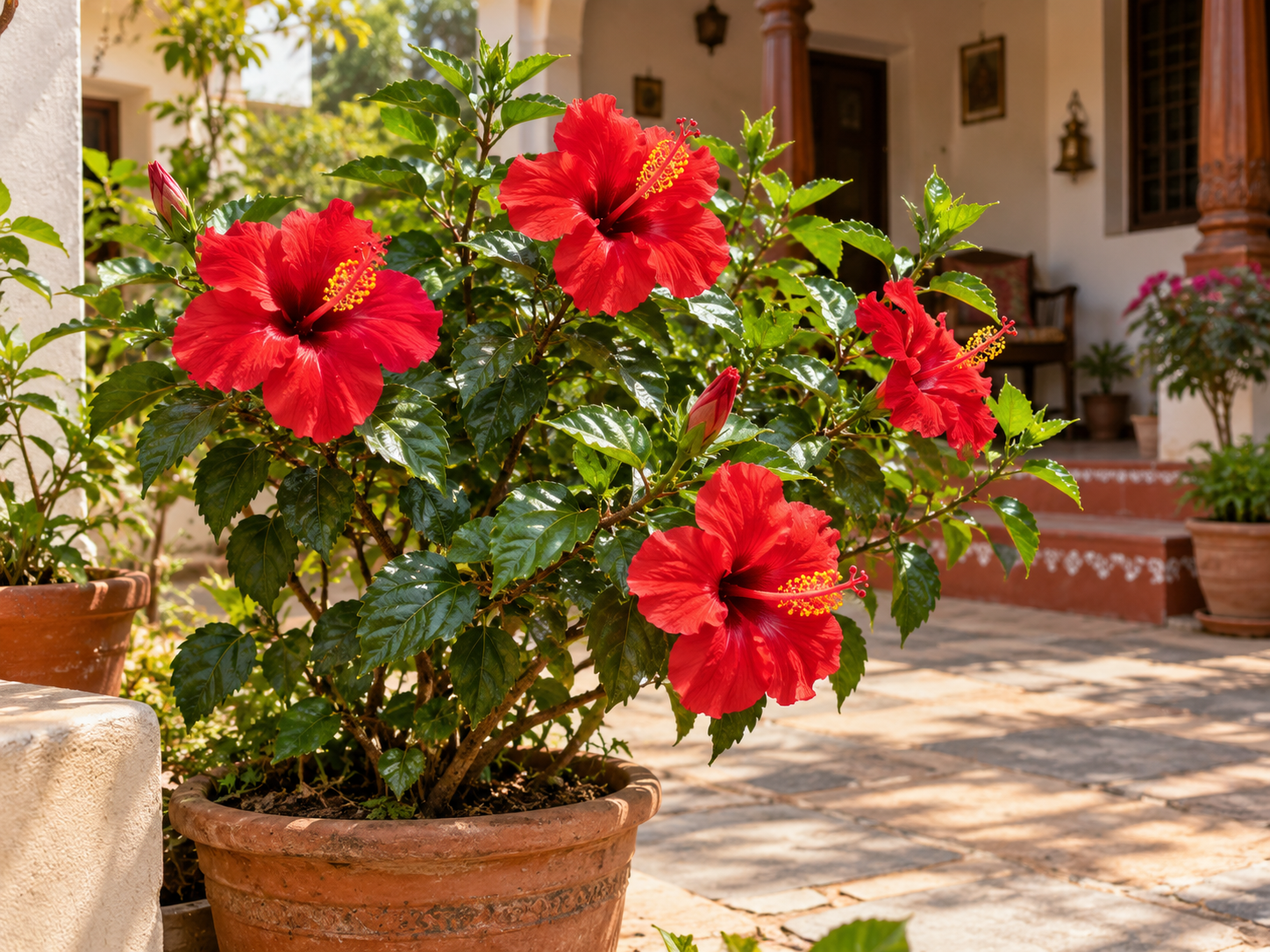
Red Hibiscus is widely associated with Shakti and Devi worship in popular religious practice.
For this guide, it is more accurate to describe Gudhal as a red flower suitable within traditions that use red flowers rather than claiming that it is the universally fixed flower for Day 1.
How to Grow Hibiscus at Home
Botanical name: Hibiscus rosa-sinensis
Sunlight: 5–6+ hours
Water: Regular but avoid waterlogging
Soil: Fertile and well-draining
Pot: Large pot as the plant matures
Propagation: Cuttings
Pruning: Regular pruning encourages branching and flowering
Lotus / Kamal (कमल)
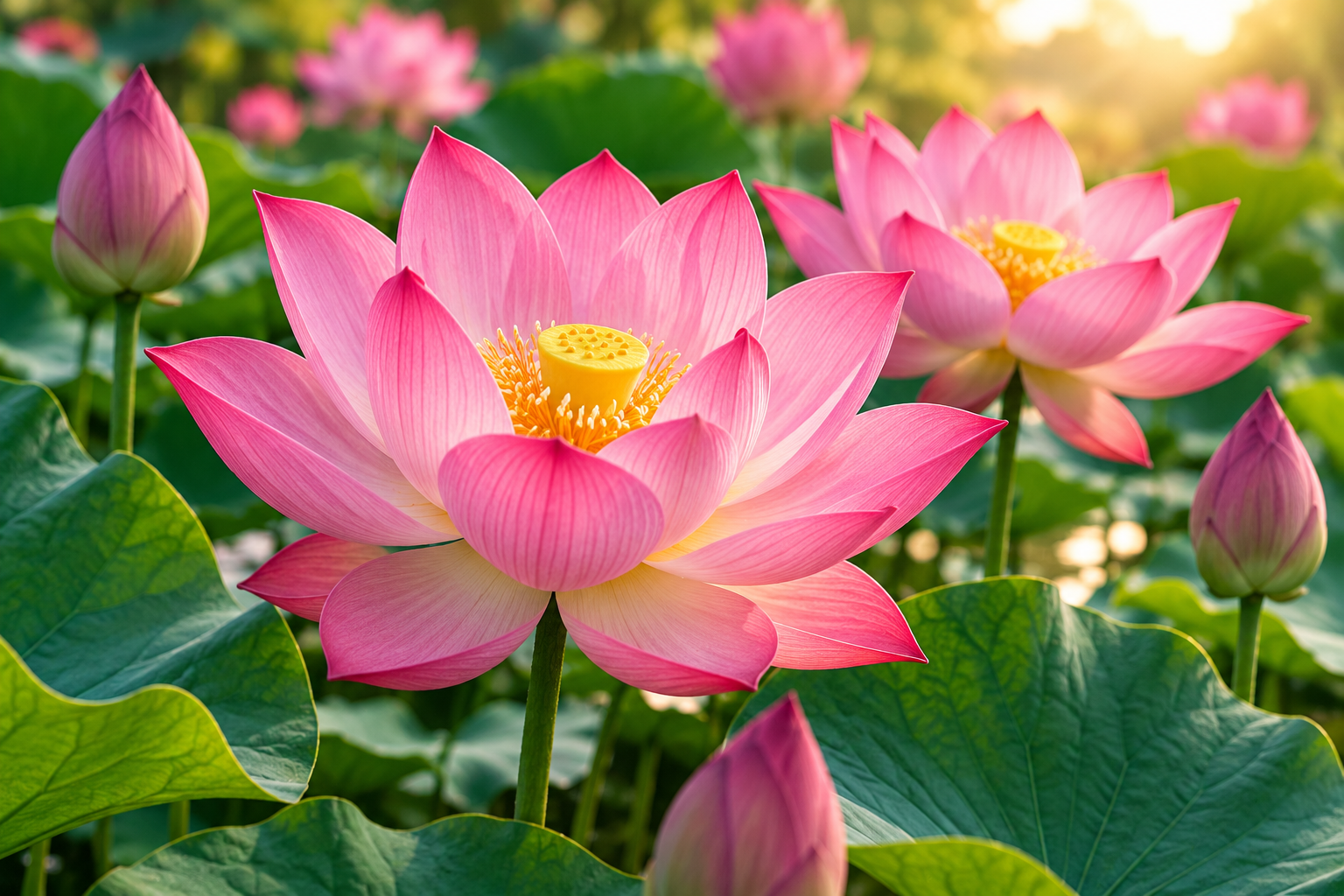
Lotus is one of India's most important sacred flowers, but in the day-wise flower list used above it is not assigned as the favourite flower for one specific Navratri day.
It can still be used according to family or temple tradition.
How to Grow Lotus at Home
Lotus is an aquatic plant.
- Use a wide water container
- Use heavy aquatic soil
- Provide strong direct sunlight
- Maintain permanent standing water
Shiuli / Parijat (शिउली / पारिजात)
The search term durga shiuli flower is relevant because Shiuli is culturally associated with the autumn festive atmosphere, particularly around Durga Puja in eastern India.
However, it should not automatically be presented as the officially fixed flower of a particular Navdurga day unless a specific tradition states so.
How to Grow Shiuli / Parijat
Botanical name: Nyctanthes arbor-tristis
Sunlight: Full sun to bright partial sun
Water: Moderate
Soil: Well-draining
Space: Courtyard or large growing area
The white flowers with orange centres open at night and commonly fall by morning.
Which Is Durga Maa's Favourite Flower?
The search query Durga Maa favourite flower sounds as though it should have one simple answer, but devotional traditions are more varied than that.
Within the day-wise reference followed in this guide:
- Days 1–3: Jasmine / Chameli
- Days 4–5: Red-coloured flowers
- Day 6: Red flowers, especially Rose
- Days 7–9: Night-blooming Jasmine / Raat Ki Rani
It is therefore more accurate to say that different flowers are associated with different forms of Navdurga rather than declaring one universally accepted favourite flower for all forms of Goddess Durga.
What If the Navratri Flower Is Not Available?
This is one of the biggest practical problems devotees may face during Navratri.
If the flower listed in a particular guide is unavailable:
- follow your family or temple tradition first
- use a fresh locally available flower if your tradition permits it
- do not assume that an expensive or rare flower is compulsory simply because an online chart lists it
- avoid wilted, rotten or spoiled flowers
Regional and family traditions can differ, so local custom matters.
Can You Offer Home-Grown Flowers to Maa Durga?
From a gardening perspective, home-grown flowers are practical because they can be harvested fresh.
| Flower | Suitable Space | Difficulty |
|---|---|---|
| Jasmine / Chameli | Pot or ground | Easy–moderate |
| Hibiscus / Gudhal | Large pot | Easy |
| Rose / Gulab | Large pot | Moderate |
| Marigold / Genda | Pots | Very easy |
| Raat Ki Rani | Large pot / ground | Easy |
| Parijat / Shiuli | Courtyard | Moderate |
| Lotus | Water tub / pond | Moderate |
Best Navratri Flowers for Small Balconies
For limited spaces, practical flowering plants include:
- Marigold
- Jasmine
- Compact Hibiscus
- Rose
- Manageable fragrant flowering shrubs
Avoid choosing plants only because of religious importance. Their mature size, sunlight requirement and long-term growing conditions still matter.
When Should You Pick Flowers for Puja?
For many garden flowers, harvesting during cooler morning hours helps preserve freshness.
Choose blooms that are:
- fresh
- clean
- healthy
- free from visible pests
- not recently drenched in pesticide spray
Different traditions may have their own rules regarding the picking and offering of flowers, so devotional practice should be followed separately from gardening advice.
Common Mistakes When Growing Navratri Flowers
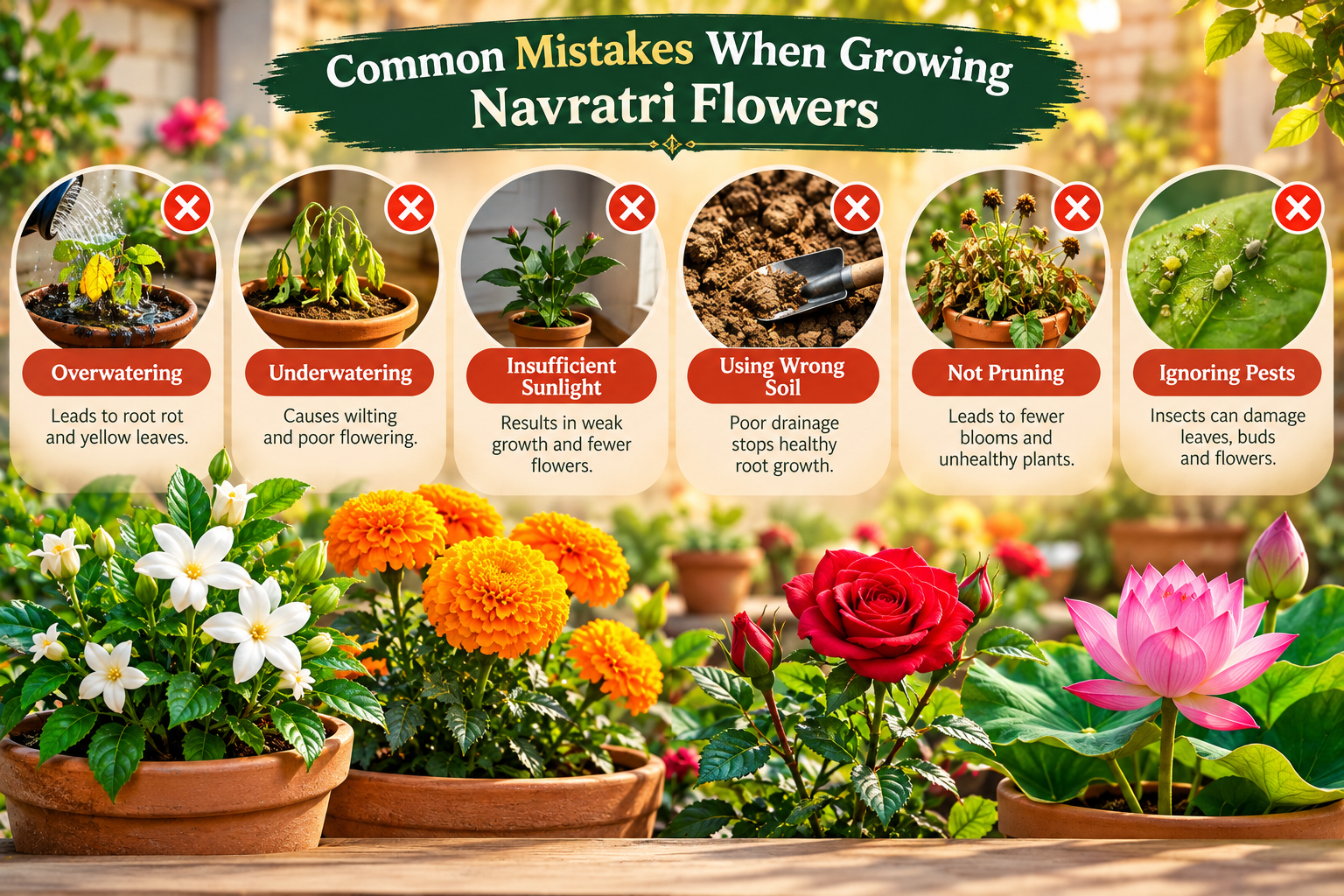
1. Assuming Every Navratri Day Must Have a Different Flower
This creates unnecessary confusion.
2. Planting Flowers Just a Few Days Before Navratri
Most flowering plants will not produce blooms immediately after sowing or planting.
3. Keeping Flowering Plants in Too Much Shade
Jasmine, Hibiscus, Rose and Marigold generally need good light to flower well.
4. Overwatering
More water does not mean more flowers.
5. Treating Lotus Like a Normal Flower Pot
Lotus is aquatic.
6. Trusting Nursery Names Without Checking the Plant
Common plant names can overlap and vary by region.
How to Create a Home Navratri Flower Garden
Rather than trying to grow nine separate plants for nine days, create a garden that can provide several devotional flowers throughout the year.
Flowers for Pots
- Marigold
- Jasmine
- Rose
- Hibiscus
Flowers for a Larger Courtyard
- Raat Ki Rani
- Parijat
Flowers for a Water Garden
- Lotus
This approach is easier to maintain and provides useful flowers beyond the nine days of Navratri.
Frequently Asked Questions About Navratri Flowers
Jasmine or Chameli is listed for Maa Shailputri in the day-wise reference followed in this guide.
Jasmine or Chameli is listed for Maa Brahmacharini.
Jasmine or Chameli is listed for Maa Chandraghanta.
Red-coloured flowers are listed for Maa Kushmanda rather than one single flower species.
Red-coloured flowers are listed for Maa Skandamata.
Red flowers, especially Rose, are listed for Maa Katyayani.
Night-blooming Jasmine or Raat Ki Rani is listed for Maa Kalaratri.
Night-blooming Jasmine or Raat Ki Rani is listed for Maa Mahagauri.
Night-blooming Jasmine or Raat Ki Rani is listed for Maa Siddhidatri.
Yes. Marigold or Genda is widely used for Navratri puja, garlands and festive decoration.
Not according to the consistent day-wise reference used in this guide. Several flowers repeat across multiple days, and regional or family traditions may differ.
इस गाइड में इस्तेमाल किए गए day-wise reference के अनुसार माँ शैलपुत्री के लिए चमेली का फूल बताया गया है।
इस गाइड के अनुसार माँ ब्रह्मचारिणी के लिए चमेली का फूल दिया गया है।
नहीं। एक consistent day-wise reference में कई दिनों पर वही फूल repeat होते हैं। परिवार और क्षेत्र की परंपरा अलग हो सकती है।
Haan. Marigold ya Genda Navratri puja, garlands aur festive decoration me commonly use hota hai.
Nahi. Is guide ke day-wise reference me Day 1 Maa Shailputri ke liye Jasmine ya Chameli listed hai.
Marigold, Hibiscus, Jasmine aur Rose practical options hain. Space zyada ho to Raat Ki Rani aur Parijat bhi grow kiye ja sakte hain.